
Renoir Heist Solved: Damaged Paintings Recovered from Hidden Wall in Southern France
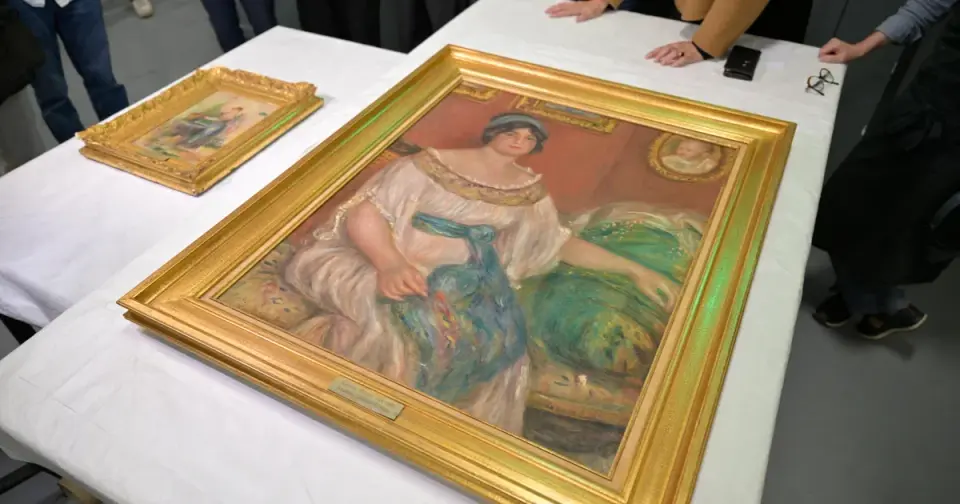
Two paintings by Pierre-Auguste Renoir, stolen from a museum in Cagnes-sur-Mer, France, in September 2026, have been recovered after being hidden behind a cinder block wall. The works, 'Portrait of Madame Colonna Romano' and 'Young Woman at the Well,' were found in Clermont-l'Hérault following the arrest of six suspects. While the paintings were recovered in 'record time,' they sustained minor damage, including a tear in the canvas of the portrait and a damaged frame, requiring restoration. This successful recovery follows a wave of high-profile art heists in France, including the Louvre jewel theft, which has intensified scrutiny on museum security and funding.
Key points
- The two missing Renoir paintings were recovered on October 9, 2026, from a home in Clermont-l'Hérault, hidden behind a solid cinder block wall described as 'completely undetectable' by prosecutors.
- Six suspects, including a 29-year-old man linked via DNA evidence, were arrested in connection with the September theft from the Renoir Museum in Cagnes-sur-Mer.
- The paintings, valued as part of a $10 million total for the four stolen works, showed signs of damage: a tear in the dress of 'Portrait of Madame Colonna Romano' and a damaged frame for 'Young Woman at the Well.'
- The theft occurred in September 2026 when thieves cut through a fence and entered through a window, initially taking four paintings but abandoning two in the garden as they fled.
- The recovery was praised by French Culture Minister Catherine Pegard and local officials as a result of efficient investigation, though it highlights ongoing security concerns in French museums.
Background
This incident is part of a broader trend of art thefts in France and Europe. In October 2025, crown jewels worth approximately $100 million were stolen from the Louvre in Paris, leading to criticism of security measures. Other recent heists include the theft of jewelry from the Lalique museum in July 2026 and gold from the Natural History Museum in Paris. The Renoir Museum in Cagnes-sur-Mer, which houses 12 of the artist's works and personal items, had previously been targeted in a similar three-minute raid in 2025 involving works by Renoir, Cézanne, and Matisse, which were recovered in August 2025.
How outlets are covering it
CBS News and AP News emphasize the forensic and investigative aspects, noting that DNA evidence linked a 29-year-old suspect to the crime and that vehicle-tracking data aided the solution. They highlight the physical damage to the artworks, which will require restoration. CNN and BBC focus more on the public reaction and the broader context of museum security, with the mayor of Cagnes-sur-Mer expressing 'immense joy' and 'profound relief.' All sources agree on the timeline of the recovery and the arrests but differ in emphasis: CBS and AP detail the specific damage and suspect charges, while CNN and BBC frame the event within the narrative of recent high-profile heists and the political response regarding cultural heritage protection.
Why it matters
The recovery of the Renoir paintings demonstrates the effectiveness of modern forensic techniques in art crime, but the damage to the works underscores the physical risks of theft. The incident reinforces concerns about the vulnerability of French museums to organized crime, particularly following the Louvre heist. It also highlights the importance of rapid response and international cooperation in recovering cultural heritage, as well as the ongoing debate over funding and security upgrades for cultural institutions in France.
What to watch
The recovered paintings will undergo restoration to address the tear in the canvas and the damaged frame. The six arrested suspects face legal proceedings, with the 29-year-old main suspect charged based on DNA evidence. Authorities may review security protocols at the Renoir Museum and other French cultural sites in light of the breach. The case may also influence policy discussions regarding funding for museum security and the protection of national treasures.
- Stolen Renoir paintings found hidden, and damaged, behind cinder block wall: "Completely undetectable" CBS News
- 2 Renoir paintings recovered from French museum heist, 6 arrested CNN
- DNA and vehicle-tracking help French investigators recover stolen Renoirs and makes arrests AP News
- Two Renoir paintings stolen from French museum are recovered BBC
- Police swooped on Renoir theft suspects fearing second museum heist, prosecutor says Yahoo
Want the full story? Read the original reporting
Read on CBS News