
Netflix's 'New Stanford Prison Experiment' Fails to Recreate 1971 Controversy
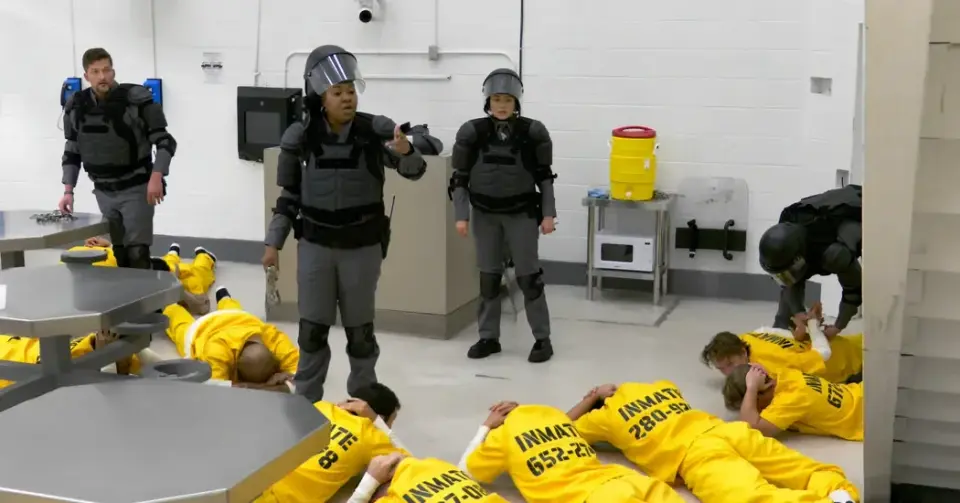
Netflix's six-episode unscripted series 'The New Stanford Prison Experiment' attempts to recreate the infamous 1971 psychological study but is widely criticized for being unenlightening and structurally flawed. Critics note that the show functions more as standard reality television than a rigorous scientific inquiry, failing to produce the chaos of the original due to modern ethical constraints and participant awareness. While the series features 30 participants in a real Georgia correctional facility, reviewers argue it lacks the tension of the original study and instead highlights the artificiality of modern behavioral experiments.
Key points
- The series features 30 participants in a real prison facility in Georgia, divided into 22 male prisoners and 8 guards (including 3 women).
- Critics argue the show fails to replicate the 1971 study's chaos because participants are aware they are on television, undermining the 'social experiment' premise.
- The original 1971 study by Philip Zimbardo is now widely criticized for ethical flaws and Zimbardo's direct coaching of guards, which influenced outcomes.
- A 2002 BBC replication showed different results, with prisoners gaining power over guards, highlighting the impact of experimental design on behavior.
- The series includes a panel of experts, including a behavioral scientist and a journalist, who analyze the events, a format critics compare to cooking show judges.
Background
The 1971 Stanford Prison Experiment, designed by Philip Zimbardo, was intended to last two weeks but ended after six days due to escalating cruelty. It was originally hailed as proof that ordinary people could commit evil under situational pressure, but later faced severe criticism for Zimbardo's active role in coaching guards and creating harsh conditions. A 2002 BBC replication, 'The Experiment,' produced different results, with prisoners gaining power, suggesting the original's outcomes were heavily influenced by Zimbardo's direction. The 2026 Netflix series is the latest attempt to revisit this controversial study, following a 2015 Hollywood film and a 2024 National Geographic documentary.
How outlets are covering it
The New York Times critic James Poniewozik describes the series as 'unenlightening reality TV' that fails as both a scandal and an experiment, noting that the 'possibility of disaster' is teased but not realized. CNN provides historical context, emphasizing that the original study's validity is undermined by Zimbardo's direct involvement and coaching, which contradicts modern ethical standards. The Guardian critic argues that the show is 'insulting' and 'not real,' pointing out that participants are aware they are on TV, which prevents genuine behavioral shifts. The Independent highlights the original study's impact on public discourse, noting that Zimbardo's fame and charisma obscured the study's flaws, while modern critics like Thibault Le Texier argue the original was 'more theater than science.' All sources agree that the Netflix series does not successfully replicate the 1971 study's outcomes, but they differ on whether the failure is due to ethical constraints, reality TV conventions, or the inherent impossibility of replicating a flawed study.
Why it matters
The series raises questions about the reliability of psychological studies and the ethics of behavioral research in the age of reality television. It highlights the tension between scientific inquiry and entertainment, as well as the ongoing debate about whether situational factors or individual personalities drive human behavior. The failure of the Netflix series to replicate the 1971 study's chaos underscores the importance of experimental design and the potential for researcher bias to influence outcomes.
What to watch
The series is available on Netflix, and viewers can watch the six episodes to see how the participants navigate the simulated prison environment. Critics and viewers may continue to debate the validity of the series as a scientific experiment versus a reality TV show. The ongoing discussion about the 1971 study's legacy and the ethics of behavioral research may also continue in academic and public discourse.
- Review: ‘The New Stanford Prison Experiment’ Is a Stiff Sentence The New York Times
- A botched scientific experiment returns as a Netflix reality TV show CNN
- The original Stanford Prison Experiment showed we’re all capable of terrible things The Independent
- The New Stanford Prison Experiment review – surely no one believes this insulting TV show is real? The Guardian
- What Happened During the Real Stanford Prison Experiment? What to Know About the Controversial Study People.com
Want the full story? Read the original reporting
Read on The New York Times