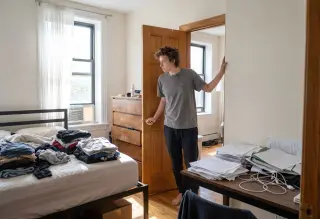
Compulsive tidying is usually a learned coping mechanism from chaotic childhoods, not a character flaw: anxiety triggers ritual, orderly actions, and research shows cleaning can temporarily reduce stress physiology; recognizing the history behind the habit can reduce shame and guide healthier responses.
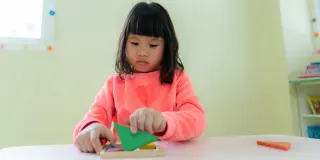
A study of 504 children from Frontiers in Psychology identifies a seven-factor Play Qualities Inventory, highlighting the elusive “play feeling” as the strongest predictor of good play. It shows that people often value play through an adult lens, but the best experiences frequently involve transgression and a lack of adult interference; forcing alignment can ruin the moment. The findings suggest educators and parents should step back and support children’s own play choices, recognizing that what feels “totally perfect” to one child may differ for another or across cultures.
A two-decade analysis of 1.2 million adolescents across 43 countries finds that psychological distress rose for both sexes, but the gap between girls and boys widened more in countries with higher gender equality. Researchers link this to rising schoolwork pressure and a dual burden of expectations on girls, along with declining peer support in highly equal nations. The study (HBSC data, 2002–2022) is observational and acknowledges limitations like binary gender measures and lack of race/ethnicity data; authors caution that true gender equality requires shared daily burdens, not just policy progress.
A Dresden University of Technology study analyzing over 700 participants across nine new tasks and six existing datasets finds that repeating past actions biases current decisions more strongly than explicit value reasoning. A hierarchical Bayesian reinforcement-learning model incorporating reward learning and action repetition outperformed alternatives, suggesting that some so-called irrational preferences arise from habit-like carryover rather than complex calculations, with implications for everyday habits and how environments shape choices.
Neuroscience suggests reading before bed actively engages the brain, boosting language connectivity and even leaving ‘shadow activity’ into the next morning, while watching TV delivers passively processed content that can reduce language skills and impair sleep. Over weeks and months, regular reading strengthens neural networks tied to language, memory, empathy, and cognitive control, whereas late-night screen use can hinder sleep quality and cognitive function. The practical takeaway: swap 10 minutes of screen time for reading to foster calmer sleep and long-term brain benefits.
A large meta-analysis of 229 studies (over 185,000 participants) shows narcissism is not uniformly harmful or protective. Grandiose narcissism, driven by agentic extraversion, links to higher positive mental health (life satisfaction, self-esteem, resilience) with little impact on negative mental health except for more compulsive social-media use; vulnerable narcissism relates to poorer outcomes across positive and negative mental-health measures (more depression, anxiety, loneliness, and stress). The researchers further split grandiose narcissism into admiration (associated with higher happiness and lower distress) and rivalry (linked to worse mental health). They also apply a three-factor model (agentic extraversion, antagonism, neuroticism) to explain patterns, finding agentic extraversion generally protective, while neuroticism and antagonism tend to be harmful. Age, survey type, and culture modulate effects, and limitations include reliance on self-reports and convenience samples. The study emphasizes nuanced, domain-specific interpretations of narcissism’s impact on mental health.
A psychologist argues that growing up in the 1950s with little expectation of rescue created a 'stress inoculation' effect: exposure to small, solvable hardships built an internal locus of control and persistence, while later generations' comfort shifted them toward external explanations and entitlement, eroding persistence.
In 1992, psychologist Richard Bentall proposed classifying happiness as a psychiatric disorder—'major affective disorder, pleasant type'—arguing its rarity, a discrete symptom cluster, cognitive biases (overestimating control, unreal self-evaluations), and possible CNS dysfunction, with critics noting happiness’s lack of negative valence, which Bentall deemed scientifically irrelevant.
The Bulwark’s Mona Charen argues that Trump’s Iran conflict is driven by psychological impulses—humiliation, vainglory, and personal bravado—more than a clear strategy, with little domestic or allied briefing and no congressional authorization; the piece contends the president overestimated air power as a magic wand, misread popular uprisings, and risks a protracted war that Iran can endure, warning that the fight is being waged to heal Trump’s ego rather than to advance a coherent national interest.
Couvade syndrome, or sympathetic pregnancy, describes pregnancy-like symptoms experienced by non-pregnant partners—often fathers—during a partner’s pregnancy. Symptoms can include nausea, fatigue, mood swings, and weight changes, with research suggesting hormonal shifts and brain changes may play a role. Prevalence varies across studies and regions, but experts agree it’s multifactorial, reflecting a mix of biological, psychological, and social adjustments to impending parenthood rather than a formal medical disorder.
Therapists report that people in their forties often grieve not over relationships or career but the loss of the future self they imagined—the so-called 'phantom life.' This midlife reckoning is quiet and internal: a gap between who they are and who they thought they’d become. The guidance centers on naming it as grief, separating mourning from regret, and seeking honest challenge from others to prevent identity from hardening; the goal is integration of the actual self with the imagined one, not a return to a past dream.
A study of 500 Hungarian women found that greater openness to sugar relationships is linked to poorer personality functioning, maladaptive emotion regulation, and stronger early maladaptive schemas, suggesting this openness reflects broader psychological patterns rather than being caused by the relationships themselves (correlational findings).
A study of 467 adults by the Netherlands Institute for Neuroscience identifies seven distinct dimensions of hyperarousal—anxious, somatic, sensitive, sleep-related, irritable, vigilant, and sudomotor—each with different symptoms. The findings suggest hyperarousal is multi-dimensional and linked to conditions like insomnia and ADHD, with potential implications for diagnosis and treatment.
BBC Science Features outlines nine science-backed strategies to cope with anxiety and uncertainty: name and differentiate emotions (emotional granularity), reframe anxiety as a signal for preparation, channel worry into action, use books, music or surroundings to boost mood (bibliotherapy and environmental cues), watch horror films to rehearse threats, count daily blessings, focus on what you can and can't control (Stoic guidance), pursue hope linked to action, and talk with children about adversity to support emotional regulation.
Researchers tested nine chimpanzees at a Spanish rehab center, offering crystals and ordinary stones and observing that chimps distinguished crystals and showed varying levels of attraction, with individuals like Toti and especially Sandy displaying the strongest engagement. The study highlights a “crystal allure” in chimps, fueling playful speculation about which chimp could become a symbolic “crystal healer,” while noting the findings are exploratory and tied to broader debates about human-crystal fascination.