
Dutch Broadcaster Avrotros Withdraws From 2027 Eurovision Over Gaza Conflict
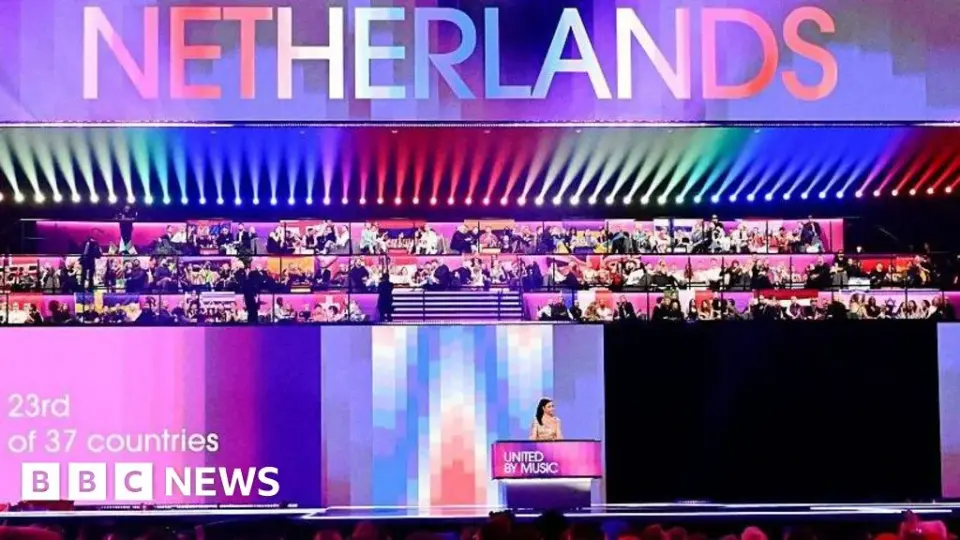
Dutch public broadcaster Avrotros has withdrawn from the 2027 Eurovision Song Contest, citing the event's loss of neutrality due to the ongoing war in Gaza. The broadcaster rejected recent rule changes by the Eurovision Broadcasting Union (EBU) as insufficient to restore the contest's independent character. While Avrotros has returned responsibility for Dutch participation to the umbrella organization NPO, the Netherlands previously boycotted the 2026 edition in Vienna alongside four other countries. The 2027 contest is scheduled for Burgas, Bulgaria, following a 35 million viewer drop in 2026 attributed to these political boycotts.
Key points
- Avrotros announced its withdrawal from the 2027 Eurovision Song Contest on Monday, stating the competition can no longer be considered neutral while a participating country remains involved in a large-scale military conflict.
- The broadcaster criticized the EBU's recent rule changes, which bar countries involved in armed conflicts from hosting the contest if they win, arguing these measures do not provide sufficient confidence that the event's neutral character has been restored.
- Avrotros director-general Taco Zimmerman described the contest as a 'platform for division' that undermines its original purpose of bringing countries together, citing severe humanitarian suffering in Gaza and restrictions on press freedom.
- The broadcaster has returned the decision regarding Dutch participation to the NPO, the umbrella organization for Dutch public service media, which may assign the slot to another broadcaster within the system.
- The 2027 contest is scheduled for May 15 in Burgas, Bulgaria, following the 2026 victory of Bulgarian singer Dara, who won in Vienna with the song 'Bangaranga'.
- The 2026 competition saw a 35 million viewer drop compared to the previous year, reaching 131 million total, after five countries—including the Netherlands, Spain, Ireland, Iceland, and Slovenia—boycotted the event over Israel's participation.
Background
This withdrawal follows a pattern of political boycotts in the Eurovision Song Contest. In November 2025, five broadcasters, including the Netherlands, Spain, and Ireland, boycotted the competition after a failed attempt to suspend Israel. Israel finished second in both 2025 and 2026, with Noam Bettan placing second in 2026 with the song 'Michelle'. The EBU introduced new rules earlier this month to address concerns about countries involved in armed conflicts hosting the contest, a move that also affects Ukraine, which has been engaged in a protracted war since the 2022 Russian invasion. Ukrainian group Kalush Orchestra won Eurovision 2022 in a symbolic show of public support. The Netherlands has won Eurovision more times than any country except Ireland and Sweden.
How outlets are covering it
All four sources agree on the core facts: Avrotros's withdrawal, the citation of Gaza-related neutrality concerns, and the EBU's new hosting rules. However, they differ in emphasis. BBC and Euronews provide detailed context on the 2026 viewer drop and the specific rule changes regarding 'sensitive geopolitical situations.' Al Jazeera focuses on the broader narrative of the contest becoming a 'platform for division' and highlights the 2026 boycott by five countries. The Jerusalem Post frames the withdrawal primarily around the 'Israel-Hamas War' and notes that Avrotros has returned responsibility to the NPO, emphasizing the broadcaster's demand for a 'clear framework' for assessing participation. BBC and Euronews note that the withdrawal does not necessarily rule out Dutch participation if another broadcaster within the NPO system takes over, a nuance less emphasized in the other sources.
Why it matters
The withdrawal signals a deepening political fracture within the Eurovision Song Contest, potentially threatening its status as a neutral cultural platform. The EBU's new rules, while aimed at addressing conflicts, may not satisfy broadcasters who view the contest's integrity as compromised by the participation of countries involved in active military conflicts. This could lead to further boycotts and a continued decline in viewership, as seen in 2026. The decision also highlights the increasing intersection of international conflicts with major cultural events, forcing broadcasters to choose between participation and adherence to their values regarding neutrality and humanitarian concerns.
What to watch
The NPO will decide whether another Dutch public broadcaster will take over the Eurovision slot for 2027. The EBU has stated it will continue dialogue with the NPO regarding opportunities for another broadcaster to participate. The 2027 contest is scheduled for May 15 in Burgas, Bulgaria. The EBU's new rules, which bar countries involved in armed conflicts from hosting if they win, will be in effect, though their effectiveness in restoring neutrality remains contested by some broadcasters.
- Dutch broadcaster Avrotros pulls out of 2027 Eurovision Song Contest BBC
- Dutch public broadcaster to boycott ‘no longer’ neutral Eurovision Al Jazeera
- Netherlands withdraws from 'no longer' neutral 2027 Eurovision Euronews.com
- Dutch broadcaster announces it will not participate in Eurovision due to Gaza The Jerusalem Post
- Dutch pull out of 'no longer neutral' Eurovision DW.com
Want the full story? Read the original reporting
Read on BBC