
Orlean joins Oates in defending Nolan's 'Odyssey' against Wilson's critique
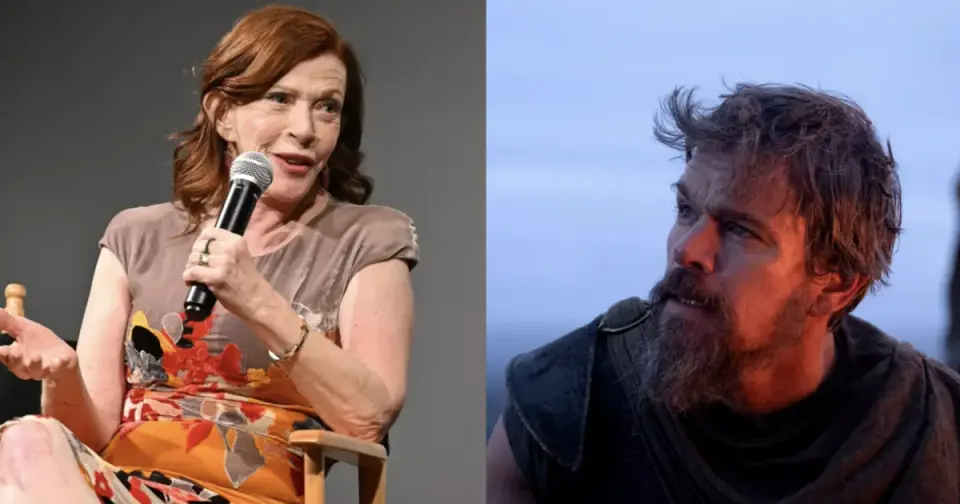
The cultural debate over Christopher Nolan’s 'The Odyssey' has escalated into a high-profile literary feud. Classicist Emily Wilson, whose 2017 translation inspired Nolan, published a harsh 4,200-word review in the London Review of Books, calling the film shallow and lacking in ethical depth. In response, authors Susan Orlean and Joyce Carol Oates publicly defended the film, with Orlean calling Wilson 'a bit of a jerk.' Wilson has since expressed regret over her comments regarding the film's race-neutral casting, while the film continues to dominate box office and cultural discourse.
Key points
- Susan Orlean and Joyce Carol Oates have publicly defended Christopher Nolan's 'The Odyssey' against Emily Wilson's critical review, with Orlean calling Wilson 'a bit of a jerk' on Threads.
- Wilson's 4,200-word critique in the London Review of Books labeled the film a shallow blockbuster, criticizing its lack of psychological depth, poor dialogue, and absence of sex scenes, though she admitted regret over her framing of the race-neutral casting.
- Nolan's film has grossed over $700 million, surpassing 'Oppenheimer,' and drove a 600% increase in sales for Wilson's 'Odyssey' translation on Audible, despite the controversy.
- Wilson suggested Nolan should have hired a professional screenwriter, arguing the script lacked believable character motivations, while Oates criticized Wilson's tone as dismissive and 'haughty.'
- The debate has become a major cultural phenomenon, with The Guardian noting that the film has created a rare 'monoculture' event, driving robust discussion across demographics despite initial right-wing culture war campaigns.
Background
This dispute follows earlier coverage of Joyce Carol Oates' public defense of Nolan against Wilson's critique, where Oates accused Wilson of 'haughty superiority' and argued that translations and adaptations are inherently subjective. The current escalation involves Susan Orlean, whose own works inspired films like 'Adaptation' and 'Blue Crush,' joining the defense of Nolan's adaptation. The controversy is set against the backdrop of the film's massive commercial success and its status as a cultural touchstone, with Wilson's translation sales surging due to Nolan's early citations of her work.
How outlets are covering it
The outlets present a clear divide in perspectives. The Los Angeles Times and NPR focus on the personal and professional fallout, highlighting Wilson's regret over her casting comments and her suggestion that Nolan should have hired a writer. The Guardian frames the dispute as a broader cultural phenomenon, emphasizing the film's 'monoculture' status and the diverse demographics engaging with the debate. Ars Technica offers a more balanced critical view, acknowledging Wilson's skill but arguing her review failed to assess the film's artistic intent, while praising Nolan's 'intimate' take on the epic. All sources agree on the film's commercial success and the viral nature of the debate, but they differ in their assessment of Wilson's tone and the validity of her critiques.
Why it matters
The feud illustrates the tension between academic criticism and popular culture, with Wilson's review crashing the London Review of Books website and driving a 600% spike in her translation's sales. It highlights how Nolan's film has become a rare 'monoculture' event, engaging diverse demographics and sparking robust debate. The controversy also underscores the ongoing discussion about race-neutral casting and the role of screenwriters in auteur-driven films, with Wilson's regret over her casting comments signaling a shift in the discourse.
What to watch
Wilson is expected to continue her work on a new translation of 'The Odyssey' and a collection of essays, 'Crossing the Wine-Dark Sea,' due in September. The film is likely to receive numerous Oscar nominations, with particular praise for the performances of Samantha Morton, Matt Damon, and Anne Hathaway. The cultural debate may continue to evolve as more reviews and analyses are published, but the commercial success of the film suggests that the controversy has not deterred audiences.
- 'The Odyssey' book nerd battle rages on: Susan Orlean says Emily Wilson is being 'a bit of a jerk' Los Angeles Times
- Emily Wilson’s Pan of ‘The Odyssey’ Ignites a Debate Among Classicists and Commenters The New York Times
- Review: Yes, we’re still arguing about Nolan’s The Odyssey Ars Technica
- 'Odyssey' translator Emily Wilson says Nolan shouldn't have written the movie himself NPR
- ‘A towering piece of monoculture’: how The Odyssey discourse has dominated this summer The Guardian
Want the full story? Read the original reporting
Read on Los Angeles Times