
Schoenbrun’s 'Camp Miasma' Blends Slasher Gore with Queer Intimacy
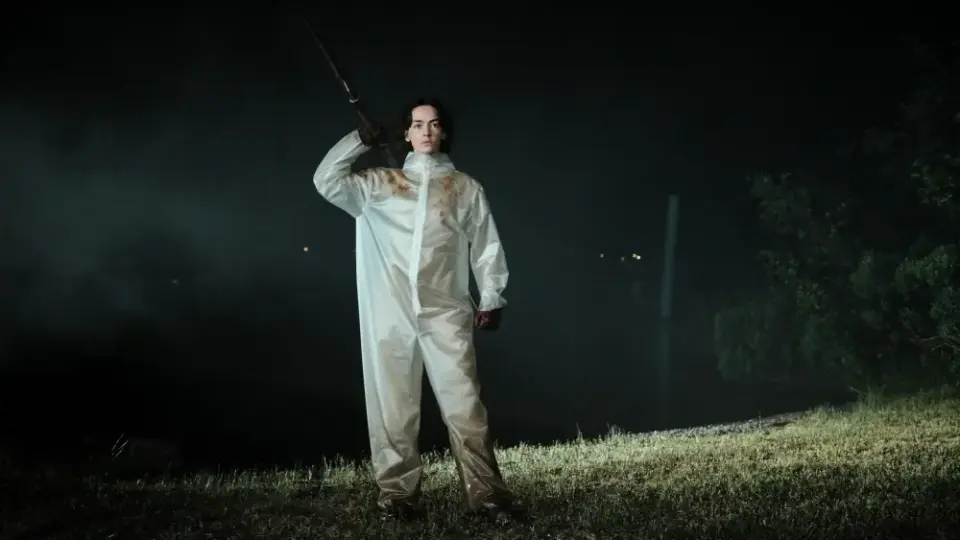
Jane Schoenbrun’s latest feature, 'Teenage Sex and Death at Camp Miasma,' is currently playing in select theaters via Mubi. The film stars Hannah Einbinder as a queer filmmaker tasked with rebooting a fictional 1980s slasher franchise, and Gillian Anderson as the reclusive star of the original films. The movie explores themes of dissociation, sexual awakening, and the reclamation of transphobic horror tropes through a mix of campy gore and intimate romance. It won the Queer Palm at the Cannes Film Festival and has received critical acclaim for its technical ambition and emotional depth.
Key points
- The film centers on Kris, a young queer filmmaker (Einbinder), who is hired to revitalize the 'Camp Miasma' franchise, a fictional 1980s slasher series criticized for transphobic content.
- Kris travels to an abandoned camp in Oregon to recruit Billy Preston (Anderson), the reclusive 'final girl' from the original films, to star in the reboot.
- A central sequence features the villain Little Death (Jack Haven) massacring a summer camp in a one-take shot choreographed to Counting Crows' 'A Long December.'
- The narrative intertwines the characters' sexual struggles with the horror plot, using the slasher genre to explore dissociation and the difficulty of being present in one's own body.
- The film won the Queer Palm at the 2026 Cannes Film Festival and is described by critics as Schoenbrun’s most mainstream and technically ambitious work yet.
Background
Jane Schoenbrun previously gained cult status with 'I Saw the TV Glow,' a film that similarly explored the impact of media on identity. 'Teenage Sex and Death at Camp Miasma' marks a shift toward larger-scale production with a wider theatrical release through Mubi, following its festival premiere. The film continues Schoenbrun’s pattern of using horror genres to dissect personal and cultural anxieties, specifically focusing on the intersection of sexuality, gender, and nostalgia.
How outlets are covering it
Variety emphasizes the technical execution of the film, highlighting the complex one-take sequence and the collaboration between cinematographer Eric Yue and editor Graham Mason. They note the use of VFX to create 'playful' blood effects and the physical demands placed on actor Jack Haven. CNN focuses on the thematic core, describing the film as an exploration of dissociation and the struggle to achieve sexual presence, framing the slasher elements as a metaphor for the director’s own post-transition experiences. Rolling Stone praises the film as a 'fever dream' that validates 'guilty pleasures,' highlighting the detailed recreation of 1980s pop culture ephemera and the chemistry between Einbinder and Anderson. The New York Times critic Alissa Wilkinson calls it a 'Critic’s Pick,' noting how the film uses the history of a problematic franchise to explore the guilt and liberation associated with loving trash cinema. While all outlets agree on the film’s quality, Variety and Rolling Stone focus more on the craft and nostalgia, whereas CNN and the NYT emphasize the personal and psychological dimensions of the story.
Why it matters
The film represents a significant moment for queer horror, moving beyond simple representation to actively deconstruct and reclaim transphobic tropes from 1980s slashers. Its success at Cannes and subsequent critical acclaim suggest a growing appetite for films that blend genre conventions with deep personal and cultural critique. The technical ambition of the one-take sequence also signals a willingness in independent filmmaking to invest in high-concept visual spectacles that serve thematic purposes, rather than just aesthetic ones.
What to watch
The film is currently in limited theatrical release through Mubi. Given its critical reception and festival success, a wider distribution or streaming release is likely. There is no immediate announcement regarding a sequel, but the film’s exploration of franchise reboots may influence how studios approach the revitalization of older, problematic IP in the future.
- 'Teenage Sex and Death at Camp Miasma': Little Death's Bloody One-Take Variety
- This queer summer slasher wants you to have good sex CNN
- ‘Teenage Sex and Death at Camp Miasma’ Is a Horror Fan’s Hot Fever Dream Rolling Stone
- ‘Teenage Sex and Death at Camp Miasma’ Review: Gushing With Desire The New York Times
- Jane Schoenbrun On Tackling "Toxic Soup" Of Slasher Genre In 'Camp Miasma' Deadline
Want the full story? Read the original reporting
Read on Variety