
Netflix's 'Unabomber' Draws Criticism for Inventing a Diagnosis and Ignoring Kaczynski's Philosophy
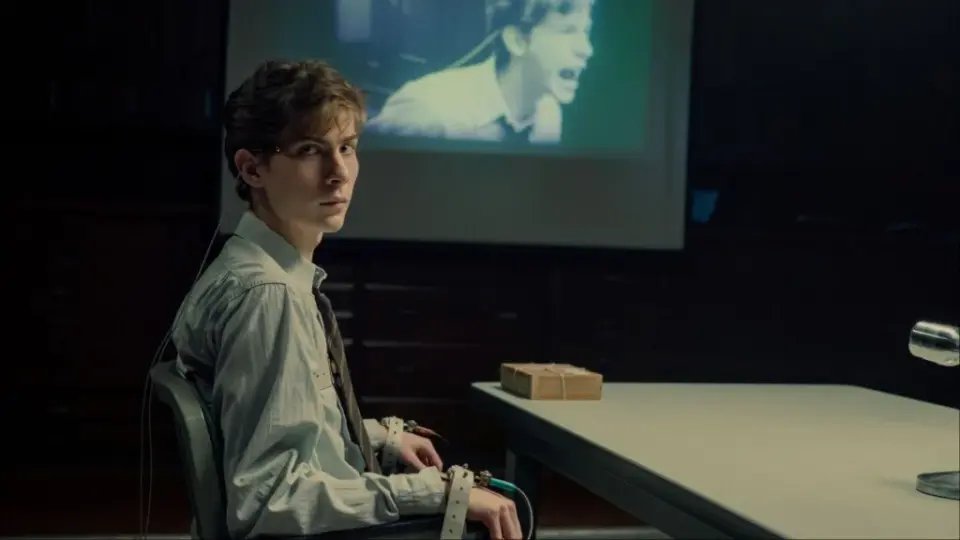
Netflix's new biopic 'Unabomber' has received mixed-to-negative reviews for prioritizing a generic coming-of-age narrative over the complex reality of Ted Kaczynski's life. Critics argue the film fabricates a schizophrenia diagnosis for Kaczynski and fails to engage with his anti-technology manifesto, resulting in a shallow portrayal of the infamous bomber.
Key points
- The film, directed by Janus Metz Pedersen, alternates between Kaczynski's time at Harvard in the 1950s and the FBI's 1990s manhunt.
- Jacob Tremblay portrays a young Kaczynski, while Russell Crowe plays psychologist Henry Murray, who conducted a controversial study on the student.
- Critics note that the film invents a medical history for Kaczynski, claiming the Harvard study caused his radicalization, which contradicts historical records.
- The movie ignores Kaczynski's 35,000-word manifesto, 'Industrial Society and Its Future,' which remains culturally relevant despite his crimes.
- The film features a fictional FBI agent, Joanne Miller, played by Shailene Woodley, to drive the procedural plotline.
Background
Netflix released the first trailer for 'Unabomber' in August 2026, highlighting the dual timeline structure and the cast including Tremblay, Crowe, and Woodley. The film was set to debut on September 25, 2026. Prior coverage noted that critics were already concerned about the film's potential to ignore Kaczynski's core philosophy in favor of a standard biopic format.
How outlets are covering it
Av Club critic Natalia Keogan argues that the film confuses added context for a compelling narrative, relying on banal story beats like dating difficulties rather than the psychological implications of the Harvard study. IndieWire critic Philippe Bosse emphasizes that the film 'invents a diagnosis' for Kaczynski, creating a tidy but false explanation for his actions that ignores his own rejection of mental illness claims. The Hollywood Reporter's Richard Lawson describes the film as a 'facile rendering' that fails to find the real meaning behind the history, calling the writing starchy and the performances unconvincing. All three outlets agree that the film prioritizes entertainment over accuracy, but they differ in their emphasis: Av Club focuses on the lack of philosophical engagement, IndieWire on the factual inaccuracy of the diagnosis, and THR on the overall blandness of the execution.
Why it matters
The film's release highlights the ongoing cultural debate surrounding Ted Kaczynski's legacy and the relevance of his anti-technology manifesto in the age of AI and data centers. It also raises questions about the ethical implications of dramatizing real-life criminals, particularly when the dramatization involves fabricating medical histories or ignoring key aspects of their ideology. The film's reception may influence how future biopics handle complex, controversial figures.
What to watch
The film is available on Netflix starting September 25, 2026. Viewers can watch the film and form their own opinions about its portrayal of Kaczynski. Critics may continue to debate the film's accuracy and its handling of Kaczynski's philosophy in the coming weeks.
- Even the Unabomber can't escape the generic streaming biopic curse A.V. Club
- New ‘Unabomber’ film explores Ted Kaczynski’s time at Harvard and the controversial study he participated in The Boston Globe
- ‘Unabomber’ Review: Jacob Tremblay Stuns in a Biopic That Still Can’t Decide if Kaczynski Was Crazy IndieWire
- ‘Unabomber’ Review: Jacob Tremblay and Russell Crowe in a Facile Rendering of Ted Kaczynski’s College Days The Hollywood Reporter
- ‘Unabomber’: Explosive True Story Is Netflix’s Most Thrilling Movie in Years The Daily Beast
Want the full story? Read the original reporting
Read on A.V. Club