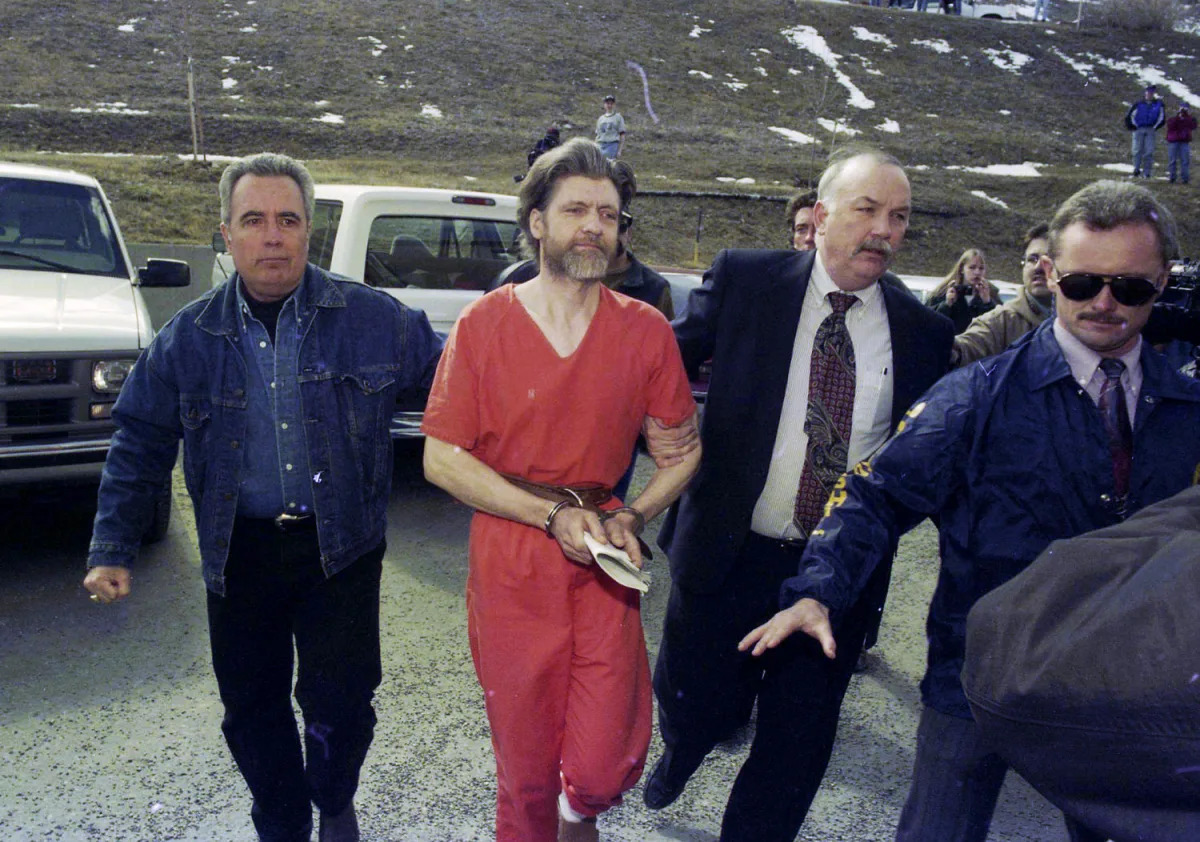
Netflix's new drama 'Unabomber' attempts to link Ted Kaczynski's violent acts to a traumatic Harvard experiment but is widely criticized for being shallow, melodramatic, and factually flawed.
Netflix's new biopic 'Unabomber,' starring Jacob Tremblay and Russell Crowe, has debuted to largely negative reviews. Critics argue the film fabricates a schizophrenia diagnosis for Ted Kaczynski and oversimplifies his radicalization, prioritizing a generic origin story over historical accuracy.
Netflix's new biopic 'Unabomber' has received mixed-to-negative reviews for prioritizing a generic coming-of-age narrative over the complex reality of Ted Kaczynski's life. Critics argue the film fabricates a schizophrenia diagnosis for Kaczynski and fails to engage with his anti-technology manifesto, resulting in a shallow portrayal of the infamous bomber.
Netflix's new biopic 'Unabomber,' starring Jacob Tremblay and Russell Crowe, has received largely negative reviews for prioritizing a generic coming-of-age narrative over the complex, anti-technological philosophy of Ted Kaczynski. Critics argue the film fails to engage with the psychological impact of the Harvard experiments or the true-crime aspects of the FBI manhunt, resulting in a shallow portrayal of a figure whose 35,000-word manifesto remains culturally relevant.
The Pima County Sheriff's Department released two ransom notes in Nancy Guthrie's Tucson disappearance, with a retired investigator saying the release mirrors the Unabomber case’s tactic of publishing the writer’s words to elicit tips. Experts note the notes’ distinctive linguistic style could help identify the sender, though the notes are just one piece of the investigation as authorities seek leads ahead of the six‑month mark; the case carries a $1.2 million reward and remains active.
The autopsy report of "Unabomber" Ted Kaczynski reveals that he was diagnosed with late-stage rectal cancer in 2021 and was noted to be depressed a month before his suicide in 2023. His death by hanging in his solitary cell at the Federal Medical Center in Butner raises questions about preventability and access to objects for self-harm. The report also mentions his history of mental health disorders and refusal of further cancer treatments due to poor prognosis and negative side effects. Kaczynski, known for a deadly bombing spree, had been captured in 1996 and sentenced to life in prison without parole.
The autopsy report of "Unabomber" Ted Kaczynski revealed that he was diagnosed with late-stage rectal cancer in 2021 and was noted to be depressed before his suicide in 2023. Kaczynski, who waged a deadly bombing spree, took his own life in his solitary cell at the Federal Medical Center in Butner. Questions have been raised about the circumstances of his suicide, including how he had access to a shoelace. The report also mentioned extensive injuries due to chest compressions and the spread of his cancer. Kaczynski's notoriety as the "Unabomber" stemmed from his campaign of homemade pipe bombs targeting universities and an American Airlines flight.
Ted Kaczynski, also known as the Unabomber, hanged himself in his prison cell at FMC Butner, where he was serving a life sentence. Kaczynski was found dead with significant neck injuries and a depressed trachea. He had been behind bars since April 1996 for killing three people and injuring 23 others with explosives he mailed or delivered to his targets between 1978 and 1995. The FBI spent nearly 20 years searching for him before locating him in Montana. Kaczynski's younger brother tipped off investigators to his possible identity when he recognized the tone of his manifesto.
Ted Kaczynski, known as the Unabomber, reportedly died by suicide in his prison cell at the age of 81. He was serving four life sentences for killing three people and injuring dozens more in a series of bombings. The official cause of death has yet to be released, but reports confirm that he died by suicide.
Ted Kaczynski, also known as the Unabomber, committed suicide by hanging himself in his cell at FMC Butner, a federal medical prison in North Carolina. Kaczynski, who carried out a 17-year bombing spree that killed three and injured 23 others, had been moved to the medical prison in December 2021 due to his poor health after being diagnosed with late-stage cancer. He had previously attempted suicide in 1998 before trial. Despite his reign of terror, some have embraced his anti-technology manifesto, with tech boss Elon Musk tweeting that Kaczynski "might not be wrong" about his belief that technology is detrimental to society.
Ted Kaczynski, known as the "Unabomber," died by suicide in prison at the age of 81. He had been serving four life sentences plus 30 years for a 17-year bombing campaign that killed three people and injured 23 others. Kaczynski was found unresponsive in his cell at the Federal Medical Center in Butner, North Carolina, and was transported to a hospital where he was pronounced dead. He had been diagnosed as a paranoid schizophrenic but refused to plead insanity and instead pleaded guilty.
Ted Kaczynski, also known as the "Unabomber," died by suicide in his North Carolina prison cell at the age of 81. He was serving a life sentence for a series of bombings across the country that took place between 1978 and 1995, which killed three people and injured 23 others. Kaczynski was diagnosed with cancer, but the type and its severity are unclear. He was transferred to the North Carolina prison in 2021 from a maximum security Colorado prison because of his declining health.
Elon Musk tweeted that the Unabomber "might not be wrong" in his belief that technology is detrimental to society, and could one day become so technologically advanced that it turns on humans. Musk also raised the possibility that an advanced AI system could decide to place humanity "under strict controls." While Musk may agree with Kaczynski's views on some level, he's also arguably the face of some of today's biggest tech advancements.
Ted Kaczynski, also known as the "Unabomber," died by suicide in his cell at the Federal Medical Center in Butner, North Carolina, at the age of 81. Kaczynski was serving four life sentences plus 30 years for a 17-year bombing campaign that killed three people and injured 23 others. He had been held in the federal Supermax prison in Florence, Colorado, since May 1998. Kaczynski was found unresponsive in his cell and was transported to a hospital, where he was pronounced dead later Saturday morning.
Theodore Kaczynski, known as the Unabomber, died in prison at the age of 81. His own writings and brother suggest that his tilt toward violence started while studying at the University of Michigan. Kaczynski's dissatisfaction with his professors, what he considered low academic standards, and his experience in an Ann Arbor "rooming house" led him to become "convinced his landlord had turned others against him," and disdained others and showed "little willingness to communicate with peers." Kaczynski became homicidal and decided he would spend his life killing.