
Critics Praise 'The End of Oak Street' for Style, but Paleontologists and Audiences Criticize Its Scientific Accuracy
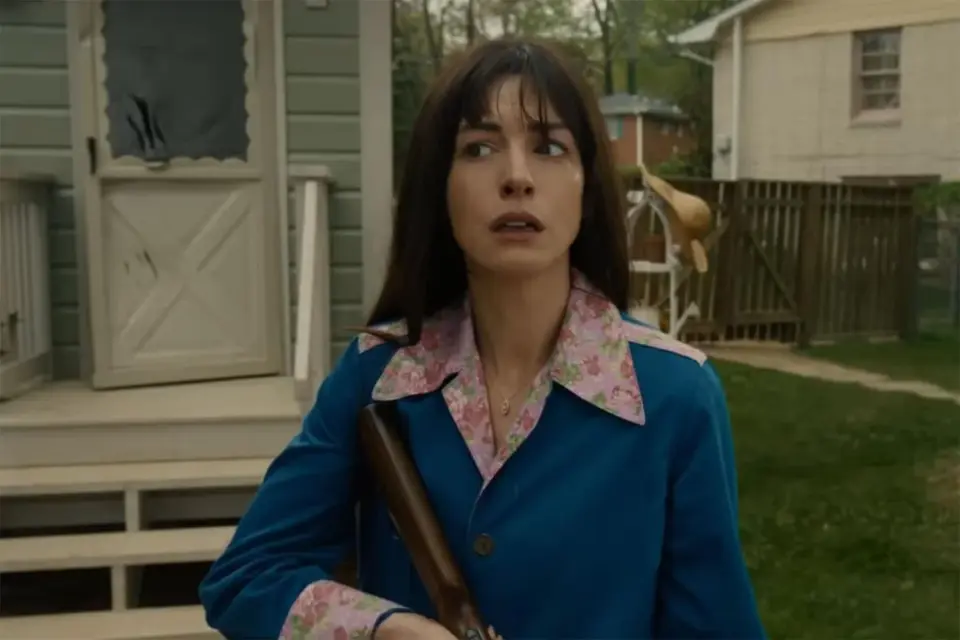
David Robert Mitchell’s 'The End of Oak Street' has received mixed reactions regarding its scientific accuracy and narrative structure. While critics praise its 1980s aesthetic and suspense, paleontologist Riley Black argues the film’s dinosaurs are a scientifically incoherent mix of eras. Audiences are divided, with some calling it the best dinosaur film in decades and others criticizing the CGI and predictable plot. The film underperformed at the box office, opening to $21 million domestically against an $80 million budget.
Key points
- The film transports a 1982 Michigan suburb to a prehistoric era, featuring a mix of Jurassic and Cretaceous creatures.
- Paleontologist Riley Black criticizes the film for ignoring scientific accuracy, noting the inclusion of anachronistic species like Titanoboa and inaccurate Pleuromeia plants.
- Critics from The New Yorker and The Ringer praise the film’s visual style and homage to Spielberg, but note its lack of narrative closure and character depth.
- Audience reviews on Rotten Tomatoes are split, with some praising the action and others criticizing the CGI and predictable storyline.
- The film underperformed at the box office, opening to $21 million domestically and $47 million worldwide, trailing behind major franchises like Spider-Man.
Background
The End of Oak Street was released on August 14, 2026, by Warner Bros. It was marketed as a potential successor to the Jurassic Park franchise but faced early controversy over AI-generated marketing materials. The film was produced by J.J. Abrams and directed by David Robert Mitchell, known for his previous works like It Follows and Under the Silver Lake.
How outlets are covering it
Slate’s Riley Black, a paleontologist, argues that the film’s dinosaurs are a 'total jumble' of different geological eras, including Late Jurassic Allosaurus and Cenozoic Titanoboa, and that the film shows 'indifference to the science.' The New Yorker’s Justin Chang praises the film’s 'fastidiously sun-drenched, nostalgia-rich homage to the early works of Steven Spielberg' but criticizes its 'nagging callousness' and lack of character depth. The Ringer’s Adam Nayman calls the film a 'swift, satisfying exercise in fight-or-flight suspense entertainment' but notes its 'startling lack of closure' and repetitive set pieces. Rotten Tomatoes audience reviews are divided, with some calling it the 'BEST dinosaur movie in decades' and others criticizing the 'crap' dinosaur visual effects and 'lackluster' ending.
Why it matters
The film’s mixed reception highlights the ongoing tension between scientific accuracy and entertainment value in dinosaur films. Its box office underperformance underscores the dominance of the Jurassic Park franchise and the difficulty of launching new dinosaur films without a strong brand. The debate over its scientific accuracy also reflects broader audience expectations for realism in science-based entertainment.
What to watch
The film’s box office performance will likely determine whether Warner Bros. invests in a sequel or further dinosaur-themed projects. The ongoing debate over its scientific accuracy may influence future dinosaur films to prioritize more rigorous scientific consultation. The film’s mixed audience reviews suggest that while it has a dedicated fanbase, it may not achieve the broad appeal needed to sustain a franchise.
- I’m a Paleontology Nerd. Anne Hathaway’s New Movie Gives Us Some Real Dinosaur Boners—Sometimes Literally. Slate
- “The End of Oak Street” Is a Weirdly Alienated Jurassic Lark The New Yorker
- ‘The End of Oak Street’ Is All Bite The Ringer
- The End of Oak Street Audience Reviews: A Fresh Take on Dinosaurs, Though Not Everyone Is Convinced Rotten Tomatoes
- ‘The End of Oak Street’ Just Exposed Everything Stale About the ‘Jurassic’ Franchise The Hollywood Reporter
Want the full story? Read the original reporting
Read on Slate