
Jane Schoenbrun’s 'Camp Miasma' Blends Slasher Nostalgia with Queer Identity
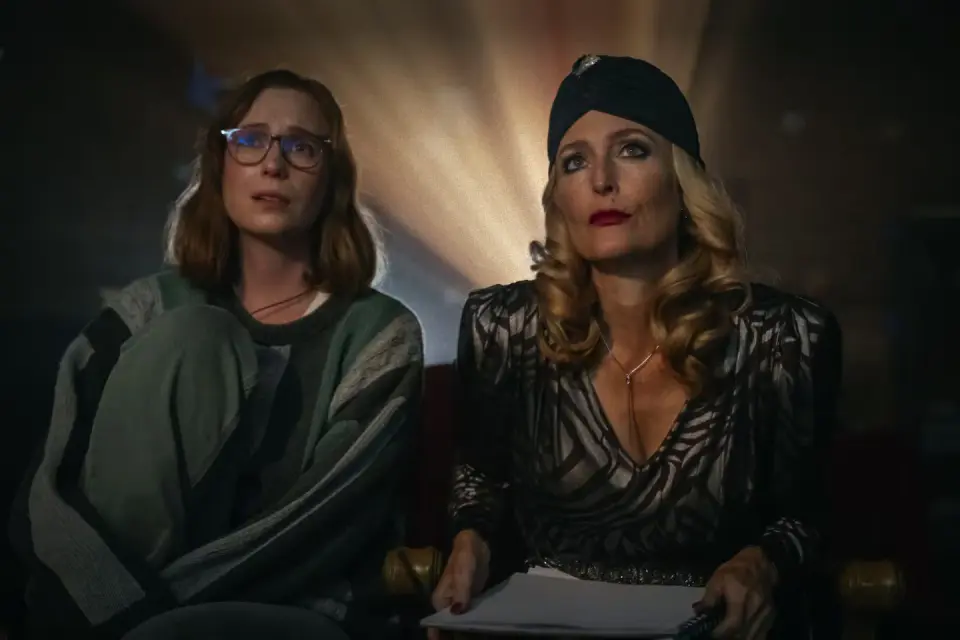
Jane Schoenbrun’s latest feature, 'Teenage Sex and Death at Camp Miasma,' has opened in select theaters, receiving praise for its inventive blend of 1980s slasher homage and queer coming-of-age themes. The film stars Gillian Anderson as a reclusive former 'final girl' and Hannah Einbinder as a queer filmmaker, exploring identity through a meta-horror lens. Critics highlight the film’s visual ambition, including a notable one-take sequence, and its subversion of traditional horror tropes to address transphobia and desire.
Key points
- The film is directed by Jane Schoenbrun, following her previous work 'I Saw the TV Glow,' and stars Gillian Anderson and Hannah Einbinder.
- The plot centers on Kris, a queer filmmaker, who pitches a reboot of the 'Camp Miasma' franchise to Billy, a reclusive former actress known for playing the 'final girl' in the original series.
- The narrative explores themes of sexual awakening, trans identity, and the intersection of fear and desire, using the slasher genre as a metaphor for these experiences.
- The film features a spear-wielding antagonist named 'Little Death,' portrayed by Jack Haven, who was also a star of Schoenbrun’s prior film.
- Critics have noted the film’s innovative technical aspects, including a multi-location one-take sequence and a distinctive opening title sequence that chronicles the franchise’s history.
Background
Schoenbrun’s previous film, 'I Saw the TV Glow,' explored identity through 1980s television nostalgia. 'Camp Miasma' continues this pattern by using the slasher genre as a vehicle for personal and queer identity exploration. Earlier coverage noted the film’s release in select theaters via Mubi and its focus on reclaiming desire and liberation through horror tropes.
How outlets are covering it
The Boston Globe’s Odie Henderson praised the film as an 'enjoyable ode to slashers,' noting its appeal to fans of the 1980s subgenre through direct homages and Easter eggs. The Mercury News’s Randy Myers emphasized the film’s subversion of the genre’s transphobic history, describing it as a 'clever, blood-soaked homage' that is often hilarious and visually robust. The Sydney Morning Herald included the film in a broader roundup of new releases but did not provide a specific review, focusing instead on other titles like 'The Dog Stars' and 'I Want Your Sex.'
Why it matters
The film represents a significant entry in the horror genre that challenges traditional tropes by centering queer and trans identities. Its critical reception highlights the potential for horror to serve as a medium for exploring complex themes of identity, desire, and liberation, moving beyond simple scares to offer a nuanced cultural commentary.
What to watch
The film is currently playing in select theaters, including the Alamo Drafthouse New Mission and AMC Kabuki in San Francisco, and the Smith Rafael Film Center in San Rafael. Wider distribution and audience reception will determine its impact on the horror genre and its potential for future sequels or related projects.
- At ‘Camp Miasma,’ a Little Death goes a long way The Boston Globe
- ‘Teenage Sex and Death at Camp Miasma’ Review: Gushing With Desire The New York Times
- A dystopian romantic comedy, plus other new movies to watch this week SMH.com.au
- What to watch: ‘Camp Miasma’ is so much more than a slasher film The Mercury News
- Teenage Sex and Death at Camp Miasma (2026) IMDb
Want the full story? Read the original reporting
Read on The Boston Globe