
Waititi’s 'Klara and the Sun' Debuts to Scorn: Critics Call It a Hollow, Tonal Mismatch
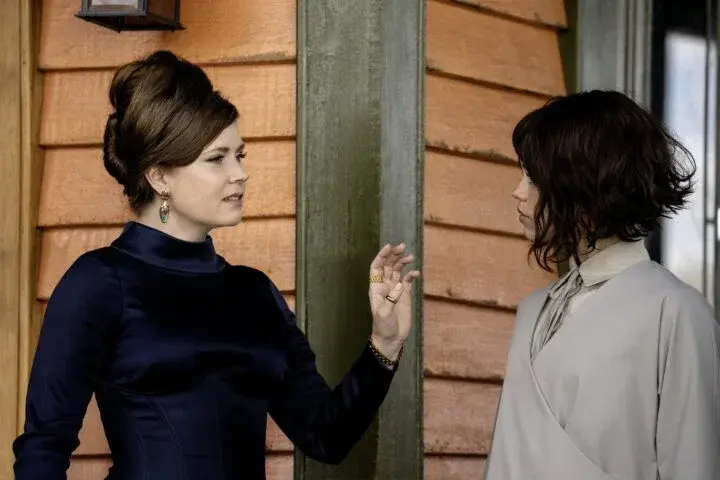
Taika Waititi’s adaptation of Kazuo Ishiguro’s novel 'Klara and the Sun' has received overwhelmingly negative reviews, with critics citing a severe tonal mismatch between the director’s comedic style and the source material’s melancholic themes. The film, starring Jenna Ortega and Amy Adams, holds a 25% Rotten Tomatoes score and a 23 Metacritic score, raising concerns about its commercial viability ahead of its October 23, 2026, theatrical release.
Key points
- The film, directed by Taika Waititi and written with Dahvi Waller, is based on Kazuo Ishiguro’s 2021 novel and stars Jenna Ortega as an artificial friend (AF) named Klara.
- Critics, including Slant Magazine and Variety, argue the adaptation strips away the novel’s interiority and emotional depth, replacing it with strained, whimsical comedy that clashes with the dystopian setting.
- The film holds a 25% Rotten Tomatoes critic score and a 23 Metacritic score, with reviewers describing it as a 'calamitous' and 'hollow' misfire that fails to capture the subtlety of Ishiguro’s work.
- Theatrical release is scheduled for October 23, 2026, distributed by Sony Pictures Releasing, with production by 3000 Pictures and Spyglass Media Group; the film premiered at the London Film Festival in October 2026.
- Critics note that while Jenna Ortega’s performance is earnest, the script’s one-note characterization and lack of narrative connective tissue undermine the film’s potential to explore themes of artificial consciousness and human connection.
Background
Taika Waititi’s previous literary adaptation, 'Jojo Rabbit' (2019), was a commercial success despite mixed critical reception, but 'Klara and the Sun' marks a sharp departure in tone. The film’s release follows a pattern of critical backlash for Waititi’s recent projects, with earlier archive coverage noting concerns about his trajectory in Hollywood. The novel 'Klara and the Sun' was published in 2021 and is often compared to Ishiguro’s earlier work 'Never Let Me Go,' which received a well-received 2010 film adaptation. The current critical consensus suggests that Waititi’s comedic sensibility is ill-suited to Ishiguro’s melancholic, interior storytelling, a contrast that has been highlighted in reviews since the London Film Festival premiere.
How outlets are covering it
Slant Magazine critic David Robb describes the film as a 'hollow adaptation' that strips away the insightful and affecting elements of Ishiguro’s novel, arguing that Waititi’s approach moves in the opposite direction of the source material’s intent. Variety’s Guy Lodge calls it a 'calamitous android fantasy,' emphasizing the 'hopeless mismatch' of filmmaker and source material, and notes that the film’s whimsical comedy fights the stoic sadness of the novel at every turn. Both outlets agree that the tonal clash is the primary failure, with Slant noting the film’s 'episodic' structure and Variety highlighting the 'textureless' visual style and 'daintily retro' production design. Rotten Tomatoes data reflects this consensus with a 25% critic score, though no audience reviews are available pre-release. The outlets differ slightly in emphasis: Slant focuses on the philosophical and emotional shallowness, while Variety critiques the technical and stylistic choices, such as the 'overbearingly precious' score by Michael Giacchino and the 'gold-filtered lensing' by Michael Berlucchi.
Why it matters
The critical reception of 'Klara and the Sun' raises questions about the commercial viability of high-profile adaptations that fail to resonate with critics, particularly when the source material is a respected literary work. The film’s poor scores and negative reviews may impact its box office performance and streaming value, especially given the current cultural conversation around artificial intelligence and human connection. For Taika Waititi, the backlash may signal a need to reconsider his approach to literary adaptations, as his previous success with 'Jojo Rabbit' does not seem to translate to this project. The film’s release also highlights the challenges of adapting complex, interior narratives for a broad audience, particularly when the director’s style is at odds with the source material’s tone.
What to watch
The film is scheduled for a wide theatrical release on October 23, 2026, distributed by Sony Pictures Releasing. Given the negative critical reception, box office performance will be a key indicator of its commercial viability. Future coverage may focus on audience reception, box office numbers, and any potential streaming release. The film’s performance may also influence discussions about the adaptation of literary works and the suitability of directors for specific projects. Additionally, the critical backlash may impact Taika Waititi’s future projects and his standing in Hollywood, as earlier archive coverage noted concerns about his recent trajectory.
- ‘Klara and the Sun’ Review: Jenna Ortega’s Earnest Robot Can’t Save Taika Waititi’s Hollow Adaptation Slant Magazine
- Klara and the Sun | Audience Reviews Rotten Tomatoes
- Jenna Ortega’s ‘Klara And The Sun’ Earns Low Critics’ Score In Early Rotten Tomatoes Reviews Forbes
- 'Klara and the Sun' Review: Taika Waititi's Calamitous Android Fantasy Variety
- Jenna Ortega plays an artificial friend in need in 'Klara and the Sun' Reuters
Want the full story? Read the original reporting
Read on Slant Magazine