
Documentary 'Wild Inside' Revisits Flaco the Owl's Brief, Tragic Freedom in NYC
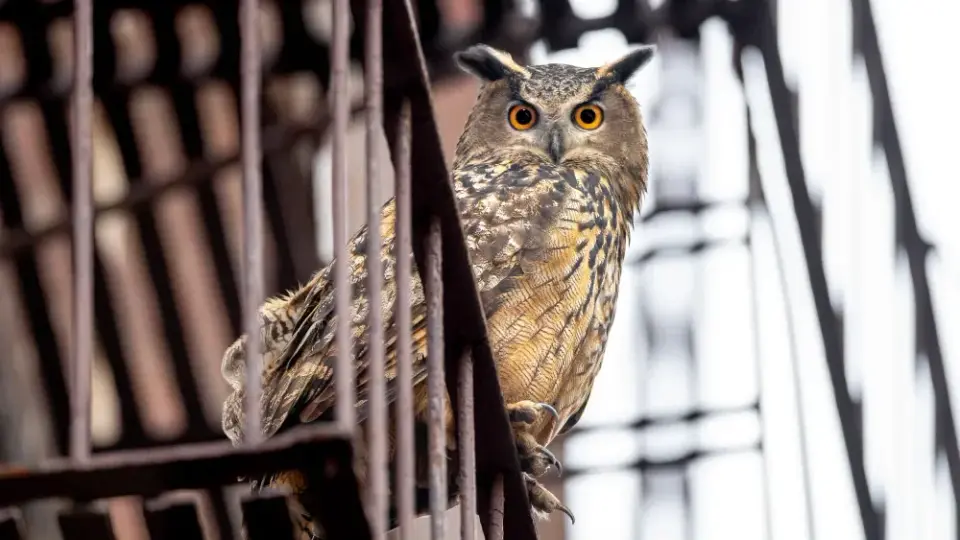
The documentary 'Wild Inside,' directed by Penny Lane, chronicles the 2023 escape and subsequent year-long survival of Flaco, a Eurasian eagle-owl, in New York City. Released by HBO Documentary Films, the film uses citizen journalism footage to explore themes of freedom and captivity, concluding with Flaco's death from rodenticide exposure.
Key points
- Flaco, a Eurasian eagle-owl, escaped the Central Park Zoo on February 2, 2023, after an individual cut the wire mesh of his enclosure.
- The owl, who had lived in captivity for 13 years, successfully adapted to wild life in Manhattan, hunting rats within two weeks.
- The film, directed by Penny Lane and edited by Hannah Buck, utilizes an archive of images captured by civilians and nature photographers to construct a narrative.
- Flaco died after colliding with a building wall, a result of weakened strength caused by ingesting rodenticide-laced prey.
- The documentary premiered at the IFC Center in New York on July 31, 2026, with a running time of 96 minutes.
Background
Flaco's story gained international media attention in 2023 when he became a symbol of urban wildlife and freedom. The city council later passed 'Flaco's Law,' which established pilot programs for rat contraceptives to replace poison, a policy shift influenced by the owl's death. This documentary serves as a retrospective on that cultural moment, building on the earlier public fascination with the bird's movements across Manhattan neighborhoods.
How outlets are covering it
Variety critic Owen Gleiberman describes the film as a 'true-life nature fairy tale' that is both enchanting and haunting, emphasizing the philosophical ambiguity of Flaco's fate. The Guardian highlights the 'fairytale' aspect, noting that Lane was compelled by the mystical nature of owls, while also detailing the tragic reality of the bird's death from pigeon herpes and anticoagulants. Vulture critic Bilge Ebiri frames the story as a reflection of New York City itself, suggesting that the public's projection of their own experiences onto Flaco turned the bird into a symbol of self-actualization and loneliness. While all outlets agree on the emotional impact, Variety focuses on the visual construction of the narrative, The Guardian emphasizes the ethical debate over captivity versus freedom, and Vulture centers on the anthropomorphic connection between the city's residents and the bird.
Why it matters
The film examines the ethical complexities of urban wildlife management and the public's relationship with nature in dense cities. It highlights the tension between the romanticization of freedom and the practical dangers of environmental toxins, such as rodenticides, that affect wild animals in metropolitan areas. The documentary also serves as a cultural artifact, capturing how a single animal can become a focal point for broader discussions about captivity, survival, and the definition of 'wildness' in a human-dominated environment.
What to watch
The documentary is currently in wide release across more than 40 theaters in the United States. As the film gains viewership, it may reignite public discourse regarding the efficacy of 'Flaco's Law' and the long-term impacts of rodenticide use on urban ecosystems. The success of the film could also influence future documentary projects focusing on urban wildlife and the intersection of human and animal habitats in major cities.
- ‘Wild Inside’ Review: The Story of the Central Park Owl Becomes a Moving and Haunting Documentary Variety
- Flaco on Film (Along With the Community the Owl Inspired) nytimes.com
- New documentary celebrates the life of Flaco the owl and those loved him ABC7 New York
- ‘Kind of like a fairytale’: documentary tells the unusual tale of Flaco the Owl theguardian.com
- In the Lovely Wild Inside , Flaco the Owl Gets His Documentary Vulture
Want the full story? Read the original reporting
Read on Variety