
New research suggests self-deprecating humor is healthy if balanced
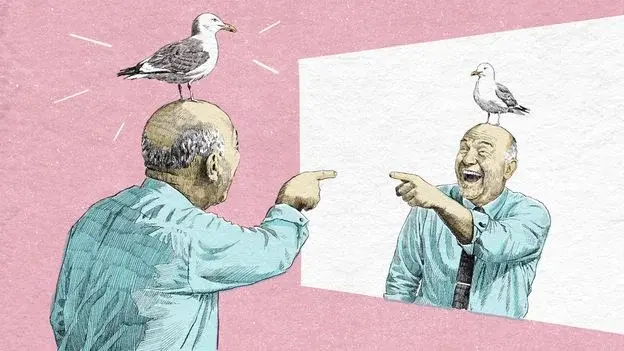
Recent psychological research challenges the long-held belief that making fun of oneself is harmful. While older studies linked self-defeating humor to low self-esteem and depression, new findings indicate that it can actually boost self-esteem and improve relationships when used as a coping mechanism. Experts emphasize that the key lies in moderation and combining self-mockery with other humor styles, rather than relying on it exclusively. Learning to laugh at oneself can help individuals cope with setbacks and navigate social situations, provided the humor does not stem from deep-seated self-hatred.
Key points
- A 2011 study confirmed that 80% of people can laugh at distorted images of their own faces, proving that self-humor is physiologically possible.
- Paul McGhee, a humor researcher, identified laughing at oneself as a critical step in developing a broader sense of humor, ranking it just below finding humor in stressful situations.
- The Humor Styles Questionnaire distinguishes between 'self-enhancing' humor (adaptive) and 'self-defeating' humor (previously viewed as maladaptive).
- Sonja Heintz, a psychology lecturer at Plymouth University, found that self-defeating humorists often reported higher self-esteem and better interpersonal relationships than expected.
- Claire Fox, a professor at the University of Bristol, found that children who used self-defeating humor alongside other humor styles ('humor endorsers') fared better than those who relied solely on it ('self-defeaters').
- Gelotophobia, an acute sensitivity to laughter, is linked to lower life satisfaction and depression, often stemming from strict parenting or past bullying.
Background
Historically, philosophers like Plato and Thomas Hobbes debated whether humans could truly laugh at themselves, with Hobbes allowing it only when reflecting on past foolishness. For decades, psychological research relied on self-reported data, which may have been aspirational rather than accurate. The 2003 Humor Styles Questionnaire was influential but is now being re-evaluated for potential methodological biases, particularly in how it frames self-defeating humor with negative value judgments.
Why it matters
Understanding the nuances of self-humor can help individuals improve their mental health and social interactions. By recognizing that self-deprecating humor can be a healthy coping mechanism when balanced with other humor styles, people can better navigate social situations and cope with life's setbacks. This shift in perspective challenges previous assumptions that self-mockery is inherently damaging, offering practical advice for cultivating a lighter, more resilient attitude.
What to watch
Sonja Heintz is working on a paper to re-evaluate the Humor Styles Questionnaire, proposing a rethink of the self-defeating scale to distinguish between truly maladaptive and adaptive varieties. Other researchers are developing new scales to better capture the nuances of self-deprecating humor. Individuals are encouraged to practice playfulness through simple activities, such as keeping a 'playfulness diary,' to cultivate a lighter attitude and improve overall well-being.
Want the full story? Read the original reporting
Read on BBC