
Ted Kennedy’s 1999 Mandate: Recover All Three Victims Together
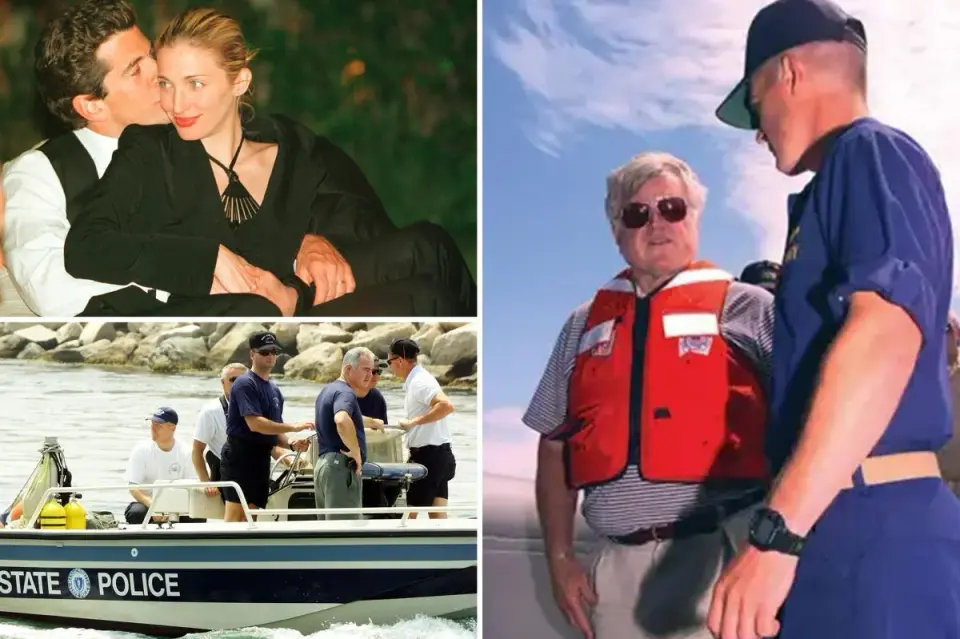
A new book reveals that Senator Ted Kennedy insisted Navy divers recover his nephew John F. Kennedy Jr. and the Bessette sisters simultaneously to prevent perceptions of preferential treatment. The 1999 recovery operation, detailed by retired Coast Guard Capt. W. Russell Webster, prioritized collective dignity over individual urgency despite the nephew’s body being found first.
Key points
- Retired US Coast Guard Capt. W. Russell Webster, who led the 1999 search, co-wrote 'The Last Flight' with his wife, detailing the recovery of JFK Jr., Carolyn Bessette-Kennedy, and Lauren Bessette.
- Senator Ted Kennedy mandated that all three bodies be raised together in a single salvage basket from the USS Grasp, rejecting initial pushes to retrieve JFK Jr. first because his body was outside the wreckage.
- The NTSB determined the crash was caused by spatial disorientation; JFK Jr. lacked an instrument rating and was not certified to fly solely using cockpit instruments in low-visibility conditions.
- Divers faced challenges including low visibility from stirred silt and the risk of commercial fishermen or treasure hunters finding the wreckage before the official recovery team.
- Kennedy remained present throughout the recovery, joining the Coast Guard crew in prayer and helping carry the caskets to hearses, later visiting the command to thank the personnel.
Background
John F. Kennedy Jr. died at age 38 in a July 16, 1999, plane crash off Martha's Vineyard, Massachusetts, along with his wife and her sister. The crash occurred when Kennedy piloted a Piper Saratoga into the Atlantic Ocean. Ted Kennedy, his paternal uncle and a long-serving U.S. Senator, was a prominent figure in the aftermath. The recovery operation was led by the USNS Grasp, with Navy divers retrieving the bodies on July 21, 1999. The ashes were scattered in the Atlantic on July 22, 1999.
Why it matters
The incident highlights the tension between public perception of elite privilege and the procedural integrity of emergency response teams. It underscores how family influence can shape operational protocols in high-profile tragedies, even when those protocols contradict standard efficiency measures. The detailed account provides insight into the human and logistical challenges of deep-water recovery operations.
What to watch
The book 'The Last Flight' provides a comprehensive historical account of the 1999 recovery mission. No further official actions are anticipated regarding the 1999 event, as the recovery and memorialization were completed in 1999. The NTSB investigation concluded that spatial disorientation caused the crash, a finding that remains the official determination.
Want the full story? Read the original reporting
Read on New York Post