
Trump, Schiff unite on federal film tax credit to halt Hollywood job exodus
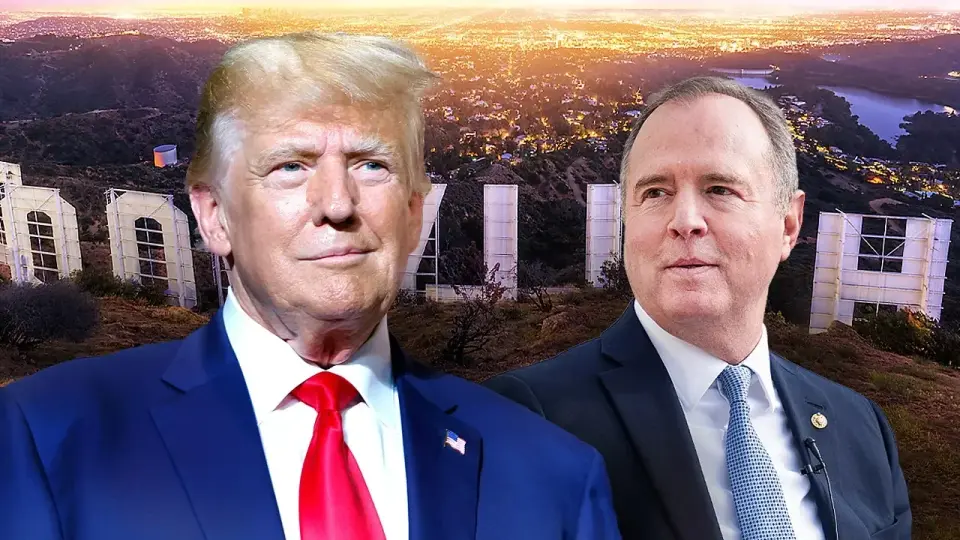
President Trump and Sen. Adam Schiff have aligned on a federal film tax incentive to reverse the loss of 49,000 entertainment jobs since 2022. The proposal, championed by actor Jon Voight and the IATSE union, aims to compete with global tax breaks. While California expanded its state credits, it remains behind Georgia and New York, prompting calls for a national 20% labor credit to stabilize production.
Key points
- The U.S. entertainment industry lost 49,000 jobs since 2022, with 45% of films and scripted TV now shot internationally, up from 33% in 2022.
- Trump and Sen. Schiff, despite their political rivalry, support a federal production incentive to bring jobs back to the U.S.
- Jon Voight, designated as the U.S. special ambassador to Hollywood, is leading efforts to draft bipartisan legislation with Rep. Laura Friedman.
- The proposed federal credit would offer a 20% labor-cost incentive, stackable with state programs, to compete with Canada and the UK.
- California’s state tax credit program was doubled to $750 million but remains smaller than Georgia’s $1 billion and New York’s $800 million allocations.
Background
This development follows earlier reports from September 2026 regarding Trump’s initial endorsement of a national film tax credit. Previous coverage noted that advocates, including the Motion Picture Association and various unions, had long pushed for a 15-20% labor-cost credit to counter the expiration of the 2004 federal tax deduction. The current push represents a significant escalation in bipartisan cooperation, moving from advocacy to active legislative drafting in Congress.
How outlets are covering it
Fox News highlights the unlikely political alliance between Trump and Schiff, emphasizing the urgency of saving jobs. The Los Angeles Times focuses on the economic disparity, noting that California’s incentives are insufficient compared to competitors like Georgia and New York. IATSE, the labor union, frames the issue as a necessary tool to level the global playing field, stating they have championed this policy for years. Politico provides a nuanced view, noting the tension in Hollywood regarding Voight’s political alignment with Trump, while acknowledging his effectiveness in bridging the gap between the industry and the White House. All sources agree on the severity of the job losses but differ on the primary driver of the solution, with Fox and IATSE emphasizing the federal mandate, while the LA Times highlights the inadequacy of state-level efforts.
Why it matters
The potential passage of a federal film tax credit could reshape the U.S. entertainment economy by reversing the trend of offshoring production. It represents a rare bipartisan consensus in a polarized political environment, directly impacting thousands of jobs in California and other states. Success could stabilize the industry’s global competitiveness, while failure may lead to further erosion of the U.S. market share in film and television production.
What to watch
Congress is expected to introduce federal incentive legislation as soon as September, though the truncated legislative schedule due to midterm elections may delay passage. The White House is setting up meetings with bipartisan lawmakers to finalize the framework. Industry stakeholders, including the Motion Picture Association and IATSE, are actively lobbying for the 20% credit to be approved quickly to prevent further job losses.
- Trump, Schiff forge unlikely alliance as Hollywood bleeds jobs Fox News
- Jon Voight-Led Group Pushes for Trump-Backed Film Credit Bill This Month Bloomberg.com
- IATSE Applauds Building Momentum for US Federal Film and Television Production Incentive as Trump Announces Support iatse
- Trump calls for federal tax incentives to revive U.S. film industry Los Angeles Times
- Waiting for Jon Voight, Hollywood’s would-be savior Politico
Want the full story? Read the original reporting
Read on Fox News