President Trump urged a bipartisan push for a federal film and television tax credit to bring jobs back to America, citing losses to overseas production; Democrats and industry groups expressed support, but no funding details were announced.
A bipartisan backlash against AI-powered data centers is intensifying, with governors and lawmakers proposing moratoriums, local-permit hurdles, and audits of tax breaks and water use. Pennsylvania, Texas and Michigan have moved to curb growth, while eight states enacted data-center tax-subsidy rollbacks in 2026 and more legislation is under consideration. Industry voices warn the issue could redefine investment and policy ahead of the 2028 elections, even as some leaders seek smarter planning and clearer community benefits to counter public concern about higher energy costs, water use, and landscape impact.
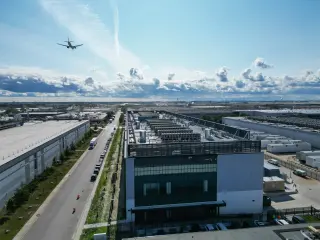
A collaborative investigation finds 18 data centers near O’Hare have won multimillion-dollar property-tax reductions and state incentives, collectively shaving about $2 billion off taxable values in Elk Grove Village, Northlake, and Franklin Park and saving nearly $100 million in taxes this year, a shift that raises homeowner costs and fuels a national debate over how such facilities should be valued and whether incentives are warranted.
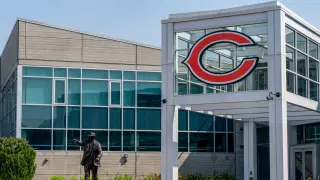
The Chicago Bears announced they are advancing plans for a new stadium in Hammond, Indiana, evaluating two sites near Wolf Lake for a stadium and surrounding mixed-use development, while maintaining communications with Indiana lawmakers and facing stalled talks on Illinois incentives.
Southwest suburb McCook proposed an 150-acre site on a former quarry for an 80,000-seat domed stadium owned by the village and leased to the Chicago Bears for $1 per year, with no property taxes for the team. It's unclear if the Bears are seriously considering the plan, which comes after Arlington Heights and Hammond, Indiana efforts; the village could pursue other projects if not chosen.
Colin Farrell talks up filming Sugar in Los Angeles despite subpar tax breaks, praising LA crews and calling the city a love letter to its people. He notes LA incentives aren’t as competitive, a point echoed by producer Simon Kinberg. Farrell also recounts being invited by Tom Cruise to a Steven Spielberg screening of Disclosure Day, calling Cruise “a lot of fun.” Finally, he confirms Batman 2 starts shooting in about 3–4 weeks, with Farrell in only a few scenes as The Penguin.
The Chicago Bears’ board voted to advance a stadium project in Hammond, Indiana, with the exact site to be selected; the plan would total roughly $3 billion—over $2 billion from the Bears and about $1 billion in public funding under Indiana’s framework—while Illinois lawmakers debated a lakefront Arlington Heights proposal. Indiana Gov. Braun welcomed the deal as a regional economic boost. A Suffolk University poll cited by the Tribune shows Chicago-area residents leaning toward Arlington Heights or staying in Chicago as the Bears’ home, not Indiana (56% vs. 10%, with 26% indifferent).
Illinois Gov. JB Pritzker will pause processing applications for state data-center tax incentives starting July 1 and will urge lawmakers, labor groups, utilities, local governments and industry leaders to develop a comprehensive framework in the fall veto session. The aim is to balance economic growth with affordability, protect natural resources, ensure grid reliability, and increase transparency about water and electricity use as data centers expand.
Illinois Gov. J.B. Pritzker refused to commit billions of taxpayer dollars to a Chicago Bears stadium deal, and with the legislature failing to act, the team’s future in Illinois is uncertain as Indiana becomes a looming option, signaling potential departure unless a deal is reached.
Lawmakers are crafting a plan to let local governments form stadium authorities that could shield the Chicago Bears from property taxes, aiming to keep the team in Illinois after a PILOT-style megaprojects bill collapsed; the proposal would resemble Indiana’s publicly owned, privately financed stadium model and may hinge on Chicago and Springfield support, with details not yet public.
The Androscoggin mill in Jay, Maine is slated for conversion into a neocloud data center, part of a wider push to bring data-center projects to rural areas with promises of high-wage jobs and tax revenue. However, economists say long-term, permanent employment from such centers is typically limited, with many workers only on site for construction or short-term maintenance, while communities contend with energy and water demands and the uncertain scale of benefits. Maine even debated a moratorium to study impacts before the governor vetoed it for fear of losing jobs, illustrating the tension between incentives and actual economic gains in rural towns.
Across at least 28 of 38 states that offered incentives to data centers, lawmakers are moving to end or shrink those subsidies amid rising electricity costs, budget pressures, and doubts about the local benefits, with some proposing guardrails tied to clean energy or local jobs while others push to expand incentives to stay competitive, reflecting a broad, partisan and regional rethinking of the data-center boom.
Box Elder County Commission weighs approving a large hyperscale data center and energy project led by O’Leary Digital, with public comment barred at the meeting while two forthcoming town halls are planned. Backed by MIDA, the project promises 2,000 high‑paying jobs and self‑sufficient power with water treatment for the Great Salt Lake, funded by significant tax incentives—including a reduced 0.5% energy-use tax and rebates that divert much revenue to the developer—for land spanning about 40,000 acres plus UTTR land. Critics question environmental and community impacts, while supporters tout economic benefits.
Georgia’s multibillion-dollar AI data-center expansion, buoyed by tax breaks and a stable power grid, is triggering bipartisan backlash as voters worry about rising electricity bills, water use, and local input on siting; the issue is shaping a pivotal governor’s race and Ossoff’s Senate bid, with Republicans emphasizing local control and incentives while Democrats push pauses or reforms, a dynamic highlighted by a Forsyth-area special election and mirrored by national debates over data-center incentives.
The Illinois House passed a sprawling megaprojects bill designed to keep the Chicago Bears in Illinois by enabling PILOT (payments in lieu of taxes) agreements that could freeze property taxes for 25–40 years based on investment, while adding broader economic tools and a property-tax relief component; the measure, which still faces Senate approval, drew Bears’ calls for further changes and comes as Indiana touts bigger subsidy offers.