
Global photographers capture October's Hunter's Moon as astrologers debate its Taurus implications
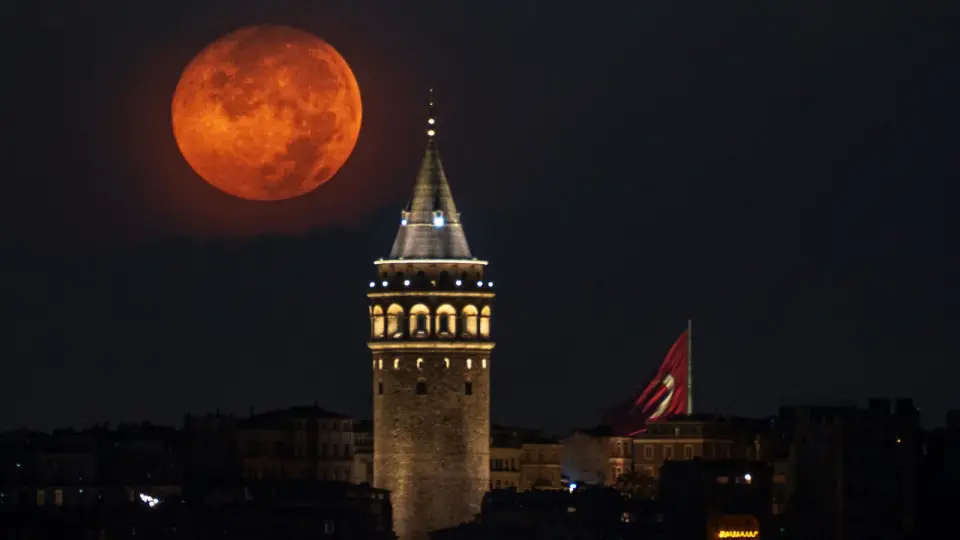
The October 2026 full moon, traditionally called the Hunter's Moon, reached peak illumination on October 26 at 12:12 a.m. ET. While astronomers and photographers highlighted its visual impact across global landmarks, astrologers focused on its position in Taurus, linking it to themes of stability and value.
Key points
- The Hunter's Moon reached 100% illumination on October 26, 2026, at 12:12 a.m. ET, according to the U.S. Naval Observatory.
- The name 'Hunter's Moon' originates from historical Northern Hemisphere traditions where the moon provided extra light for hunters to catch animals after harvest.
- The moon is currently positioned in the zodiac sign of Taurus, which astrologers associate with stability, finances, and personal values.
- The event coincides with Venus retrograde in Libra and Mercury retrograde in Scorpio, creating a 'double retrograde' period that astrologers advise against major decisions.
- The next full moon will be a supermoon, appearing up to 14% larger and 30% brighter than the smallest full moon of the year.
Background
Our archive notes that the Hunter's Moon has been a recurring topic in late October, with previous coverage emphasizing its peak timing and astrological alignment. The current event is part of a broader autumn skywatching season, following the September Harvest Moon.
How outlets are covering it
Space.com and BBC focused on the visual spectacle, featuring photographs from San Francisco, New York, Istanbul, and Italy. In contrast, ABC News and Yoga Journal emphasized astrological interpretations. ABC News cited astrologer Kyle Thomas, who linked the Taurus moon to financial and relationship changes for various zodiac signs. Yoga Journal offered a more introspective view, suggesting the moon helps individuals release 'closed hands' or comfort zones, while warning that the double retrograde period is not suitable for making final decisions.
Why it matters
The Hunter's Moon serves as a significant cultural and astronomical event, bridging scientific observation with popular astrology. Its visual prominence allows for global photography, while its astrological timing influences public discourse on personal stability and value.
What to watch
The next full moon will occur as a supermoon, offering a larger and brighter lunar disk. Astrologers expect the double retrograde period to continue until November 13, 2026, when Mercury and Venus station direct.
- October full 'Hunter's Moon' dazzles in spectacular photos from around the world Space
- Stunning photos capture October's Hunter's Moon around the world BBC
- October Hunter's Moon 2026: What it means for your zodiac sign ABC News - Breaking News, Latest News and Videos
- See photos of last night’s brilliant Hunter’s Moon The Boston Globe
- What the Full Moon in Taurus Means for You Yoga Journal
Want the full story? Read the original reporting
Read on Space