science-and-space12 min read
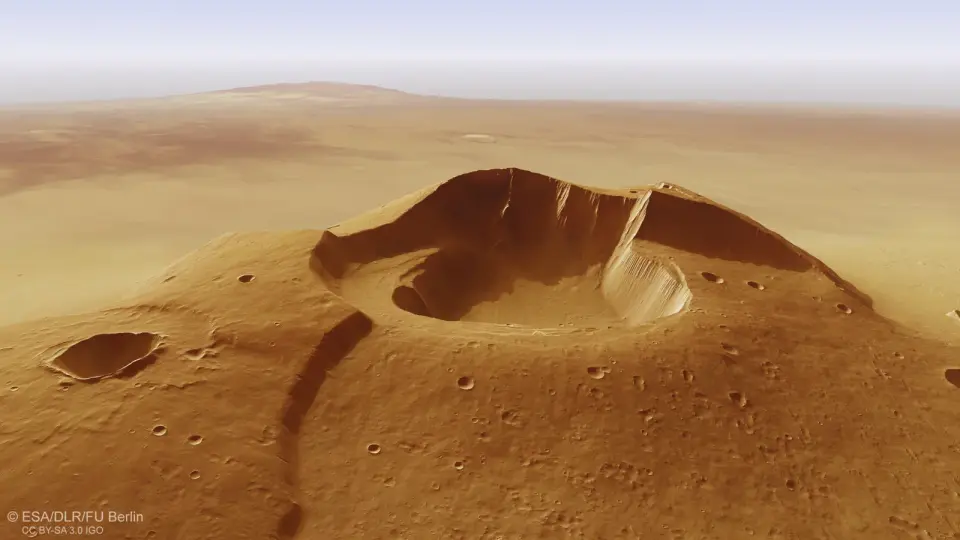
ESA Mars Express captures steep, eroded profile of ancient volcano Tharsis Tholus
7 hours ago•Source: Space
View original source
The latest science and space stories, each synthesized from multiple sources with added background and context.

NASA released 'The Europa Concept,' a documentary detailing the decade-long effort to build and launch the Europa Clipper spacecraft. The film, available on NASA+ since November 23, 2026, highlights the engineering challenges of creating the largest planetary probe ever sent into deep space. It chronicles the mission's journey from a 2013 concept to its October 2024 launch, emphasizing the goal of assessing habitability on Jupiter's moon Europa. The documentary features insights from scientists and engineers involved in the project, showcasing the resilience required to overcome obstacles like a global pandemic and severe weather near launch day.

HuffPost•20 hours ago
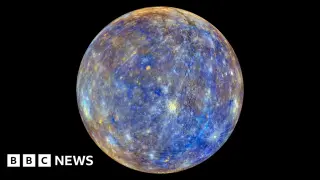
The joint European-Japanese BepiColombo mission is set to enter orbit around Mercury on November 21, 2026, after an eight-year voyage spanning nearly 6 billion miles. The mission, which launched in 2018, will split into two separate probes to study the planet's surface, magnetic field, and interior. This marks the second time a spacecraft has orbited Mercury, following NASA's Messenger mission. The arrival was delayed by one year due to propulsion issues, but the mission is now on track to begin science operations in April 2027.

A new study analyzing 257 black hole mergers detected by the LIGO-Virgo-KAGRA network suggests that a significant portion of these objects formed when massive stars collapsed directly into black holes without a supernova explosion. Researchers found a distinct peak in black hole masses at 10 solar masses and a notable gap between 12 and 16 solar masses, consistent with theoretical models of 'failed supernovae.'
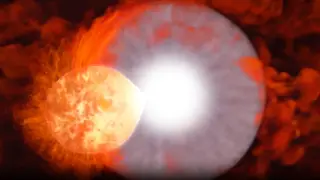
T. Coronae Borealis, a binary star system consisting of a white dwarf and a red giant, is expected to undergo a nova explosion within the next few years. The last eruption occurred in 1946, and the system is currently in a phase where material accumulation on the white dwarf is nearing a critical threshold. While the event is imminent, precise timing remains impossible due to the inability to accurately measure gas transfer rates and trigger mass. When the flare occurs, the star will brighten from magnitude +10 to +1.7, becoming visible to the naked eye for a few days before fading, though X-ray and radio emissions will persist for months.

Astronomers debate the nature of object 1998 KY26, which exhibits unexplained acceleration. While mainstream experts classify it as a 'dark comet,' Harvard’s Avi Loeb argues it is a lost Soviet spacecraft. New thermal models suggest it is too warm for buried ice, challenging the outgassing theory. JAXA’s Hayabusa2 is scheduled to visit the object in July 2031 to resolve these conflicting hypotheses.
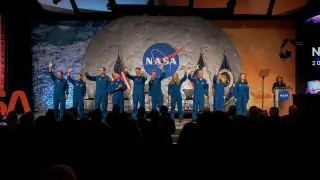
NASA has opened applications for its 25th astronaut class, with a deadline of December 3, 2026. The agency seeks U.S. citizens to support the 2028 lunar return, construction of a moon base, and future Mars missions. Candidates must meet strict educational and professional experience requirements, including STEM degrees, medical qualifications, or pilot experience. The starting salary is $164,395, and successful applicants will undergo two years of training.
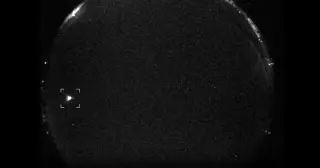
NASA confirmed that a bright fireball observed across southeastern Tennessee and North Carolina on November 5, 2026, was a small asteroid fragment. The object, measuring two inches in diameter and weighing six ounces, entered the atmosphere at 47,000 miles per hour. It disintegrated 25 miles above East Ridge, Tennessee, after traveling approximately 120 miles in under ten seconds. The event was not associated with the active Taurid meteor shower.
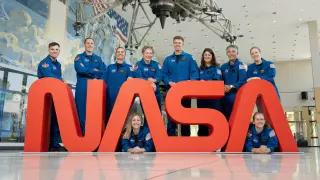
NASA is accepting applications for its 25th astronaut class to address a shortage of active personnel and support the Artemis program’s goal of returning humans to the Moon in 2028. With only 32 active astronauts, the agency needs more recruits for upcoming missions, including a lunar landing near the south pole. Applications close on December 3, with training expected to begin in early 2028.

NASA is accepting applications for its 25th astronaut class to address a shortage of active personnel and support the Artemis program's goal of establishing a permanent lunar presence. With only 32 active astronauts currently, the agency needs more recruits to handle upcoming missions, including the 2028 crewed lunar landing. Applications are open until December 3, with training expected to begin in early 2028.
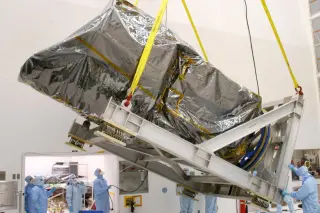
NASA's Neil Gehrels Swift Observatory reentered Earth's atmosphere on November 4, 2026, ending a 22-year mission that observed gamma-ray bursts for 11 times longer than planned. A commercial rescue attempt by Katalyst Space failed in September, and intense solar activity accelerated the telescope's orbital decay. NASA is now seeking private sector proposals to potentially save the Hubble Space Telescope from a similar fate by 2032.
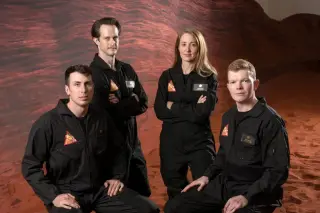
Four NASA volunteers emerged from a 3D-printed habitat in Houston on October 31, 2026, after 378 days of isolation to simulate a Mars mission. The Crew Health and Performance Exploration Analog (CHAPEA) Mission 2 tested long-duration isolation, communication delays, and crop cultivation to prepare for future lunar and Martian exploration. The crew will undergo two weeks of post-mission evaluations, while NASA plans to transition the program into a broader Moon and Mars Exploration Analog (MMEA) starting in 2027.