
China’s AI Video Boom Displaces 690,000 Workers as Production Costs Collapse
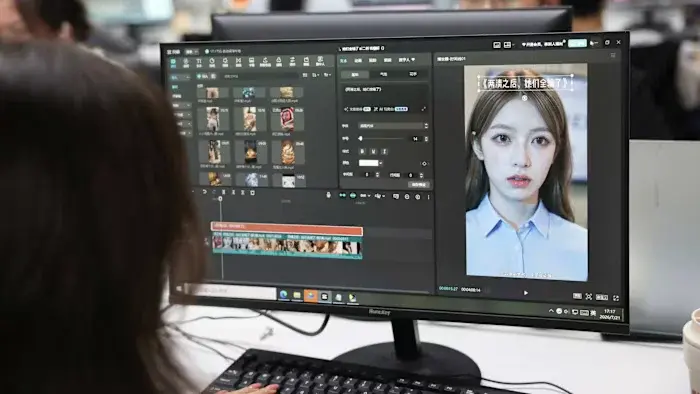
China’s short-drama industry is undergoing a rapid shift toward AI-generated content, leading to significant job losses and a restructuring of production costs. While production expenses have plummeted, marketing costs have surged, creating a new economic dynamic where human actors are increasingly replaced by digital replicas.
Key points
- ByteDance’s Seedance 2.0 model has enabled the mass production of AI-generated short dramas, with 95% of Q1 2026 releases being AI-created.
- The industry employs 690,000 people directly, but many are losing jobs as AI reduces production time from months to days.
- Production costs have dropped by 90%, but advertising and user acquisition costs have risen by over 100%, eroding profit margins.
- Actors are being forced to 'distil' their likeness into AI models, sometimes as a condition for continued employment or to secure redundancy payments.
- Regulatory measures, including mandatory AI labeling from September 2026, are being introduced to manage the surge in synthetic content.
Background
This development follows a broader global trend of AI integration in creative industries, where the cost of production is increasingly decoupled from human labor. Previous coverage of actor displacement, such as Keeley Hazell’s experience in traditional television, highlights the long-standing anxieties around role allocation, but the scale and speed of AI replacement in China’s micro-drama sector represent a distinct, industrial-level shift. Unlike the gradual evolution of Hollywood, China’s market has seen a sudden collapse of traditional production models, with AI tools now dominating over 90% of top-performing content on major platforms like Douyin.
How outlets are covering it
The Financial Times emphasizes the human cost, highlighting how actors are being forced to consent to AI replicas of their likeness to avoid unemployment, and notes the rise in labor disputes. CNBC focuses on the business model, arguing that while production is cheap, the high cost of paid user acquisition means most AI dramas fail to generate profit, creating a 'fail-fast' environment. ABAB News provides a data-driven view, noting that while production costs have dropped, revenue per play has fallen by over 50%, and that the market is now dominated by a few 'blockbuster' AI titles while the majority of content fails to break even. The outlets agree on the scale of AI adoption but differ on whether the industry is a sustainable economic engine or a bubble driven by aggressive marketing spend.
Why it matters
This shift signals a fundamental change in the global media economy, where the value of human performance is being replaced by algorithmic efficiency. The 'distillation' of human likeness into AI models raises new legal and ethical questions about consent and intellectual property. For the broader tech sector, it demonstrates how generative AI can disrupt labor markets in creative industries, potentially leading to similar disruptions in other regions as these models become more accessible and cost-effective.
What to watch
Regulators in China are set to enforce mandatory labeling of AI-generated content from September 2026, which may impact the efficiency of ad-driven distribution. The industry is likely to see a consolidation of platforms as only a few titles can afford the high cost of user acquisition. Internationally, the success of AI dramas on platforms like TikTok may accelerate the adoption of similar models in the US and Europe, potentially leading to further labor disputes and regulatory scrutiny regarding the use of digital replicas.
- China’s actors written out of dramas as AI doubles ready to take their roles Financial Times
- China's short-drama producers flood the market with cheap bets — and let audiences pick the winners CNBC
- How China is building an edge over the US in video AI South China Morning Post
- In May 2026, 89 out of the top 100 AI dramas and animated series on Douyin were AI-generated human-like dramas ababnews.com
- AI came for microdramas. Now it wants the whole picture Tech in Asia
Want the full story? Read the original reporting
Read on Financial Times