
Musk’s AI 'Odyssey' Episode Draws Scathing Reviews and Self-Admitted Failure
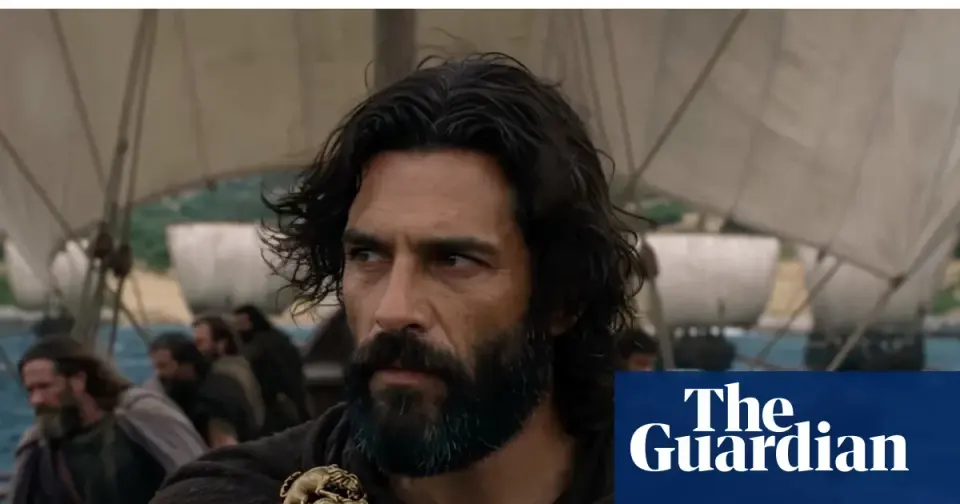
Elon Musk’s AI-generated adaptation of 'The Odyssey' has been widely panned by critics and audiences. The seven-minute pilot, produced by Wonder Studios, was described as 'soulless slop' and lacks historical accuracy, a fact admitted by the AI model itself. This failure contrasts sharply with Christopher Nolan’s live-action film, which grossed over $1.8 billion despite Musk’s earlier attacks on its casting and historical fidelity.
Key points
- Musk released a seven-minute AI-generated episode of 'The Odyssey' on X, fulfilling a partial promise made in July to create a 'historically accurate' adaptation by year's end.
- The episode, produced by Wonder Studios and director Dev Walker, was criticized for lacking emotional depth, featuring inconsistent character appearances, and having unnatural pacing.
- Grok Imagine, the AI model used, explicitly stated that the production is not historically accurate, noting that Homer’s work is mythological and the video uses modern cinematic tropes rather than archaeological evidence.
- Critics, including Peter Bradshaw of The Guardian, gave the episode one star, comparing its dramatic moments to 'meaningless movement on a laptop screensaver.'
- Nolan’s live-action 'The Odyssey' has grossed over $1.8 billion worldwide, becoming his highest-grossing film, despite Musk’s public campaigns against its diverse casting and historical deviations.
Background
This release follows months of Musk’s public criticism of Christopher Nolan’s 'The Odyssey,' which he claimed failed historical and racial standards. The AI episode was produced by Wonder Studios, a London-based startup that also collaborated with Google DeepMind on other AI video projects. The backlash against Musk’s AI attempt coincides with a broader cultural shift in fall 2026, where major films and documentaries portray tech leaders as antagonists, reflecting growing public anxiety over concentrated corporate power and AI capabilities.
How outlets are covering it
The Guardian’s Peter Bradshaw gave the episode one star, calling it motiveless and meaningless. The Telegraph’s reviewer described the footage as 'sloppy gruesomeness' with 'zombie-like' characters, though praised battle sequences for their epic scale. WIRED highlighted that Grok itself admitted the video is not historically accurate, undercutting Musk’s original critique of Nolan. The Hollywood Reporter noted that while some viewers found the visuals impressive, the lack of substance and emotional expression led to widespread dismissal as 'soulless slop.' Yahoo reported that audience expectations for AI-generated entertainment have shifted, with viewers now scrutinizing creative limitations more sharply than a year ago.
Why it matters
The failure of Musk’s AI 'Odyssey' episode underscores the current limitations of generative AI in producing coherent, emotionally resonant narrative content. It also highlights the disconnect between Musk’s public claims of historical accuracy and the reality of AI-generated media, which often relies on modern cinematic tropes rather than historical fidelity. The episode’s poor reception, contrasted with Nolan’s commercial success, suggests that audiences value substantive storytelling and diverse casting over AI-generated visual spectacle, especially when the latter is framed as a corrective to perceived cultural errors.
What to watch
Wonder Studios has stated it will address criticism, including historical inaccuracies and pacing issues, in the second episode, aiming to make it 'radically better' than the first. Musk had promised a full-length movie by year's end but is currently releasing the project in episodes. The next episode is expected to be released in the coming weeks, with Wonder Studios planning to review all feedback to improve the production.
- ‘Sloppy gruesomeness’: reviewers slate Musk’s AI-made Odyssey film The Guardian
- Grok Says Its AI-Generated Version of ‘The Odyssey’ Is ‘Not Historically Accurate’ WIRED
- Elon Musk’s Attempt to One-Up Christopher Nolan With AI Takes a Messy Turn Yahoo
- Elon Musk’s Anti-Woke AI ‘The Odyssey’ Movie Ripped as “Soulless Slop” After Criticizing Nolan The Hollywood Reporter
- 'Pure garbage': Elon Musk’s AI-generated 'The Odyssey' clip ridiculed online Euronews.com
Want the full story? Read the original reporting
Read on The Guardian