
Delaware imposes emergency hunting rules to contain first CWD cases
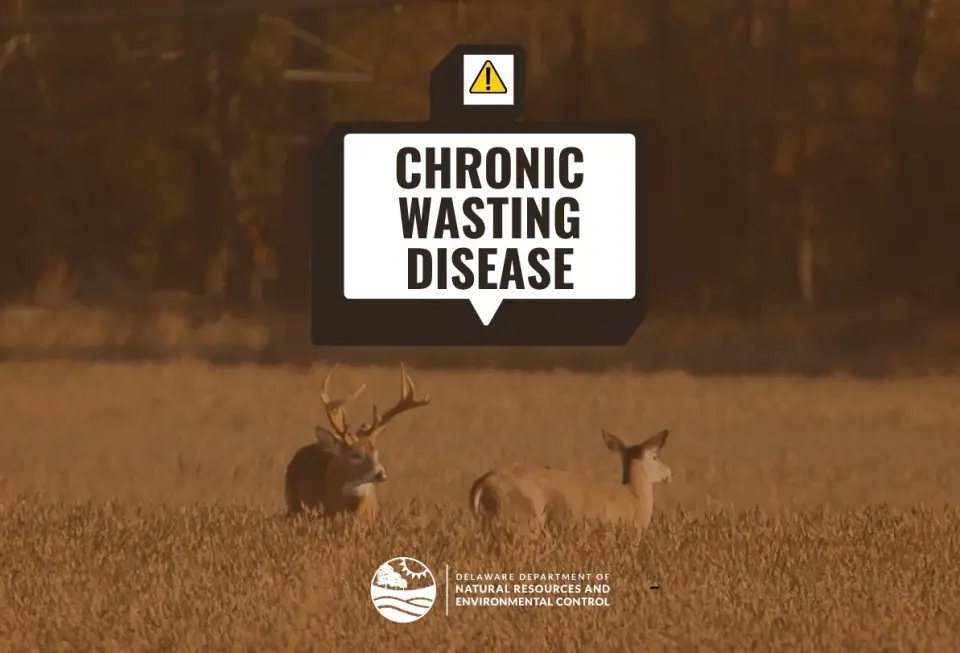
Delaware’s Department of Natural Resources and Environmental Control (DNREC) has implemented emergency regulations to contain Chronic Wasting Disease (CWD) after its first confirmed detection in the state. The measures, effective August 17, 2026, establish a management zone in Sussex County, ban specific lures and baiting, and mandate deer testing ahead of the November hunting season.
Key points
- CWD was first confirmed in Delaware in April 2026, triggering the state’s emergency response plan.
- A July cluster sampling of 100 deer by the USDA’s APHIS found no additional cases near the initial findings.
- A CWD Management Zone (CMZ) now covers Wildlife Management Zones 14 and 16 in lower Sussex County, including Trap Pond State Park.
- Hunters must check in deer harvested in the CMZ during the Nov. 13-22 shotgun season at two designated stations.
- The state has banned natural urine-based 'buck lures' and the use of bait/feed within the CMZ to prevent deer congregation.
- Emergency regulations are valid for 120 days, with a potential 60-day extension, pending a formal public comment process for permanent rules.
Background
This is the first confirmed detection of CWD in Delaware, a prion disease that is fatal to deer and elk. Previous archive coverage does not contain relevant background on CWD in Delaware, but the state has a history of managing wildlife diseases through DNREC. The regulations aim to prevent the disease from spreading beyond the initial detection site in Central Sussex County.
How outlets are covering it
Both the primary source (State of Delaware News) and secondary source (WMDT) report on the same emergency regulations adopted by DNREC. WMDT adds a quote from DNREC Wildlife Biologist Sam Millman, emphasizing the importance of proper carcass disposal and testing, and notes that the hunting season begins on Sept. 1. The primary source focuses on the regulatory details and the rationale for the bans, while WMDT highlights the practical steps for hunters and the free testing service available at self-serve drop-off locations. Both sources agree that the July sampling found no new cases, but the regulations are being implemented as a precautionary measure to contain the disease while its range is limited.
Why it matters
CWD is a fatal neurodegenerative disease that can spread through direct contact or contaminated soil. Early containment is critical to prevent the disease from becoming endemic in Delaware's deer population, which could have long-term ecological and economic impacts on hunting and wildlife management. The emergency regulations are a proactive step to limit the spread while the state gathers more data on the disease's prevalence.
What to watch
DNREC will continue CWD surveillance and evaluate testing results to determine next steps. The emergency regulations will remain in effect for 120 days, with a potential 60-day extension. To make the changes permanent, DNREC must go through the normal regulatory process, including public comment. Hunters are encouraged to have their deer tested at free self-serve drop-off locations before consuming the meat.
- DNREC Adopts Emergency Deer Hunting Regulations to Try to Limit Spread of CWD State of Delaware News (.gov)
- Emergency deer hunting regulations announced in Delaware in response to chronic wasting disease WBOC TV
- Delaware Adds New Deer Hunting Rules to Fight CWD Eastern Shore Undercover
- DNREC Implements New Emergency Regulations for Deer Hunting Season after CWD Found WGMD – The Talk of Delmarva
- DNREC Adopts Emergency Deer Hunting Rules to Combat CWD - 47abc WMDT
Want the full story? Read the original reporting
Read on State of Delaware News (.gov)