
Nigeria Confirms First Ebola Case in Abuja, Marking West African Expansion of Bundibugyo Outbreak
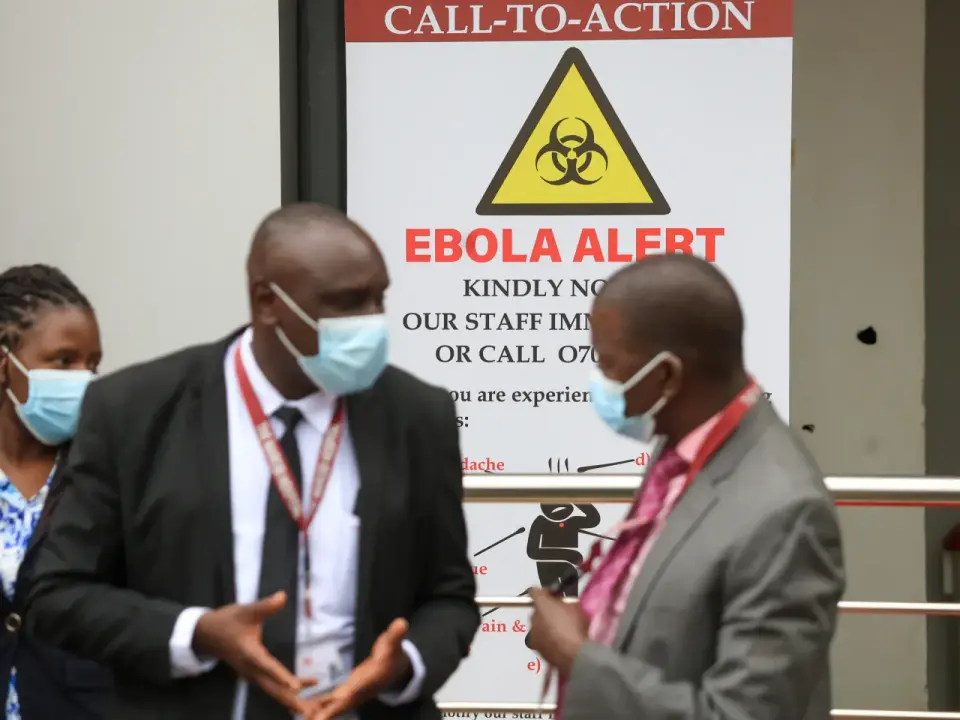
Nigeria has confirmed its first Ebola case in over a decade, involving a woman who traveled from Uganda to the capital, Abuja. The patient, who developed symptoms on October 7 and was hospitalized on October 11, is the first West African infection linked to the current East African outbreak. Health authorities are tracing 44 close contacts as the Bundibugyo strain, which has no approved vaccine, continues to spread across the continent. Meanwhile, Kenya has recorded nine cases, all within a single cluster, with no evidence of community transmission outside that group.
Key points
- Nigeria confirmed its first Ebola case in 12 years, involving a woman who traveled from Uganda to Abuja.
- The patient began showing symptoms on October 7 and was admitted to a private hospital on October 11.
- Health authorities are tracing 44 close contacts of the patient to contain the spread.
- Kenya has confirmed nine Ebola cases, all within a single cluster, with no evidence of transmission outside that group.
- The Bundibugyo strain, which has no approved vaccine or treatment, has infected over 9,500 people and killed more than 4,600 in the DRC.
Background
The current Ebola outbreak, caused by the rare Bundibugyo strain, began in the Democratic Republic of Congo in mid-May 2026. It has since spread to Uganda and Kenya, with Uganda declaring itself Ebola-free in August. The outbreak is the fastest-spreading on record and is on track to exceed the deadliest outbreak in West Africa between 2014 and 2016, which killed 11,000 people. Nigeria was one of the countries affected in the 2014 outbreak, recording 20 cases before the outbreak was declared over after three months.
How outlets are covering it
Al Jazeera, The Guardian, NBC News, and BBC all report on Nigeria's first Ebola case, emphasizing the patient's travel from Uganda to Abuja and the tracing of 44 close contacts. The Guardian and NBC News note that Uganda's Ministry of Health stated the patient only transited through Uganda and that the location of exposure remains under investigation. The BBC highlights that Nigeria successfully stopped a previous outbreak in 2014 and that the current outbreak is the fastest-spreading on record. All sources agree that the Bundibugyo strain has no approved vaccine or treatment, with case-fatality rates near 50%.
Why it matters
The confirmation of an Ebola case in Nigeria marks the first West African infection linked to the current East African outbreak, raising concerns about a potential continental spread. The Bundibugyo strain, which has no approved vaccine or treatment, has already infected over 9,500 people and killed more than 4,600 in the DRC. The outbreak is the fastest-spreading on record and is on track to exceed the deadliest outbreak in West Africa between 2014 and 2016. The spread of the virus across multiple countries highlights the challenges of containing a rare and deadly disease with limited medical interventions.
What to watch
Health authorities in Nigeria are tracing 44 close contacts of the patient to contain the spread. The Nigeria Centre for Disease Control has stepped up surveillance and is urging travelers to remain vigilant and seek medical attention promptly if they develop symptoms. In Kenya, 134 of 135 contacts have been traced and quarantined, with most expected to return home from October 25 after completing the 21-day monitoring period. The US has advised its citizens to reconsider travel to Kenya due to health risks. A new clinical trial for a Bundibugyo vaccine is being prepared, but current case-fatality rates remain near 48%.
- Nigeria confirms first Ebola case amid concerns about continental spread Al Jazeera
- Nigeria confirms Ebola case in patient who arrived from Uganda Reuters
- Nigeria confirms Ebola case as outbreak spreads into western Africa The Guardian
- Nigeria confirms Ebola case in Abuja as woman who arrived from Uganda tests positive NBC News
- Nigeria confirms Ebola case linked to East Africa BBC
Want the full story? Read the original reporting
Read on Al Jazeera