
HPAI Confirmed as Cause of Big Bear Eagle Jackie's Death
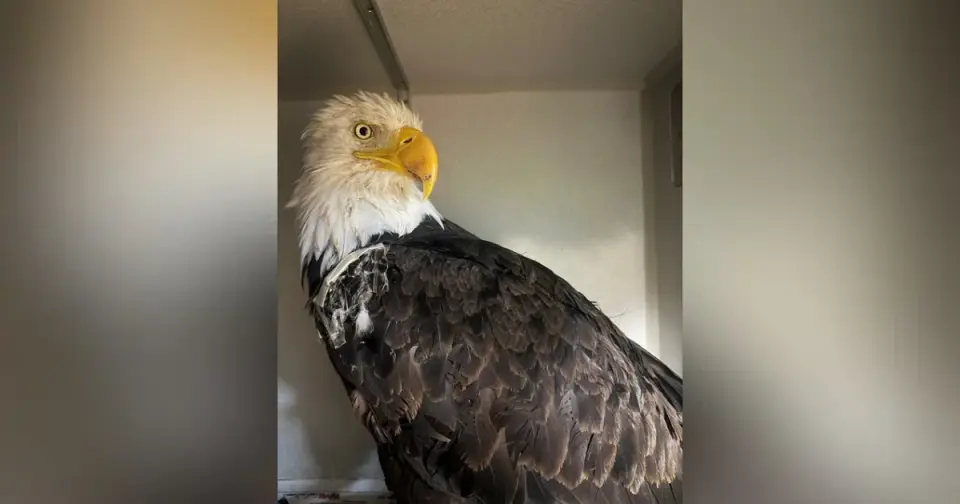
Jackie, the famous bald eagle from Big Bear Lake, died in August 2026 from highly pathogenic avian influenza (HPAI). A necropsy revealed the virus caused severe stomach ulcers, leading to internal bleeding, anemia, and secondary bacterial infections. Although traces of rat poison were found, they were not the primary cause of death. Her mate, Shadow, remains healthy, and her remains were cremated to prevent virus spread.
Key points
- Jackie, estimated to be 14 years old, died nearly a month after being rescued from the Big Bear Lake shoreline in July 2026.
- The California Department of Fish and Wildlife confirmed HPAI as the primary underlying cause of her decline following weeks of testing.
- The virus caused an uncommon presentation, resulting in a severe ulcer in her stomach that led to persistent internal bleeding and bacterial sepsis.
- Tests ruled out West Nile Virus and heavy metal toxicity, while brodifacoum (rat poison) was detected but not linked to uncontrolled bleeding.
- Jackie's remains were cremated by the U.S. Fish and Wildlife Service to prevent the transmission of HPAI to other wildlife or humans.
- Shadow, Jackie's mate, and their recent eaglets, Sandy and Luna, show no signs of illness based on camera data.
Background
Jackie and Shadow became iconic figures in Southern California due to a 24/7 livestream camera monitoring their nest above Big Bear Lake. The pair parented several clutches of eaglets over the years, drawing millions of viewers and raising public awareness about bald eagle conservation. Following Jackie's death in August 2026, the public honored her with a memorial service, a life-size monument, and a California legislative resolution proclaiming September 4 as California Wildlife Day.
Why it matters
The detailed necropsy findings provide critical insights into how HPAI can manifest in raptors, highlighting the need for improved veterinary care and monitoring of avian influenza in wildlife populations. The case also underscores the emotional and conservation impact of charismatic species on public engagement with environmental issues.
What to watch
California wildlife officials will use the findings from Jackie's case to inform future care and treatment protocols for eagles and other wildlife affected by HPAI. Continued monitoring of Shadow and the eaglets will ensure no secondary infections occur, while broader surveillance of avian influenza in the region may be intensified.
Want the full story? Read the original reporting
Read on CBS News