
Dead Pelican in Fremantle Highlights Escalating Bird Flu Threat to Australian Wildlife
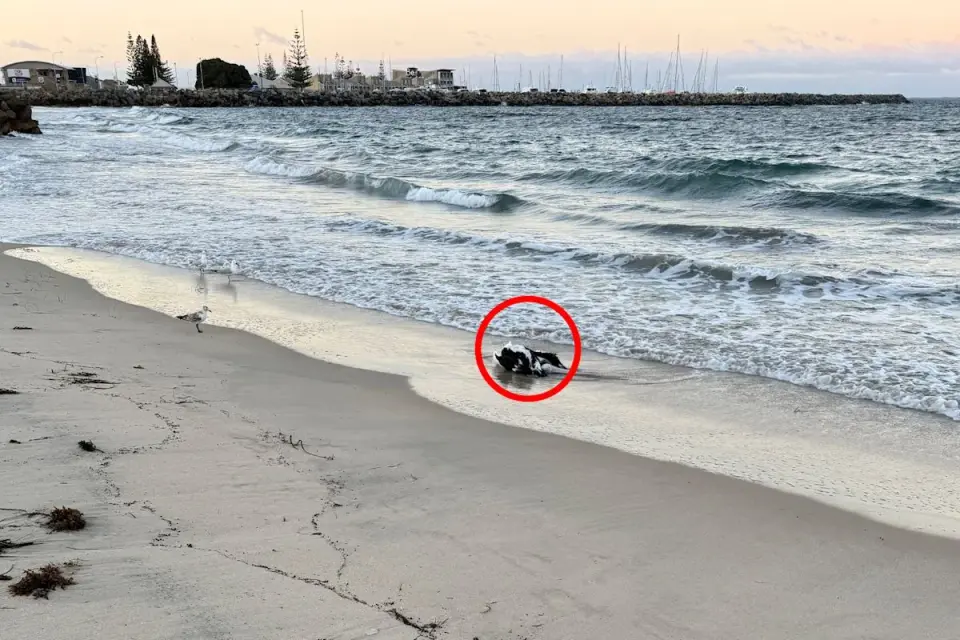
A dead pelican found on Bathers Beach in Fremantle, Western Australia, has been reported to authorities amid a surge in H5N1 bird flu cases across the continent. While the cause of this specific death is unconfirmed, it coincides with the federal government’s release of a risk assessment listing pelicans as 'very high' risk. This event follows the first confirmed mass mortality event in South Australia and suspected clusters in Victoria, prompting warnings that the virus will continue to spread to native species.
Key points
- David Parker discovered a dead pelican on Bathers Beach in Fremantle, which was reported to the 24-hour Emergency Animal Disease Hotline.
- The federal government released a risk assessment ranking pelicans as 'very high' risk for H5N1, noting that 40% of pelicans died in Peru.
- Australia confirmed its first mass mortality event at Baudin Rocks in South Australia, involving 49 dead and 35 sick greater crested terns.
- Suspected clusters of dead and sick terns were also identified in the Glenelg River estuary and Lawrence Rocks in Victoria.
- A government risk list indicates that five bird species face 'extreme threat' of extinction, including the Herald petrel and Christmas Island frigatebird.
Background
Australia had been the last continent to report H5N1 cases, with the virus first detected in June 2026. Prior to the current escalation, the country had focused on biosecurity measures for poultry farms and monitoring shorebirds. The recent developments mark a shift from isolated detections to mass mortality events among native wildlife, raising concerns about the virus's impact on endemic species that have no prior exposure.
How outlets are covering it
Yahoo News Australia highlights the local discovery in Fremantle and the uncertainty surrounding the cause of death, noting that botulism is a possible alternative due to hot weather. In contrast, Al Jazeera and The Guardian emphasize the confirmed spread, with Agriculture Minister Julie Collins and Environment Minister Murray Watt warning that further mass mortality events are inevitable as wild birds migrate. ABC News focuses on the long-term ecological impact, citing a government risk assessment that predicts severe population reductions for hundreds of species and 'extreme threat' for five others, while Invasive Species Council CEO Jack Gough calls for an immediate $200 million investment in wildlife resilience to mitigate other threats like invasive species.
Why it matters
The spread of H5N1 poses a critical risk to Australia's unique biodiversity, with several endangered species facing potential extinction. The virus's ability to cause mass mortality in seabirds and its potential to move inland during the spring breeding season could have cascading effects on the ecosystem. The situation also highlights the limitations of current biosecurity strategies, as officials acknowledge that preventing the virus from spreading among wild, migratory species is impossible, necessitating a shift toward population resilience and captive breeding programs.
What to watch
Authorities are prioritizing the testing of reported cases through the Emergency Animal Disease Hotline to determine if the Fremantle pelican and other suspected cases are linked to H5N1. The government is continuing to monitor for further mass mortality events, particularly in wetland areas like the Coorong. Additionally, trials are underway to assess the viability of vaccinating threatened species in captivity, while calls for increased funding for wildlife resilience and invasive species control are expected to intensify ahead of the spring breeding season.
- Beach discovery takes sinister turn as major catastrophe looms on Australia's doorstep Yahoo News Australia
- Australia warns H5N1 likely to spread after first mass mortality episode Al Jazeera
- Suspected mass bird flu deaths found in second state as Murray Watt warns ‘this is the beginning’ The Guardian
- 'List of doom' outlines birds facing extinction if deadly flu spreads ABC News & Headlines – Australian Broadcasting Corporation
- Australia’s little penguin colony could lose up to 40% of population to bird flu The Independent
Want the full story? Read the original reporting
Read on Yahoo News Australia