
Egypt Becomes First Nation to Retain WHO Gold Tier Status for Hepatitis C Elimination
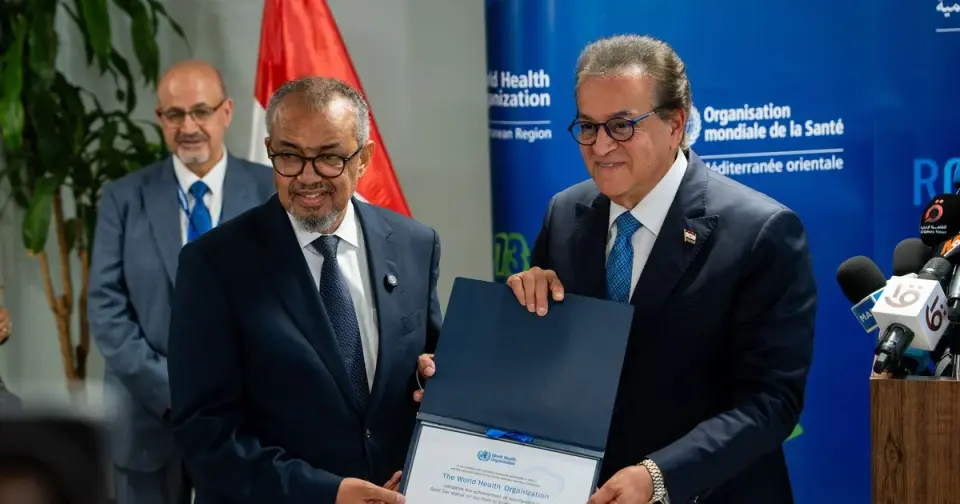
The World Health Organization (WHO) has officially validated that Egypt is the first country globally to retain its Gold Tier status for hepatitis C elimination. This milestone, confirmed in October 2026, follows a review of Egypt’s progress from 2023 to 2025. Egypt previously achieved this status in 2023 after reducing the virus’s prevalence from approximately 10% to under 0.38% in just over a decade. The achievement is attributed to the nationwide '100 Million Healthy Lives' campaign, which screened over 60 million people and treated more than 4.5 million using locally manufactured antivirals. Egypt now leads major industrial powers, including the US, UK, and China, in meeting international elimination benchmarks.
Key points
- WHO validated Egypt’s retention of Gold Tier status on October 14, 2026, making it the first nation to sustain this recognition.
- Egypt reduced hepatitis C prevalence from 10% to under 0.38% between 2013 and 2023.
- The '100 Million Healthy Lives' campaign screened over 60 million people and treated 4.5 million using local drugs.
- Egypt now exceeds WHO benchmarks by diagnosing 87% of cases and treating 93% of diagnosed patients.
- The country has transitioned from mass screening to integrated primary healthcare and universal insurance coverage.
Background
In October 2023, Egypt became the first country in the world to achieve WHO Gold Tier status for hepatitis C elimination. At that time, the nation had already demonstrated a rapid decline in prevalence, moving from roughly 10% to less than 0.38%. This 2026 validation confirms that Egypt has not only achieved but sustained these high standards, maintaining its lead over other major economies in disease control.
How outlets are covering it
Business Insider Africa emphasizes Egypt’s achievement as a historic first, highlighting that it surpasses major industrial powers like the US, UK, and China. The New Arab provides historical context, noting that Egypt’s high prevalence was largely due to unsterilized needles in 20th-century public health campaigns, and details the formal certificate presentation by WHO Director-General Tedros Adhanom Ghebreyesus. Egypt Today focuses on the systemic shift from campaign-based screening to a permanent, integrated healthcare model. The WHO’s official statement underscores the role of political commitment and the use of locally produced direct-acting antivirals, while noting that the validation was endorsed by the Regional Validation Committee in July 2026.
Why it matters
Egypt’s success offers a replicable model for other nations struggling with viral hepatitis, demonstrating that rapid elimination is possible through strong political will, local drug production, and integrated health systems. It sets a new global benchmark for disease control, proving that even countries with historically high prevalence can achieve and sustain elimination targets ahead of wealthier nations.
What to watch
Egypt will continue implementing its 2025–2030 National Sustainability Plan for Viral Hepatitis. The focus will remain on strengthening routine case finding, improving laboratory quality, and maintaining high safety standards for blood and injections to prevent any resurgence of the virus.
- Ahead of the U.S., UK, and China, WHO confirms African nation as world-first to retain gold status for hepatitis C elimination using locally made drugs Business Insider Africa
- Egypt becomes first country to retain WHO gold-tier Hep C status The New Arab
- Health Minister discusses with Africa CDC Director ways to enhance health cooperation across the Continent الهيئة العامة للاستعلامات
- WHO confirms Egypt as first country to retain Hepatitis C gold status Egypt Today
- Egypt is the first country globally to maintain Gold Tier status on the path to hepatitis C elimination World Health Organization (WHO)
Want the full story? Read the original reporting
Read on Business Insider Africa