
State Legislatures Face Surge in Anti-Vaccine Bills, with Few Enacted but Momentum Gaining
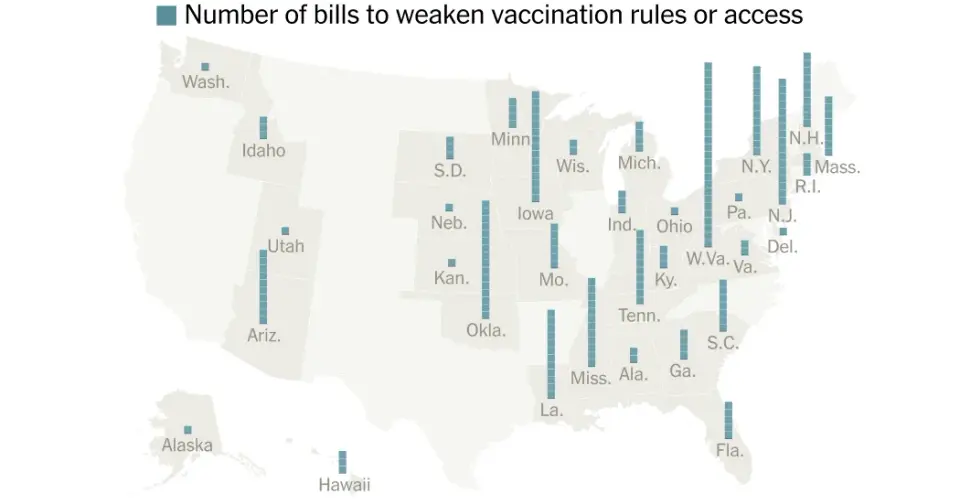
A New York Times analysis reveals that over 200 bills aimed at weakening vaccination rules were introduced in 34 states this year. While only nine became law, advocates for the measures claim success as proposals advanced further through legislative chambers. The bills targeted school mandates, employer requirements, and vaccine safety perceptions, often citing 'medical freedom' or personal liberty. Proponents plan to reintroduce these measures in the next session, noting that bills previously stalled in committee are now passing one or both chambers. Public health experts warn that widespread enactment could reduce vaccine uptake and lead to disease outbreaks, though most proposals failed due to partisan opposition or gubernatorial vetoes.
Key points
- More than 200 measures seeking to dismantle vaccination rules or question vaccine safety were introduced in 34 states, part of a total of 400 vaccine-related bills.
- Only nine anti-vaccine bills became law, including measures in Louisiana, Mississippi, and Oklahoma requiring infant death reports to list recent vaccinations, a practice linked to debunked claims about sudden infant death syndrome.
- Arizona and New Hampshire passed bills prohibiting certain vaccination requirements, though Arizona’s governor vetoed key mandates, highlighting partisan divides.
- Bills categorized into five groups: weakening rules, protecting unvaccinated individuals, promoting danger claims, targeting mRNA/Covid vaccines, and altering vaccination systems.
- Advocates like Del Bigtree of the Informed Consent Action Network claim momentum, noting that proposals are advancing further than in previous sessions despite limited enactment.
- Pro-vaccine advocates countered by emphasizing public support for maintaining childhood vaccination rules and school safety, influencing legislative outcomes.
Background
This legislative push follows a broader national trend of questioning vaccine mandates, emboldened by federal health officials' opposition to vaccines. The 2026 session saw increased activity compared to prior years, with bills targeting not just mandates but also vaccine safety perceptions and administrative processes. Earlier debates over transgender sports and other state-level regulatory powers reflect a wider pattern of states asserting authority over personal and medical decisions, though vaccine legislation remains distinct in its focus on public health infrastructure. The movement’s emphasis on 'medical freedom' and 'personal liberty' mirrors broader cultural debates over bodily autonomy, but specific to immunization policy.
Why it matters
The proliferation of anti-vaccine bills, even if not enacted, signals a growing political challenge to public health infrastructure. By advancing through legislative chambers, these proposals normalize skepticism about vaccine safety and requirements, potentially eroding public trust. If more bills pass in future sessions, states could face reduced vaccination rates, increased disease outbreaks, and fragmented healthcare policies. The partisan nature of the debate—where Republican-majority states often pass such measures while Democratic governors veto them—highlights deepening ideological divides over medical policy. This legislative activity also reflects a shift from pandemic-era mandates to broader 'medical freedom' rhetoric, which could influence future debates on other health interventions.
What to watch
Advocates for anti-vaccine measures plan to reintroduce similar proposals in the next legislative session, with model bills already developed by groups like the Informed Consent Action Network. Proponents argue that current progress—bills passing one or both chambers—indicates growing legislative support, even if enactment remains limited. Public health advocates will likely continue lobbying to maintain vaccination requirements, emphasizing constituent support for school safety. The outcome of future sessions will depend on partisan control of state legislatures and governors, as well as public opinion shifts following any disease outbreaks or federal policy changes. Monitoring which bills advance in the next session will be key to assessing the movement’s long-term impact on public health infrastructure.
Want the full story? Read the original reporting
Read on The New York Times