
FDA Signals Aging as Priority for Future Regulatory Science
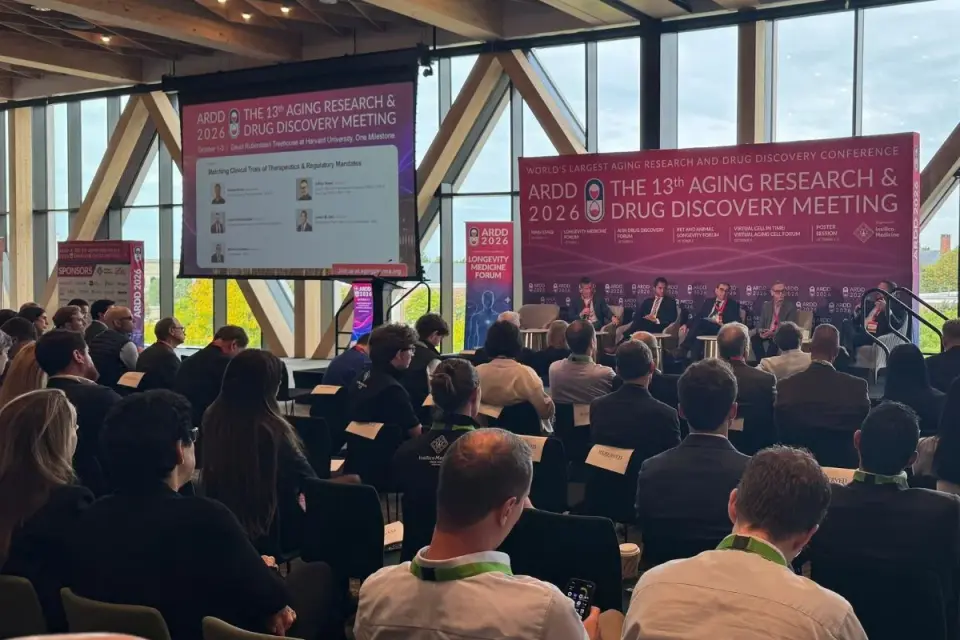
At ARDD 2026, senior FDA officials confirmed that aging and longevity will be included in the agency's upcoming focus areas of regulatory science. The panel outlined a phased approach to approving anti-aging therapies, starting with hard endpoints like mortality and comorbidity prevention before moving to validated surrogate measures. They emphasized the need for pre-competitive consortia to develop shared biomarkers and warned against repurposing existing drugs without clear evidence of broader benefits.
Key points
- FDA officials Jeffrey Siegel, Justin Penzenstadler, Lowell Zeta, and Steven Kozlowski participated in a session at ARDD 2026 moderated by Andrew Brack.
- The FDA is preparing a new document on focus areas of regulatory science, which will explicitly include aging and longevity as a topic.
- The recommended regulatory path begins with proving benefits in preventing age-related comorbidities or mortality, rather than relying solely on intrinsic capacity measures.
- Steven Kozlowski proposed a 'G factor' analogy for aging, suggesting a shared component across chronic diseases could be quantified to serve as a standard endpoint.
- The panel warned that repurposing drugs like SGLT2 inhibitors or GLP-1 agonists may show longevity benefits due to known cardiovascular effects, requiring careful trial design to isolate aging-specific impacts.
- Developers are advised to form pre-competitive consortia to create biomarker registries and engage in recurring meetings with regulators to establish clear evidence standards.
Background
This development follows earlier discussions in 2026 about the challenges of defining aging reversal through biomarkers alone, as highlighted in a Cell Metabolism commentary. Previous reports noted that while therapies like metformin and senolytics show promise in animal models, human trials face significant regulatory hurdles. Additionally, recent studies on organ-specific biological clocks have highlighted the complexity of measuring aging across different tissues, underscoring the need for standardized, multi-domain endpoints that the FDA panel now aims to address.
Why it matters
This announcement marks a pivotal shift from the FDA viewing aging as a peripheral issue to integrating it into core regulatory science. By signaling intent to approve therapies targeting aging biology, the FDA provides a roadmap for the longevity industry, potentially accelerating the development of drugs that address multiple age-related conditions simultaneously. This could transform how chronic diseases are treated and funded, moving from single-disease models to broader, mechanism-based interventions.
What to watch
The FDA will release its focus areas of regulatory science document, though a specific timeline has not been set. The industry is expected to form pre-competitive consortia to develop shared biomarkers and longitudinal datasets. Early trials will likely focus on hard endpoints like mortality and comorbidity prevention in older populations with multimorbidity, before transitioning to validated surrogate endpoints that allow for shorter, more efficient trials.
Want the full story? Read the original reporting
Read on Longevity.Technology