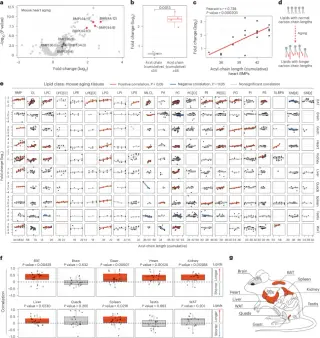
A study in Nature Aging identifies the lengthening of lipid acyl chains as a conserved hallmark of aging in mice, worms, flies, and humans. The research links this molecular shift to the gene Plb1, which regulates lipid remodeling. Interventions that shorten lipids, such as dietary restriction or genetic knockdown, extend lifespan, suggesting a causal link between lipid chain length and longevity.
Dr. Michael Hall, a Miami Beach longevity physician, has outlined ten core principles for extending healthy years, arguing that basic lifestyle habits are more effective than expensive supplements or biohacks. His framework, detailed in his new book 'Infinite Youth,' prioritizes sleep, movement, strength, real food, purpose, social connection, challenge, curiosity, and maintaining physiological resilience. While Hall emphasizes accessible, low-cost strategies, other experts like Dr. Pamela Brar of Mayo Clinic and Dr. Ariela Orkaby of Mass General Brigham highlight the distinction between lifespan and healthspan, noting that healthspan typically peaks in the mid-60s. They recommend following established guidelines such as the American Heart Association’s Life Essential 8, which include nutritious diets, exercise, and quality sleep. Meanwhile, scientists are exploring whether aging itself can be treated as a medical condition, with researchers at Albert Einstein College of Medicine and Columbia University investigating biological markers to intervene before age-related diseases develop. Although clinical trials for human longevity interventions are not yet complete, experts agree that foundational habits like sleep, exercise, and social connection remain the most reliable methods for extending healthy years.
Longevity researcher Dan Buettner identifies purified water, black coffee, and red wine as the three most common beverages in global blue zones, citing their potential links to lower rates of chronic disease and heart conditions.
Dr. Michael Hall, a Miami Beach longevity physician and author of 'Infinite Youth,' outlines ten fundamental habits for extending healthspan without relying on expensive supplements or biohacks. His framework emphasizes sleep, movement, strength, real food, purpose, social connection, cognitive challenge, curiosity, and maintaining physiological resilience. Hall argues that consistent adherence to these basics is more effective than cutting-edge treatments for achieving a longer, healthier life.
Bryan Johnson, the 49-year-old founder of the 'Don't Die' movement, has been diagnosed with autoimmune gastritis, a chronic condition where the immune system attacks stomach lining cells. Despite the incurable nature of the disease, Johnson views the diagnosis as a validation of his longevity philosophy rather than a failure. He spends over $2 million annually on extreme health interventions and maintains a medical concierge team to monitor his body. Critics celebrated his diagnosis, which Johnson interprets as evidence that his presence in the public sphere provokes strong reactions. He argues that early detection through intensive tracking allows for better management of such conditions, aligning with his broader goal of extending human lifespan.
Medical experts distinguish between lifespan, the total duration of life, and healthspan, the period of life free from limiting chronic conditions. While average US life expectancy has risen to 79 years, healthspan typically peaks around age 65, leaving a gap of 15 years or more where individuals may manage disabilities or illnesses. Doctors emphasize that extending healthspan requires consistent lifestyle habits rather than quick fixes, focusing on heart and brain health to maintain independence and quality of life into old age.
A new study published in JAMA Network Open indicates that having a parent who lived past 100 is associated with significantly delayed mortality and lower risks of age-related diseases in their children. The research analyzed data from 4,030 participants across three major cohorts in the US and UK, finding that offspring of centenarians had reduced risks of cardiovascular disease, high blood pressure, and early death compared to those whose parents died by age 73. While only about 101,000 people in the US are centenarians, the findings suggest that genetic and environmental factors contributing to extreme longevity may be heritable, offering a model for identifying mechanisms that promote healthy aging.
Debra Coltune, a food critic, moved from Las Vegas to the Italian island of San Pietro after discovering its status as a 'Blue Zone' known for exceptional longevity. She relocated with her children and dogs within a year of visiting, citing the island's plant-centered diet and slower pace as key factors in her decision to leave her previous high-stress lifestyle.
Researchers at LSU’s Pennington Biomedical Research Center propose that the brain coordinates a body-wide adaptive response to protein restriction, potentially explaining why reduced protein intake extends lifespan. The study highlights the hormone FGF21 as a key signal linking nutrient scarcity to metabolic and behavioral changes. This framework suggests that protein restriction triggers a coordinated physiological state rather than isolated cellular effects, offering new avenues for understanding healthy aging and personalized dietary interventions.
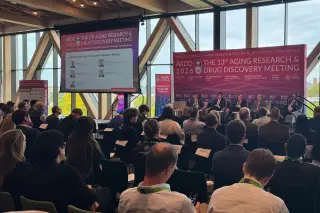
At ARDD 2026, senior FDA officials confirmed that aging and longevity will be included in the agency's upcoming focus areas of regulatory science. The panel outlined a phased approach to approving anti-aging therapies, starting with hard endpoints like mortality and comorbidity prevention before moving to validated surrogate measures. They emphasized the need for pre-competitive consortia to develop shared biomarkers and warned against repurposing existing drugs without clear evidence of broader benefits.
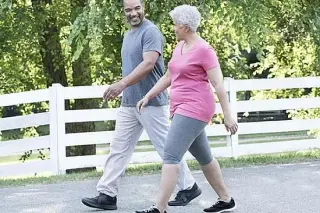
A new study of 64,743 UK adults finds that walking faster can significantly reduce mortality risk, even for those who do not reach high step counts. While 7,500 to 10,000 daily steps offer the lowest overall death rates, a brisk pace of 90-100 steps per minute for 30 minutes provides substantial benefits. Experts note that while walking is foundational, it should be combined with strength training for comprehensive fitness, and that benefits begin well below the traditional 10,000-step target.
Researchers are moving beyond treating age-related diseases to targeting the biological processes of aging itself, aiming to extend 'health span' rather than just lifespan. While animal studies show that interventions can slow cellular aging, human clinical trials remain in early stages due to the difficulty of measuring long-term outcomes. New biomarkers, such as epigenetic markers, are being developed to predict health outcomes without waiting decades for results. Meanwhile, longevity clinics are emerging globally, with Abu Dhabi becoming the first jurisdiction to formally regulate and license such centers, though experts caution that basic lifestyle changes remain the only proven method for healthy aging.
AOL.com reports that dietitians have identified five specific supplements to consider for promoting longevity. The article suggests that while general supplementation may not benefit everyone, targeted use of these products could support healthspan. This follows recent scientific reviews indicating that routine vitamin intake offers limited protection against major diseases for healthy adults.
As adults age, muscle loss accelerates due to hormonal changes, sedentary lifestyles, and the rising use of GLP-1 weight-loss drugs. Fitness coach Jacob Zemer and longevity physician Jennifer Timmons emphasize that preserving muscle mass is critical for independence and metabolic health. Key strategies include consistent strength training, adequate protein consumption, sufficient sleep, and maintaining activity even when injured. While GLP-1s can cause lean muscle loss alongside fat reduction, experts advise pairing these medications with resistance exercises and high-protein diets to mitigate the effects. Consistency in movement and nutrition is highlighted as more important than intensity, with even brief workouts helping to maintain muscle mass in older adults.
Scientists are increasingly viewing aging as a treatable biological process rather than an inevitable stage of life, aiming to extend 'health span' by intervening before age-related diseases emerge. While animal studies show promise, human clinical trials remain in early stages due to the complexity of measuring outcomes over decades. Investment in longevity biotech has surged, yet experts warn that the science is outpacing regulatory frameworks and proven efficacy, with basic lifestyle factors remaining the only validated method for healthy aging.