
Texas Flu Surge Defies Political Shifts as CDC Flags 'Very High' Activity
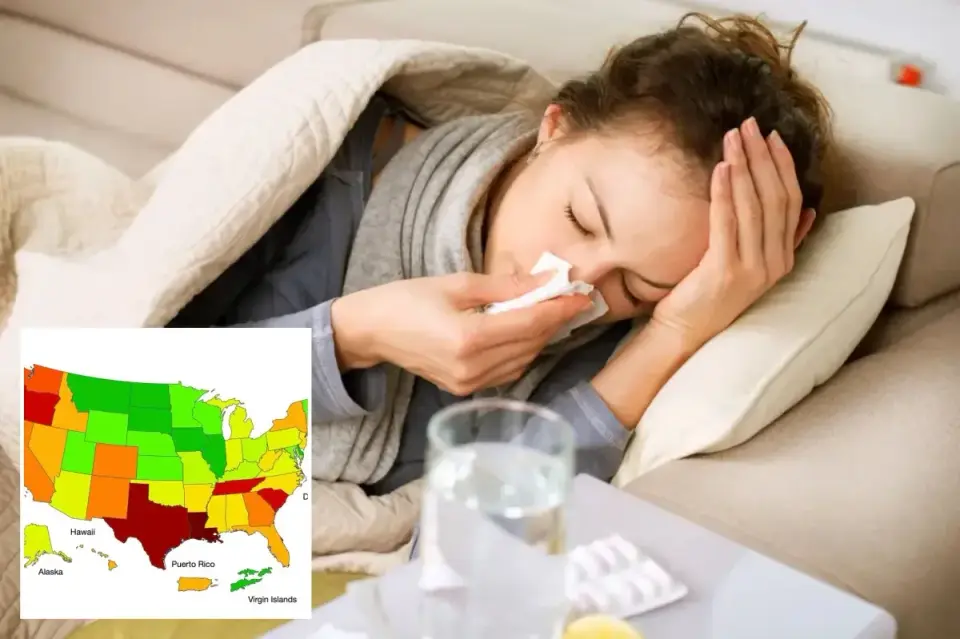
Texas has entered the CDC’s highest alert level for influenza-like illness, joining Louisiana as the only states with 'very high' activity. While the state recently flipped to Democratic control in the 2026 midterms, its health metrics remain starkly red. Cases are rising earlier than usual, driven by a mutated H1N1 strain, with hospitalizations climbing in major cities like San Antonio and Houston. Experts urge immediate vaccination before the holiday travel surge.
Key points
- Texas and Louisiana are the only two states currently at the 'very high' level on the CDC’s infectious disease tracker.
- In Texas, confirmed flu cases reached 1,221 in the week of Nov. 8–14, with emergency department visits for flu-like illness rising to 7.2%.
- San Antonio saw a 55% increase in positive flu cases in early November, with positivity rates hitting 20% compared to 2% last year.
- Dr. Olivia Tomasco of Houston Methodist notes that 98% of positive tests are Influenza A, specifically a mutated H1N1 strain.
- Texas and Louisiana have among the lowest flu vaccination rates in the nation, at 42% and 43% respectively, according to KFF data.
- The 2024–2025 flu season resulted in approximately 45,000 deaths, one of the highest totals since 2010.
Background
This health crisis occurs shortly after the 2026 midterms, where Democrats achieved a historic 'blue tsunami,' flipping Texas and winning seven seats on the Texas Supreme Court. Despite this political shift, the state’s public health infrastructure faces a severe strain. The current surge is part of a broader national trend where flu activity began earlier than usual, with positivity rates in September reaching a six-year high.
How outlets are covering it
The New York Post frames the situation through a political lens, contrasting Texas’s 'bright red' CDC status with its recent 'blue wave' electoral shift. In contrast, Texas Public Radio and Yahoo focus on the medical urgency, highlighting the early arrival of the season and the specific threat of the mutated H1N1 strain. KTBS 3 emphasizes the local impact in East Texas, noting school closures and the effectiveness of antiviral medications like Xofluza. While all sources agree on the severity, the Post highlights the irony of the political/health divide, whereas local outlets stress the practical need for vaccination before the holiday travel window.
Why it matters
The early surge threatens to overwhelm healthcare systems during the critical holiday period. With low vaccination rates in key states and a mutated strain circulating, the risk of severe illness and hospitalization is elevated. The data suggests that the current vaccine is well-matched to the circulating strain, offering a critical window for protection before cases potentially peak in January.
What to watch
Health officials expect flu activity to remain elevated through the second week of January. The CDC and local health districts are urging immediate vaccination, noting that it takes about two weeks for full protection to develop. Monitoring of the mutated H1N1 strain will continue to assess if severity increases beyond current levels.
Want the full story? Read the original reporting
Read on New York Post