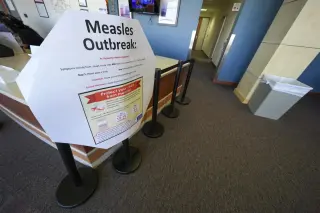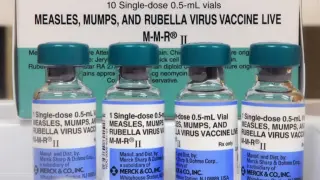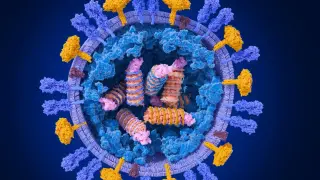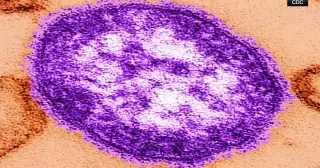
Health officials say Utah is the current epicenter of a nationwide measles outbreak, urging vaccination as cases rise and transmission remains highest in communities with lower immunization rates.
Measles cases are climbing as infants remain ineligible for the MMR vaccine,占 leaving a protection gap and heightening outbreak risk; in South Carolina, nonmedical vaccine exemptions have surged and a bill would delay vaccines for children under two, fueling debates about parental choice and herd immunity as national cases rise and kindergarten vaccination rates lag.
Health officials warn of a possible measles exposure at Boise Airport after a traveler with the virus passed through on March 29; those who shared flights should watch for fever, runny nose, cough, red or watery eyes, or a rash and consult a healthcare provider about vaccination.
Maricopa County Public Health confirmed a measles case in a Valley resident with exposure in Queen Creek and listed three exposure sites with times: Costco (April 3, 11 a.m.–2 p.m.), Walmart (April 4, 8:15–10:45 a.m.), and Generation Church Queen Creek at Faith Mather Sossaman Elementary (April 5, 8:45 a.m.–12:30 p.m.). People who were at those locations during those windows should monitor for symptoms through late April, check their vaccination status, and contact a healthcare provider if symptoms appear; measles is highly contagious and can linger in the air for up to two hours.
CDPHE warns of a possible measles exposure linked to a Chick-fil-A visit at 505 N. Academy Blvd in Colorado Springs on March 25 from 5–8 p.m., tied to two unvaccinated Weld County residents and unrelated to the Broomfield outbreak. People who were there during that window should monitor for measles symptoms (fever, cough, runny nose, red eyes, rash) through April 15 and seek medical care if they develop any signs. The exposure location is being investigated and health officials advise contacting a healthcare provider if symptoms appear.
Utah's measles outbreak has grown to 583 confirmed cases since last summer, expanding from rural, low‑vaccination communities near the Arizona border to the rest of the state. About 83% of cases are among unvaccinated people, with exposures at the University of Utah and in several high schools illustrating the virus's reach. Public‑health officials emphasize vaccination and discussions with doctors to counter misinformation, noting that severe illness can affect teens and children and that containment remains challenging as spring arrives.
A new COVID-19 variant, BA.3.2—nicknamed the Cicada—has a high number of spike mutations and has been detected in at least 23 countries; while it could partially evade immunity and current vaccines may be less effective against it, it does not yet appear more severe, with vaccines still offering some protection, and public health officials emphasize protecting high‑risk individuals and maintaining standard precautions as surveillance continues.
Texas Tribune findings show a measles outbreak linked to federal detention facilities in West Texas and El Paso, infecting at least four El Paso workers and signaling potential wider spillover as officials struggle to obtain detainee vaccination data from DHS/ICE/LaSalle Corrections; statewide, 147 measles cases have been reported so far this year, most in WTDF, Camp East Montana, and Dilley, while local health officials press for more transparency to guide vaccination efforts and outbreak forecasting.
Doctors warn that catching COVID again isn’t harmless: reinfections are linked to a higher risk of long COVID and chronic conditions like diabetes or kidney disease, with CDC data showing substantial hospitalizations and deaths in the latest year. The best defense is staying up to date with annual vaccines, which reduce the risk of severe disease and long COVID, though there is currently no cure for long COVID. Management focuses on symptoms and quality-of-life improvements through rehab, sleep and mental health support; if you suspect long COVID, consult your healthcare provider.
An on‑the‑ground look at Ave Maria, Florida, where a measles outbreak linked to Ave Maria University has spread beyond campus, with 100+ county cases (88 confirmed, 16 probable) and rising counts among teens and young children; public updates from officials have been sparse, prompting local leaders including a former HHS aide to coordinate messaging and vaccination efforts, while experts warn that limited communication can hinder outbreak control and public trust.
A large measles outbreak linked to Ave Maria University in Florida has spread into the town, with over 100 cases county-wide. The public health department’s communications have been inconsistent, prompting local leaders—including a former HHS official—along with the diocese and university to fill information gaps and promote vaccination. Experts warn that timely, transparent updates are crucial to curb spread, while questions linger about the official response and the visibility of case data to residents.
A JAMA study of more than 5 million births finds a sharp rise in parents declining routine newborn preventive care, notably vitamin K shots (2.9% to 5.2% from 2017 to 2024), with related declines in eye ointment and hepatitis B vaccination. Doctors warn that skipping these measures risks serious bleeding and infections, and cite anti-science misinformation and social-media influences as driving factors. Health professionals stress respectful, informative conversations to address concerns and protect infants.
Meningitis cases in Kent have risen to 34 (23 confirmed, 11 under investigation) amid a widening outbreak that has killed two young people; five vaccination centres are operating, 5,841 people have been vaccinated, and over 11,000 have received antibiotics as authorities race to contain the spread.
A Weld County resident who is unvaccinated has been confirmed as Colorado's 12th measles case of 2026 (the 10th this month). The case involves travel to an outbreak area in another state and is not linked to the Broomfield outbreak. Two exposure sites in Loveland were identified, and officials urge vaccination within 72 hours of exposure and watching for symptoms. Colorado’s measles count for 2026 stands at 12 so far; last year saw 36 cases. Measles is highly contagious and can spread rapidly.
Public Health – Seattle & King County warns of a confirmed measles case linked to a Canadian traveler who passed through Seattle-Tacoma International Airport on March 9, with unknown vaccination status; the infected person is no longer in King County, and exposure potential spans March 16–20. Residents who are not immune or unsure of their vaccination status who were at the airport on March 9 are urged to review exposure details. Washington has 28 measles cases reported in 2026 so far.