
Iowa’s Rising Cancer Rates Reshape 2026 Midterm Politics
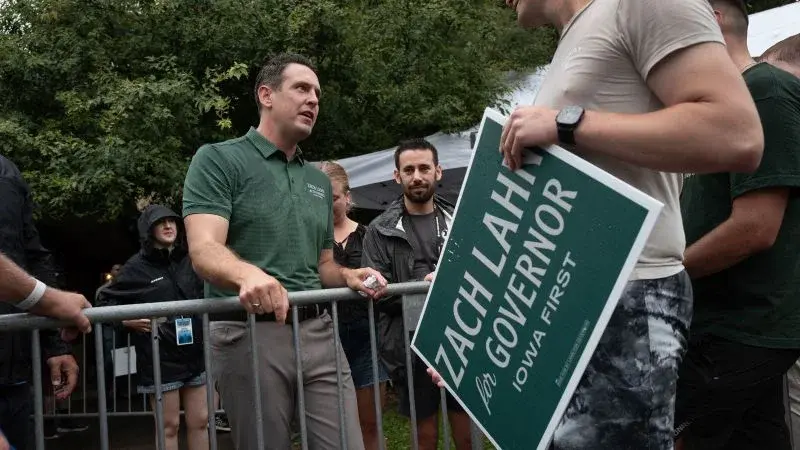
Iowa’s second-highest US cancer rate has become the central issue in the 2026 gubernatorial and Senate races, forcing both parties to address agricultural pollution. While Democrats and Republicans have integrated cancer prevention into their platforms, internal divisions over glyphosate and 'Big Ag' interests threaten coalition stability. Ad spending on the issue has surged to $30 million, reflecting a shift from niche environmental concerns to mainstream political priorities.
Key points
- Iowa ranks second in the US for cancer rates and is one of only three states where rates are rising, with rural counties like Tama showing higher incidence than urban areas.
- Nearly $30 million has been spent on over 100 campaign ads mentioning cancer this cycle, compared to just one ad in 2022, signaling a massive shift in political focus.
- Republican gubernatorial candidate Zach Lahn, backed by the 'Make America Healthy Again' (MAHA) movement, faces internal party friction over glyphosate regulation and conflicts with the Trump administration’s pesticide policies.
- Democratic candidates, including Senate nominee Josh Turek, are leveraging the issue to attack Republican ties to agricultural polluters, though some face criticism for insufficient boldness against 'Big Ag'.
- Environmental factors such as nitrate runoff from livestock manure, PFAS 'forever chemicals,' and radon exposure are cited as primary drivers, with Iowa having more Concentrated Animal Feeding Operations than any other state.
Background
This development follows a series of high-profile health scares, including the October 2026 cancer recurrence of First Gentleman Kevin Reynolds, which heightened public anxiety. Earlier debates in October 2026 saw candidates Rob Sand and Zach Lahn clash over residency and cancer policy, with fact-checkers noting significant differences in their proposed regulatory approaches. The current political landscape is a sharp departure from 2022, when environmental health was largely ignored in Iowa politics.
How outlets are covering it
CNN highlights the unifying power of the cancer crisis, noting that both parties now include environmental regulation in their platforms, but emphasizes the awkwardness of balancing economic reliance on agriculture with public health. The Tama-Toledo News Chronicle provides a granular, local perspective, detailing specific risk factors like nitrate levels and radon in rural counties, and includes voices from farmers and environmental advocates who argue for collaborative solutions rather than blame. While CNN focuses on the high-level political strategy and ad spending, the local reporting underscores the tangible health impacts and the economic strain on farmers, offering a more nuanced view of the 'Big Ag' debate. CNN notes the MAHA movement’s influence on the Republican side, while the local meeting highlights skepticism from some attendees who feel farmers are unfairly targeted, suggesting a fragmented public opinion.
Why it matters
The integration of cancer prevention into mainstream Iowa politics signals a potential realignment of voter priorities, moving away from traditional partisan lines toward health and environmental safety. This shift could influence national debates on agricultural regulation and public health funding, as Iowa’s political dynamics often serve as a bellwether for rural America. The surge in ad spending and candidate positioning indicates that voters are demanding actionable policy changes, not just rhetorical promises, which could reshape the state’s economic model and federal environmental standards.
What to watch
The November 2026 election will determine whether the current political momentum translates into legislative action. Key watchpoints include the outcome of the gubernatorial race between Rob Sand and Zach Lahn, and the Senate race between Josh Turek and Ashley Hinson. The EPA’s ongoing review of glyphosate safety and potential state-level legislation on water quality and cancer screening will be critical indicators of whether the political rhetoric results in concrete policy changes. Additionally, the internal stability of the MAHA movement and its ability to maintain a broad coalition will be crucial for future environmental policy in Iowa.
- How cancer has scrambled Iowa’s midterm politics CNN
- Opinion | A False Campaign Cancer Scare WSJ
- Iowa's cancer problem gets a closer look Daily Gate City
- Cancer, healthcare hot topics discussed at Turek’s Decorah roundtable - Enterprise Media Decorah Leader
- Environmental risk factors for cancer presented during meeting in Toledo Tama-Toledo News Chronicle
Want the full story? Read the original reporting
Read on CNN