
Revisiting the Rete Ovarii: New Research Challenges Its Status as Vestigial
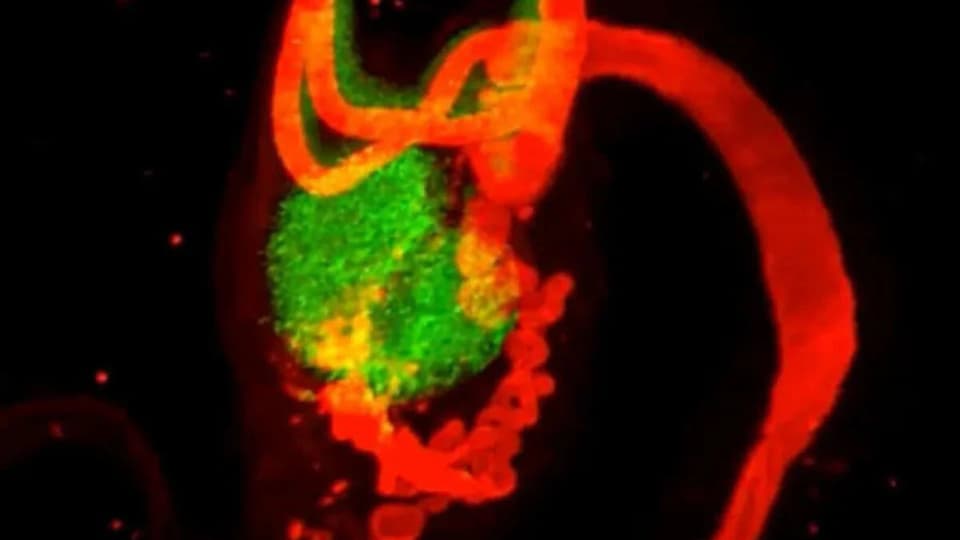
Researchers have challenged the long-held belief that the rete ovarii, a small structure connected to the ovary, is a useless vestigial remnant. New studies suggest it actively communicates with the ovary, responds to hormones, and releases proteins that may regulate ovarian function. While the findings are promising, they are based on mouse models, and it remains unclear if the structure is essential for human fertility. The discovery has sparked broader discussions about historical gaps in female anatomical research.
Key points
- The rete ovarii, first described in humans in 1870, was classified as vestigial and removed from modern anatomy textbooks due to a lack of observed function.
- A 2024 study published in the National Library of Medicine revealed that the rete ovarii has three connected regions, including the extraovarian rete, which actively moves fluid toward the ovary.
- Researchers found that the structure produces proteins, such as IGFBP2, which can influence growth factors involved in ovarian follicle development.
- The extraovarian rete contains receptors for hormones like estrogen and progesterone, suggesting it acts as an 'antenna' that senses changes in the body and signals the ovary.
- While the rete ovarii appears biologically active, scientists have not yet proven it is essential for human fertility, as key experiments were conducted on mice and human function remains unconfirmed.
Background
The rete ovarii was first identified in human anatomy in 1870 and appeared in early editions of Gray's Anatomy. However, because its function was not understood with the technology available at the time, it was eventually deemed vestigial and disappeared from modern textbooks. This recent re-evaluation occurs in a broader context of increased scrutiny on historical gaps in female health research, such as the National Institutes of Health not requiring women in federally funded clinical trials until 1993.
Why it matters
This research highlights significant gaps in the understanding of female reproductive anatomy and challenges assumptions that have persisted for over a century. It underscores the importance of modern imaging and molecular techniques in uncovering biological functions that were previously missed. Furthermore, it prompts a critical look at how historical scientific limitations and biases may have led to the dismissal of important anatomical structures, potentially impacting medical knowledge and healthcare for women.
What to watch
Researchers need to conduct further studies to determine if the rete ovarii is essential for human fertility. This includes experiments to see if removing or disabling the structure in living subjects affects reproductive outcomes. Additionally, scientists must verify if the human rete ovarii functions similarly to the one observed in mice, as the current findings are based on animal models.
Want the full story? Read the original reporting
Read on AOL.com