
Triple Therapy Eradicates HIV in Infant Macaques Within 72-Hour Window
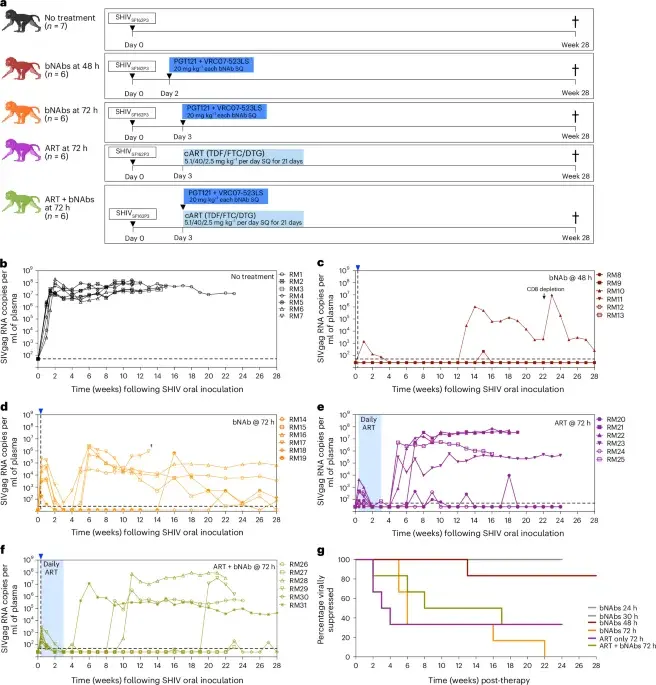
A study in infant rhesus macaques demonstrates that a combination of broadly neutralizing antibodies, antiretroviral therapy, and the CCR5-blocking antibody leronlimab can completely eliminate HIV infection when administered within 72 hours of exposure. While individual treatments failed to prevent viral reservoir establishment, the triple regimen resulted in no detectable virus one year after treatment cessation, suggesting a potential path to a functional cure for newborns.
Key points
- The study involved 55 infant rhesus macaques infected with a chimeric SHIV virus, with treatment initiated at 72 hours post-infection.
- Broadly neutralizing antibodies (bNAbs) and leronlimab alone failed to prevent the establishment of a latent viral reservoir, even when combined with antiretroviral therapy (ART).
- The triple combination of bNAbs, ART, and leronlimab resulted in 100% viral clearance, with no evidence of replicating or latent virus one year after treatment interruption.
- Leronlimab, which blocks the CCR5 co-receptor, significantly reduced viral seeding in lymphoid and gastrointestinal tissues, acting as a critical component in the synergy of the regimen.
- Researchers emphasize that the mechanism behind the complete clearance is not yet fully understood, but the use of existing clinical compounds suggests rapid translatability to human trials.
Background
This research builds on previous findings that early intervention with bNAbs within 24-48 hours can clear SHIV in infant macaques, but the 72-hour window tested here is more realistic for clinical scenarios. It also follows recent advancements in HIV therapeutics, such as the germline-targeted vaccine trials and capsid inhibitors like VH-499, which aim to improve viral control and prevention.
How outlets are covering it
The Lund Report highlights the 'shocking' and 'black-and-white' nature of the results, emphasizing the potential for a one-time cure over lifelong management. Scientific Frontline focuses on the mechanistic synergy, describing the regimen as 'turning off the faucet' (ART), 'mopping up' (bNAbs), and 'sealing off' (leronlimab). Nature provides the detailed experimental data, noting that while bNAbs and leronlimab individually failed to prevent reservoir establishment, their combination with ART created a synergistic effect that prevented viral seeding. All sources agree on the need to determine the efficacy window beyond 72 hours and to understand the precise mechanism of action.
Why it matters
Approximately 120,000 children contract HIV annually, often leading to lifelong treatment with antiretrovirals. A short-course, curative regimen could significantly reduce the global burden of pediatric HIV, particularly in regions with limited access to consistent medication. The use of already-approved or clinically tested compounds accelerates the path to human trials, potentially offering a new standard of care for newborns exposed to HIV.
What to watch
Researchers plan to investigate the efficacy of the triple regimen beyond the 72-hour window, testing if it can work weeks or months after infection. They also aim to understand the precise mechanism of the synergistic effect and will move toward human clinical trials, likely starting with newly exposed adults before applying the regimen to newborns.
- Combination therapy with broadly neutralizing antibodies, antiretroviral therapy and CCR5 blockade limits viral reservoir seeding in infant macaque model of HIV Nature
- Triple-dose regimen may permanently clear HIV in infected newborns Medical Xpress
- OHSU Study: New, three-pronged treatment clears HIV in infants The Lund Report
- Early Research Suggests Triple Therapy Could Clear HIV in Newborns Inside Precision Medicine
- Triple-Dose Regimen May Clear HIV in Newborns Scientific Frontline
Want the full story? Read the original reporting
Read on Nature