
Colitis memory: Epigenetic changes in colon stem cells drive tumor growth
TL;DR
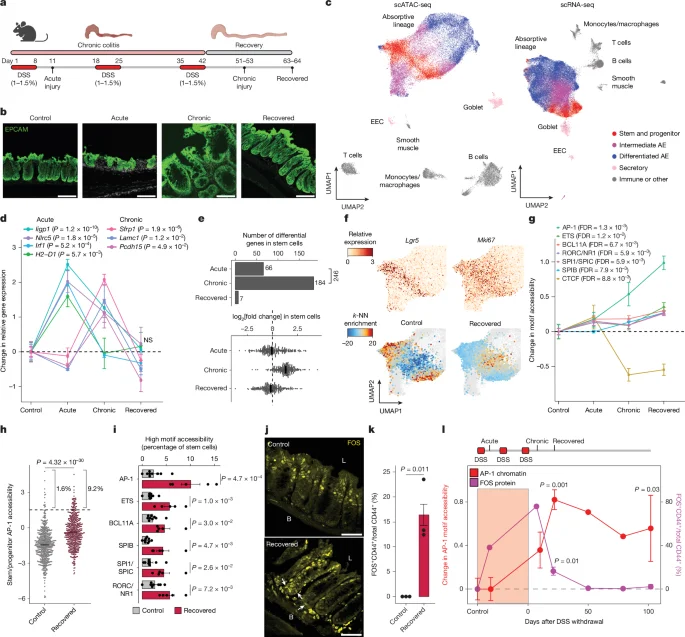
In a mouse model, repeated colitis leaves a durable, cell-intrinsic epigenetic memory in colonic stem cells, marked by progressive AP-1 activity and lasting chromatin accessibility changes for over 100 days after recovery. This memory is clonally inherited and primes stem cells for enhanced AP-1–driven gene expression after oncogenic mutation, accelerating early tumor growth. AP-1 inhibition slows tumor size but does not erase memory; the work also reveals cooperative AP-1/FOX binding and shows parallels in human organoids, suggesting diagnostic and therapeutic routes to reduce cancer risk in chronic inflammatory disease.
Topics:healthscience#ap-1-transcription-factors#colitis#epigenetic-memory#science#share-trace#tumorigenesis
- Epigenetic memory of colitis promotes tumour growth Nature
- How inflammation may prime the gut for cancer Medical Xpress
- New research sheds light on a common risk factor for colorectal cancer Spectrum News
- Chronic Inflammation Boosts Colorectal Cancer Risk Mirage News
- Epigenetic Memory from Inflammation May Prime the Gut for Colon Cancer Genetic Engineering and Biotechnology News
Want the full story? Read the original reporting
Read on Nature