
Decades-long look at a deep-sea whale fall uncovers prolonged bone degradation by bacteria
TL;DR
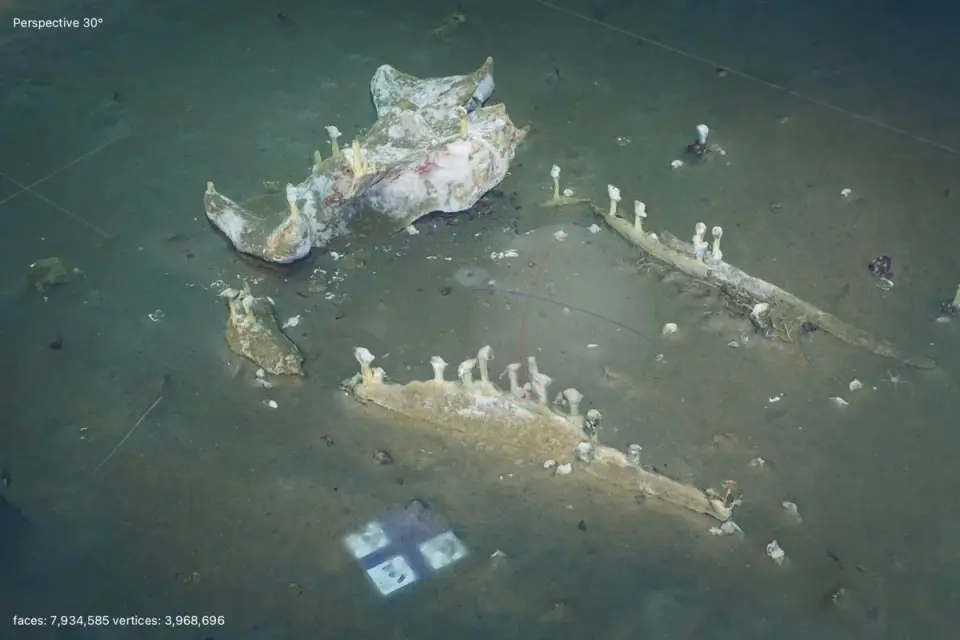
Over 15 years, researchers revisited a 1,288-meter-deep whale fall off Vancouver Island, using centimeter-scale photogrammetry and ROVs to document bone decay. They observed a prolonged sulphophilic stage—driven by bone‑degrading bacteria—that lasted at least 21 years and may stretch another decade, with a shift from early ‘zombie worms’ to diverse sulphophiles such as tube worms and clams; bone shrinkage was measurable, illustrating a slow, complex whale-fall ecosystem. Climate-related expansion of oxygen minimum zones could hinder colonization and reduce biodiversity at future carcasses.
- Scientists found a dead whale 1,288m deep in the Pacific. They filmed it for 20 years – and discovered this BBC Wildlife Magazine
- When One Dead Whale Becomes a Decades-Long Buffet Nautilus | Science
- Whalefalls can feed deep-sea creatures for more than 20 years EurekAlert!
- Watch Deep-Sea Creatures Feed on a Whale That’s Been Dead for Over 20 Years Gizmodo
- Deep-sea creatures have fed on the same whale skeleton for decades Earth.com
Want the full story? Read the original reporting
Read on BBC Wildlife Magazine