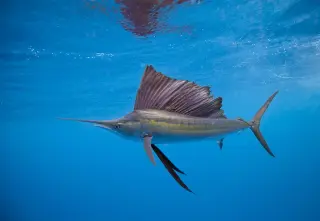
A comprehensive review of oceanic extremes highlights the blue whale as the largest animal ever, the beaked sea snake as the deadliest marine reptile, and a massive coral colony in the Solomon Islands visible from space. The report details record-holders for size, speed, venom, and depth, noting significant coral loss in Australia and the lethal potential of the box jellyfish.
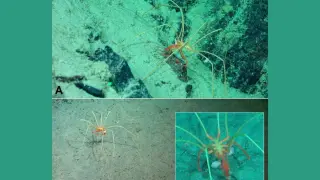
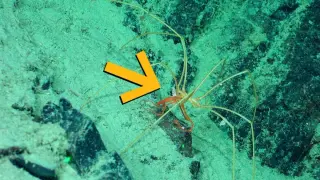
Scientists using a robotic submersible observed amphipods riding on a giant sea spider (Colossendeis colossea) about 10,000 feet beneath the Chilean margin, marking the first direct observation of mobile hitchhiking between these species. The researchers suggest the behavior could aid dispersal, mating, or foraging, pointing to a potentially common but underrecognized deep-sea ecological strategy and highlighting the need for more in‑situ studies.
Two deep-sea encounters show amphipods Mesopleustes abyssorum clinging to giant sea spiders Colossendeis colossea, suggesting phoresis (hitchhiking) as a deliberate transport strategy. Observed about 140 miles apart at depths of ~2,700–3,200 m, the amphipods appear to use the spiders to disperse and potentially mate more easily in the vast, food-sparse deep ocean; one female carried eggs, hinting at reproductive benefits. However, the sample size is small and further study is needed to confirm the behavior and its ecological significance.
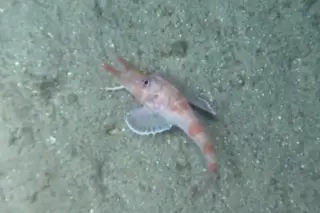
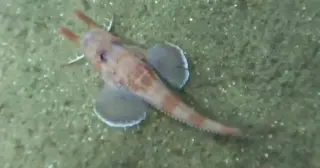
Researchers filming in the northern South China Sea captured the armored searobin walking on the ocean floor not only forward but sideways and backward, using shrimp-like fin rays and tail-driven movement—a behavior unseen in other fish that could reshape understanding of deep-sea locomotion and adaptation to extreme environments.
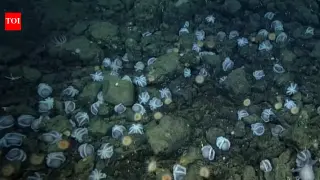
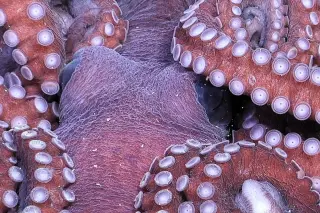
Researchers mapping a deep-sea site off Central California describe the Octopus Garden, near the Davidson Seamount, as the planet’s largest known octopus nursery with an estimated 20,000 Muusoctopus robustus across a 333-hectare area, including 5,718 individuals documented in 2.5 hectares. The octopuses congregate to mate and nest at depths around 3,200 meters where hydrothermal vents warm crevices to about 11°C, accelerating egg incubation to under two years. Females brood eggs and typically die after reproduction, while the site also sustains the local ecosystem by providing substantial biomass for other species, highlighting a remarkable deep-sea biodiversity hotspot.
A Schmidt Ocean Institute expedition to Argentina's deep sea unexpectedly found a colossal Bathelia candida coral reef—nearly the size of Vatican City—hosting abundant life and 28 candidate new species, along with a rare deep-sea whale fall and the phantom jellyfish Stygiomedusa gigantea, while dives also logged garbage and a near-pristine VHS tape, underscoring how much remains unknown and vulnerable beneath the waves.
Scientists documented the armored searobin Scalicus engyceros moving sideways and backward across the seabed—the first observed instance of a fish walking in reverse—using thick, stiff pectoral fin rays. The footage, captured with HOVs and ROVs in the South China Sea, also highlights the fish’s eye sensitivity and adaptive locomotion, expanding understanding of deep-sea life and evolution.
An eight-day deep-sea survey by the Schmidt Ocean Institute aboard the R/V Falkor found a vibrant, previously hidden ecosystem beneath the iceberg A-84, at depths up to 1,300 meters, with icefish, octopuses, giant phantom jelly, sponges and corals, potentially new species; researchers believe nutrient-rich currents and meltwater sustain life under the ice, offering insights into how future ice loss could affect sea levels as part of the Challenger 150 initiative.
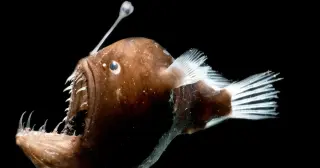
A live adult humpback anglerfish (Melanocetus johnsonii) was spotted at the sunlit surface off Tenerife in January 2025, a creature that normally inhabits the deep, dark midwater. The animal was filmed for about an hour and a half before dying, and researchers recovered the specimen for study, but its ascent and the trigger remain unresolved; the footage has gone viral with hundreds of millions of views.
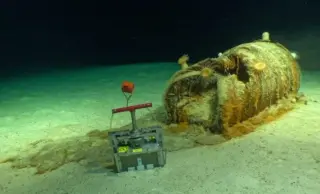
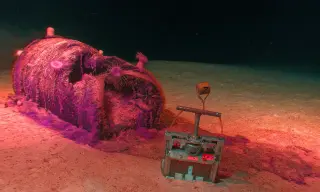
During the 2026 NODSSUM campaign, scientists aboard the Pourquoi Pas? used the Nautile submersible to inspect a deep Atlantic dumping site and found more than 200,000 radioactive waste barrels, many corroded and leaking into the sediment. Radionuclides including cobalt-60, niobium-94, cesium-137 and americium-241 were detected, and researchers collected sediment, water and biota samples to study how the contaminants move and affect deep-sea life; further lab analysis is planned to map the spread and ecological impact.
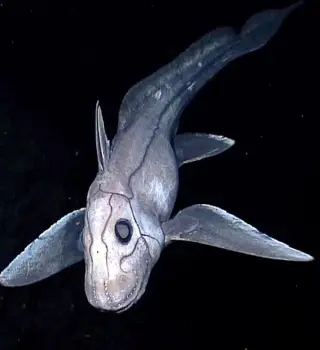
Chimaeras, or ghost sharks, are ancient relatives of sharks that diverged about 400 million years ago; living mostly hundreds to thousands of metres deep, they swim with wing-like fins, sport rodent-like tails and rabbit-like teeth, and have venomous spines for defense. They hunt on the seabed for crabs, worms and urchins using electroreceptors, lay eggs, and males have a retractable tenaculum on their head to grip females during mating. They pose little danger to humans, but many species face extinction threats from overfishing.
New analysis of 43,681 dives (1958–2024) estimates the deep seabed (~335.7 million sq km) would require about 115,800 years to visually survey with 1,000 current-rate systems, meaning humans have directly seen less than 0.001% of the deep ocean. Mapping via multibeam sonar (about 28.7% mapped) is not equivalent to visual coverage, and observations are heavily biased toward a few countries and regions. The study advocates a strategic, globally representative sampling approach (Global Deep Sea Exploration Goals) and the use of smaller, longer-endurance vehicles and machine-assisted analysis to improve coverage much sooner, rather than pursuing an exhaustive camera sweep that would outlast civilizations.
An international, French-led expedition descended about 15,400 feet into the Northeast Atlantic to directly observe more than 200,000 barrels of largely corroded, low‑level radioactive waste dumped in the latter half of the 20th century, with material spilling onto the seafloor. On-site measurements detected radionuclides such as cobalt-60, niobium-94, cesium-137 and americium-241 above background levels, though scientists caution this is not yet a final ecological verdict. A 2025 mission mapped thousands of barrels with the Ulyx robot to guide 2026 close‑range dives, which also noted deep‑sea life colonizing the waste sites. Researchers say more laboratory work is needed to determine exact concentrations, how radionuclides move through sediment and water, and whether deep‑sea organisms are absorbing them, while international efforts (OSPAR) continue to study historic dumping practices and their ecological implications.
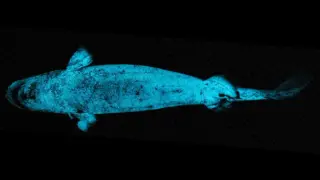
Eight live kitefin sharks show their bluish-green underside glow matches traditional counterillumination in color/brightness, but the emission also spreads sideways, especially from the nose and fins, potentially acting as a searchlight to illuminate prey on the seafloor. This dual-use - concealment plus prey attraction or signaling - challenges the idea that their bioluminescence is for camouflage alone, and suggests the light helps hunting in the deep sea. The study (iScience, 2026) analyzed bycatch sharks off New Zealand, with wild-behavior observations still needed to confirm how this works in nature.
Marine researchers exploring Rotuma, Fiji, in a deep-sea submersible at about 365 metres witnessed a nautilus swim up to the vehicle and hover at eye level, a rare encounter with this ancient mollusc that inhabits the twilight zone and relies on gas-filled buoyant chambers. The moment highlights the nautilus’s continued presence in deep-sea ecosystems and underscores the importance of protecting these habitats for deep-sea species.