
Five psychedelics converge on a common brain pattern, despite different chemistries
TL;DR
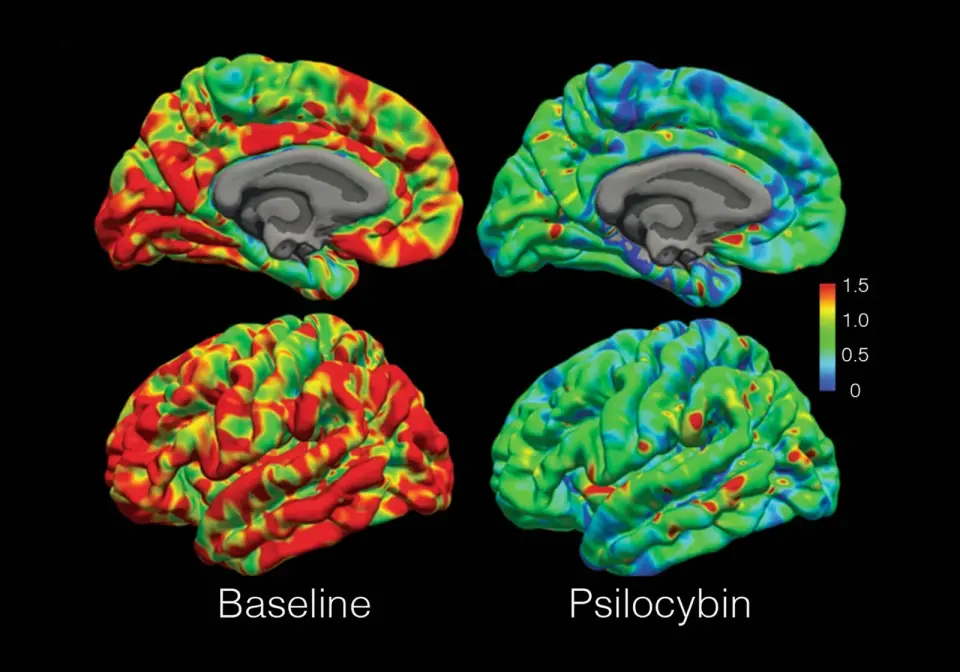
A multi-dataset analysis of over 500 brain scans from 267 participants shows psilocybin, LSD, mescaline, DMT, and ayahuasca produce a shared brain-state: weakened within-network connections and increased cross-network communication. This common neural signature could help standardize psychedelic research and guide future mental-health therapies, though the study used healthy adults and variations across datasets mean more work is needed.
- Five psychedelic drugs create the same brain activity patterns, despite having very different chemistries Earth.com
- How Psychedelics Affect the Brain The New York Times
- An international mega-analysis of psychedelic drug effects on brain circuit function Nature
- Scientists identify ‘neural fingerprint’ of psychedelic drugs in the brain The Guardian
- What 500 Brain Scans Reveal About How Psychedelics Work Medscape
Want the full story? Read the original reporting
Read on Earth.com