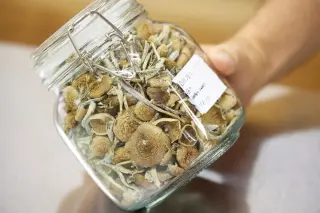
A Baltimore patient with a long history of headaches and brain fog undergoes psilocybin-assisted therapy, illustrating a growing psychedelic medicine movement that could transform treatment and spur a new industry.
When Western medicine falls short due to costs, discrimination, or access barriers, many turn to complementary and traditional practices—ranging from mindfulness and traditional therapies to psychedelics and even toad venom. The piece highlights the need for respectful, culturally informed care and guidance from trained providers to safely integrate these approaches with conventional treatment, while acknowledging broader societal and regulatory gaps that influence people’s health choices.
Edible mushroom Lanmaoa asiatica reportedly triggers vivid lilliputian visions (3–30 cm tall) that interact with the physical world. Researchers doubt cultural conditioning explains the effect and suspect a new psychedelic compound is involved; the mushroom was identified via DNA sequencing by University of Utah doctoral student Colin Domnauer, and the team plans to isolate and characterize the compound.
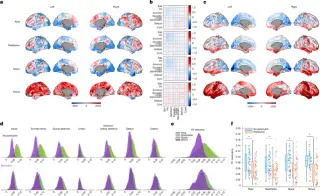
Monash University researchers conducted a five-year, open-label study with 62 healthy adults to map brain changes after psilocybin using fMRI, EEG, machine learning and questionnaires. They found a reduction in modular brain organization and a reconfiguration of networks—especially the default mode network—producing a “hidden order” linked to participants’ positive experiences and a sense of unity. The strongest global brain changes occurred when listening to ethereal music and were attenuated by visual input like watching a movie, highlighting the role of context in psychedelic effects. While findings may inform psychedelic therapies, the study lacked a placebo group and involved healthy volunteers, not patients.
Rolling Stone reports that several former partners allege Reggie Watts cavalierly promoted ketamine and other psychedelics, manipulated relationships, and failed to protect those around him; these dynamics are linked in the piece to the drug-heavy period surrounding Katherine McCollough’s death by suicide, though Watts’ representatives call the allegations false and say he did not cause or encourage her death.
A Nature study with 62 healthy adults shows psilocybin reorganizes brain networks across rest, mindfulness-like states, music, and cloud-watching, reducing the usual separation between self and world and revealing an 'embeddedness' signature that correlates with next-day positive changes. Using MRI/EEG and machine-learning mapped patterns, the research highlights context’s role in psychedelic experiences while noting limitations: participants were healthy volunteers, study was open-label and lacked a placebo, and results may not generalize to patients.
In a large, single-site study, 62 participants underwent fMRI and EEG during rest and naturalistic contexts (meditation, music, movie) before and after psilocybin. The drug reorganizes brain activity into context-aligned, low-dimensional trajectories, increasing global integration in associative regions and decreasing it in sensory areas during eyes-closed states, with eyes-open movie boosting overall synchrony. Machine-learning embeddings reveal a context-dependent state—embeddedness—that correlates with the depth of subjective self-/boundary-dissolution and with next-day mindset change; music amplified effects, while mindfulness training did not alter acute network measures. The work links latent neural order to subjective experience and therapeutic potential by showing how context shapes psychedelic brain dynamics.
University of Utah researchers sequenced Lanmaoa asiatica and confirmed it can produce vivid "tiny people" hallucinatory experiences across cultures, yet the mushroom lacks the typical psychedelic compounds such as psilocybin or ibotenic acid, leaving the exact biochemical mechanism unknown; the study also identified multiple Lanmaoa species and is building an evolutionary map for how this trait arose.
A publicly funded randomized trial found that a 25mg dose of psilocybin plus psychological support significantly boosted response (43% at 3 weeks, 56% at 6 weeks) and remission (40% at 3 weeks vs 3% placebo), with effects sustained through six weeks, suggesting psilocybin therapy could help treatment-resistant depression and warrants larger, publicly funded trials in community settings.
Northeastern researchers using MRI in rodents show mescaline uniquely dampens the cerebellum—the brain’s sensory filter—while increasing cross-brain connectivity, potentially driving hallucinatory experiences and linking to sensory-disruption seen in some psychiatric conditions; findings differ from LSD/psilocybin and point to translational steps toward human studies and clinical relevance.
Eli Lilly’s $2.8 billion acquisition of AtaiBeckley, which includes the fast‑acting 5‑MeO‑DMT program BPL‑003 with phase 2b data for treatment‑resistant depression, underscores growing momentum for psychedelic medicines among Big Pharma and could spur further M&A as investors gain confidence and regulatory signals improve; however, logistical and delivery challenges remain, shaping the type of assets likely to be acquired (favoring programs with solid top‑line data and scalable pathways) and keeping an eye on potential targets like GH Research.
Eli Lilly agreed to acquire AtaiBeckley for up to $3.8 billion, signaling Big Pharma’s embrace of psychedelic therapies such as BPL-003 (a synthetic 5-MeO-DMT nasal spray) for treatment-resistant depression, currently in Phase 3 with potential multi-billion-dollar returns. The broader field spans LSD, psilocybin, MDMA, and other compounds, buoyed by positive trial results and regulatory efforts, but faces challenges like insurance coverage and regulatory navigation; several companies eye rapid development under FDA fast-track programs as the psychedelics market aims for widespread clinical use.
Eli Lilly agreed to acquire AtaiBeckley for $2.8 billion upfront to expand into psychedelic mental-health therapy, led by BPL-003 (intranasal 5-MeO-DMT) which showed phase 2b improvements in treatment-resistant depression; the deal includes up to $1 billion in contingent payments tied to milestones for VLS-01 and BPL-003, plus a $6.75-per-share price with a 40% premium, positioning Lilly to compete with J&J’s Spravato in the TRD market.
Eli Lilly plans to acquire AtaiBeckley, the clinical-stage psychedelic drug developer, in a deal valued at about $2.8 billion upfront and up to $3.8 billion with milestones. Lilly will pay $6.75 per ATAI share in cash, a roughly 26% premium to the previous close, and could hand over an additional $2.50 per share if future clinical/regulatory milestones are hit. The move gives Lilly access to AtaiBeckley’s pipeline (including BPL-003 and VLS-01) aimed at treating treatment-resistant depression by promoting synaptic connectivity, a mechanism distinct from conventional antidepressants. The agreement signals Lilly’s expanded focus on neuroscience and psychedelic therapies, as AtaiBeckley’s stock surged in pre-market trading on the news. Regulatory approvals and closing conditions will determine final execution.
A Perspective in Frontiers in Psychology argues Earth’s constant gravity acts as a foundational scaffold for brain models of reality; in weightlessness, astronauts’ brains may recalibrate, loosening self-boundaries in a way that echoes psychedelic states. The article cites spaceflight-linked brain changes (ventricular shifts, altered vestibular networks, reduced default-mode activity) and frames the comparison as a computational parallel, not a mechanistic equivalence, emphasizing the idea is a synthesis, not an experiment, and calling for future tests to confirm or challenge the claim.