
tRNA Dosage Shifts Prostate Cancer Lineage and Therapy Resistance
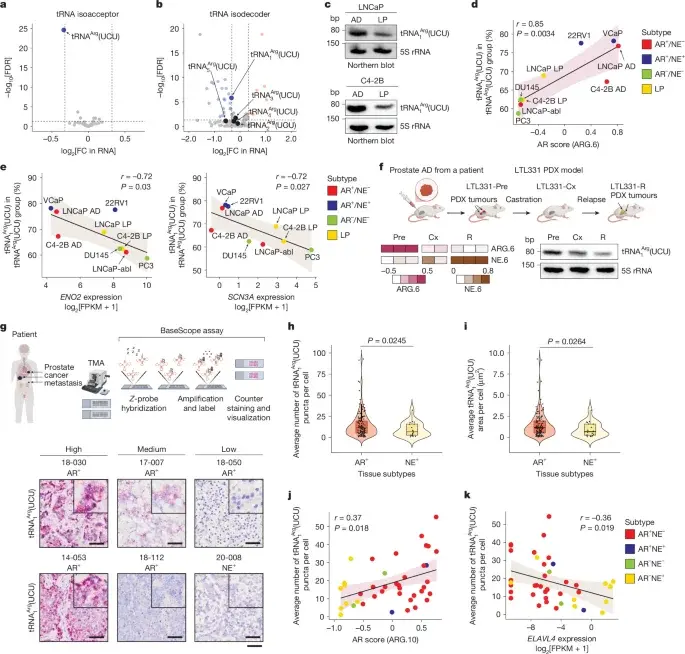
A new study identifies tRNA1Arg(UCU) as a key regulator of lineage plasticity in prostate cancer. Its downregulation drives resistance to androgen receptor inhibitors, while restoration restores sensitivity. This mechanism links translational control to tumor evolution and patient survival.
Key points
- tRNA1Arg(UCU) levels drop during the transition from androgen-dependent to neuroendocrine prostate cancer.
- Loss of this tRNA increases resistance to drugs like enzalutamide, apalutamide, and darolutamide.
- Restoring tRNA1Arg(UCU) expression re-sensitizes resistant cells to androgen receptor pathway inhibitors.
- DNA-binding proteins TARDBP and ZSCAN29 regulate the expression of tRNA1Arg(UCU) at its genomic locus.
- Low tRNA1Arg(UCU) levels correlate with accelerated metastasis and poor survival in patients.
Background
Prostate cancer is the second most common cancer in men, with cases rising approximately 3% annually. While androgen deprivation therapy is the standard initial treatment, resistance inevitably develops, leading to castration-resistant prostate cancer. Previous research has highlighted the role of lineage plasticity, where tumors switch identities to evade treatment, but the specific translational mechanisms driving this shift remained unclear until now.
How outlets are covering it
Nature reports that tRNA1Arg(UCU) directly controls lineage fidelity through the translation of SWI/SNF chromatin remodellers, specifically SMARCC2. In contrast, Bioengineer.org highlights a broader single-cell transcriptomic study showing that castration-resistant tumors upregulate MYC-driven programs and ribosomal proteins, suggesting a shift toward enhanced biosynthetic capacity. While Nature focuses on a specific tRNA isoform as a switch for lineage dependence, Bioengineer.org emphasizes the activation of immune-associated pathways during early androgen deprivation therapy, suggesting a potential window for immunotherapy combination. Inside Precision Medicine summarizes the core finding that tRNA dosage influences treatment resistance but provides less mechanistic detail than the primary source.
Why it matters
Understanding the role of tRNA1Arg(UCU) offers a new therapeutic target to reverse resistance in advanced prostate cancer. If clinicians can restore this tRNA or target its regulators, they may re-sensitize tumors to existing hormone therapies, potentially extending patient survival and delaying the need for more toxic treatments.
What to watch
Researchers will likely explore clinical trials targeting the TARDBP and ZSCAN29 regulatory axis or methods to restore tRNA1Arg(UCU) levels in resistant tumors. Additionally, the finding that androgen deprivation therapy transiently activates immune pathways may lead to new strategies for timing immunotherapy combinations with hormone therapy.
- tRNA dosage regulates lineage dependency and resistance in prostate cancer Nature
- Key driver of aggressive prostate cancer identified, suggesting new way to reverse drug resistance Medical Xpress
- Low tRNA (IMAGE) EurekAlert! Science News Releases
- tRNA Influences If Prostate Cancer Becomes Resistant to Treatment Inside Precision Medicine
- Single-Cell Map Traces How Prostate Tumors Evolve to Resist Hormone Therapy Bioengineer.org
Want the full story? Read the original reporting
Read on Nature