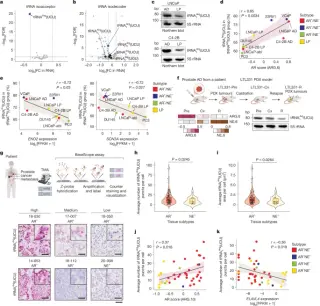
A new study identifies tRNA1Arg(UCU) as a key regulator of lineage plasticity in prostate cancer. Its downregulation drives resistance to androgen receptor inhibitors, while restoration restores sensitivity. This mechanism links translational control to tumor evolution and patient survival.
Joseph Wayne Singleton, a 33-year-old musician from Louisiana, was diagnosed with prostate cancer after a routine physical revealed dangerously high prostate-specific antigen (PSA) levels, despite having no symptoms. Treated at UT MD Anderson Cancer Center, he underwent a prostatectomy and recovered quickly. His case highlights the debate over early screening, as current guidelines generally do not recommend PSA testing for men under 40 unless they have high-risk factors. Singleton now advocates for earlier screening, while experts note that guidelines vary by age and risk profile.
The Winship Cancer Institute of Emory University is deploying a mobile screening bus across Georgia to offer free prostate cancer blood tests, aiming to counter rising late-stage diagnoses. During National Prostate Cancer Awareness Month, the initiative targets high-risk groups, including Black men, who face significantly higher mortality rates. Recent data shows new cases are climbing, but experts emphasize that early detection through simple blood tests can lead to manageable treatment outcomes without the need for chemotherapy or radiation.
Washington, D.C. has the highest per-capita prostate cancer death rate in the U.S. at 27.5 per 100,000, driven by high-risk demographics and delayed detection. Experts emphasize that early screening via blood tests can significantly improve outcomes, as the disease is highly treatable when caught early.
A new survey indicates that 80% of US men are unaware that dairy consumption is linked to increased prostate cancer risk. Despite this lack of awareness, 66% of respondents said they would likely avoid dairy if informed. The data highlights a gap in healthcare communication, as only 20% of men have received nutritional guidance from medical professionals regarding this risk. Research cited suggests plant-based diets may significantly lower cancer risk, progression, and recurrence.
Many men diagnosed with very early, low‑risk prostate cancer may not need immediate treatment. Experts suggest active surveillance—regular PSA tests every six months, annual exams, and periodic imaging and biopsies—with therapy started if tests show progression. This approach can spare patients the side effects of treatment (such as incontinence or impotence) and maintain quality of life, while still allowing timely intervention if needed. Watchful waiting is a separate option for older or less healthy individuals. Screening typically starts at age 50 for average risk (earlier for higher risk), but decisions should be personalized through a discussion with a doctor.
A UK randomized trial of 700 men on androgen deprivation therapy for prostate cancer found that the STAMINA program—supervised exercise, dietary guidance, and behavioral support—reduced deterioration in cancer-specific quality of life by up to one-third and lessened fatigue; the regimen was cost-effective and feasible within NHS trusts, with high attendance, and prompted Nuffield Health to plan broader rollout, including expansion to other cancers by 2030, though long-term survival effects remain unknown.
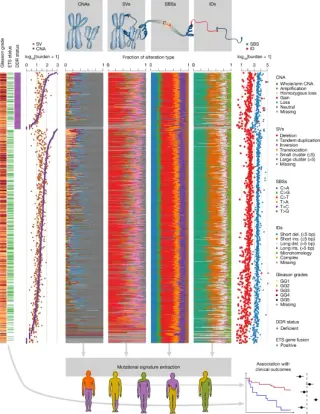
A Pan Prostate Cancer Group study analyzes 959 primary prostate cancers with whole-genome sequencing to extract SNV, indel, CNA, and complex SV signatures, identifying eight integrated mutational footprints (IMFs) that explain 85% of tumors. These IMFs reveal AR-driven mutagenesis, replication stress, and DDR defects, correlate with metastasis risk, and in metastatic settings predict response to androgen receptor pathway inhibitors, with IMF6 linked to AR signaling and replication stress and enriched in African ancestry. The IMFs were validated in TCGA-PRAD and Hartwig cohorts, suggesting WGS-based biomarker-driven risk stratification and therapy selection, though prospective validation is needed.
Prostate cancer screening is becoming more personalized: PSA remains the starting point, but MRI and new biomarkers help avoid unnecessary biopsies by focusing on PSA trends over time. Guidance is age-based and risk-adjusted (average risk ~50, higher risk 45, BRCA carriers 40–45), and many early cancers are asymptomatic, with active surveillance often viable; primary care doctors play a central role in early detection.
The American Cancer Society projects 333,830 new prostate cancer cases in 2026, with cases rising about 3% annually from 2014–2022 and a rise in advanced-stage diagnoses; experts say increased screening largely drives the rise, but late detection remains a concern. Early detection improves survival and expands treatment options, with PSA testing as the typical first step and risk-based screening conversations starting around ages 40–50 depending on risk. Prostate cancer affects about 1 in 8 men, with higher incidence in Black men, and more than 3.5 million men living with the disease today.
A health feature debunks five widespread beliefs about prostate cancer—from age being the sole risk to PSA levels guaranteeing cancer—emphasizing that regular screening and informed medical consultation can lead to early detection and better treatment options.
PSA screening for prostate cancer is a debated topic: while prostate cancer is common and often slow to develop, automatic testing is not advised; men should discuss risks and benefits with their clinician to decide if screening is appropriate.
In the phase 3 SHARE trial from South Korea, hypofractionated salvage radiotherapy (65 Gy in 26 fractions) did not improve 4-year biochemical progression-free survival compared with conventional salvage RT (66 Gy in 33 fractions) for biochemical recurrence after radical prostatectomy. Distant metastasis-free and prostate cancer–specific survival were similar between groups, while late GI toxicity was higher with hypofractionation (7.9% vs 0.7%), particularly without an endorectal balloon; quality of life was similar in both arms. Concurrent ADT and positive surgical margins were associated with better biochemical outcomes. The authors suggest hypofractionated RT could be a viable alternative given comparable outcomes, but longer follow-up and more data on balloon use are needed.
Weill Cornell researchers found that prostate tumors rewire amino acid metabolism to raise propionyl-CoA, which propionylates and stabilizes the SREBP2 transcription factor, keeping cholesterol production active even when hormone signaling is blocked. This supports androgen receptor activity and may drive resistance to therapies like enzalutamide; strategies that reduce isoleucine/valine intake or target the propionyl-CoA–SREBP2 axis could improve treatment responses.
Focal therapy uses MRI-identified prostate lesions and energy-based methods (cryotherapy, laser ablation, and high-intensity focused ultrasound) to destroy cancer tissue in a single session, offering quicker recovery and fewer early side effects than surgery or radiation. While some centers report high satisfaction and favorable short- to mid-term outcomes, rigorous randomized trials are lacking and major guidelines label the approach experimental; uptake remains low and coverage by insurance is inconsistent, underscoring ongoing debates about long-term cancer control versus quality of life.