
Paxton Files Texas Suit Against OpenAI Amid Broader State AI Crackdown
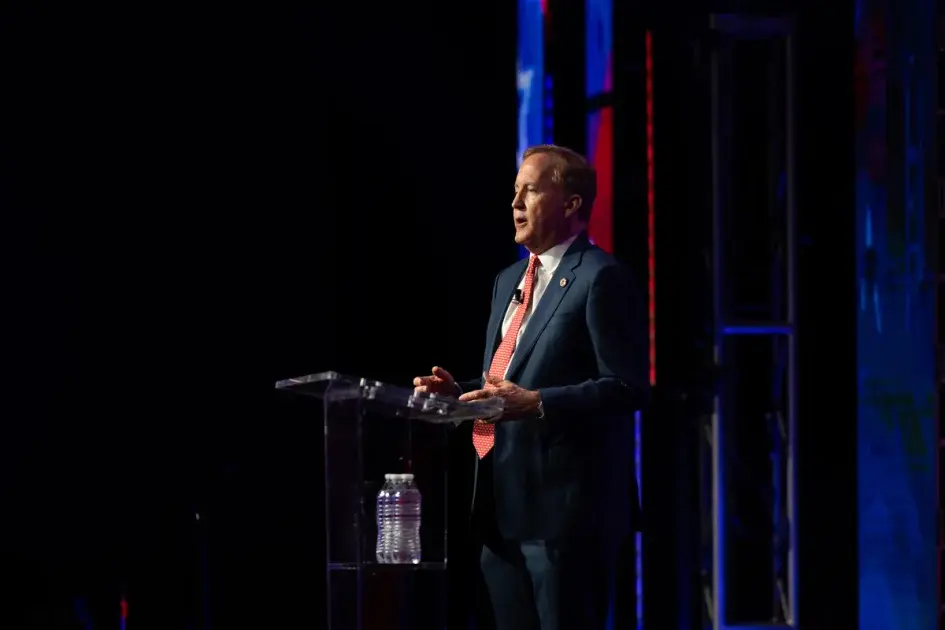
Texas Attorney General Ken Paxton filed a lawsuit against OpenAI and CEO Sam Altman in Collin County district court on October 23, 2026. The suit alleges that OpenAI deceived Texans and failed to adequately regulate ChatGPT, causing harm to minors and vulnerable users. Paxton seeks an injunction requiring the company to block access for minors and submit new models to third-party approval. This action follows coordinated lawsuits from eight other states and aligns with Paxton’s recent litigation against other tech firms, occurring as he campaigns for the U.S. Senate with significant support from Elon Musk.
Key points
- The lawsuit was filed in Collin County district court against OpenAI and founder Sam Altman.
- Paxton’s office claims ChatGPT has aided mass shooters, encouraged suicide, and addicted minors without parental oversight.
- The AG is seeking a wide-ranging injunction that includes blocking minor access and requiring court-appointed evaluators for new AI models.
- OpenAI responded by stating it is committed to working with Texas on pragmatic AI policies that apply to the entire industry.
- The suit follows a wave of similar actions by eight other states and the Federal Trade Commission in October 2026.
Background
This litigation is part of a broader trend of state-level enforcement against Big Tech. In the past year, Paxton has sued or settled with Meta, TikTok, Snapchat, and Roblox over consumer protection issues. On October 14, 2026, eight states filed coordinated lawsuits against OpenAI alleging deceptive trade practices and safety failures. Additionally, a class action lawsuit was filed in California federal court on October 23, 2026, accusing OpenAI of extracting data from children to train its models. The Texas suit adds to a growing legal pressure on AI developers regarding safety and privacy.
How outlets are covering it
The Texas Tribune highlights the political dimension, noting that Paxton is running for the U.S. Senate and is backed by nearly $200 million from Elon Musk, who has a contentious history with OpenAI. The Tribune emphasizes Paxton’s pattern of suing tech companies to protect Texans. Politico frames the suit as part of a growing legal offensive by states against AI makers, noting that the federal government has largely maintained a hands-off approach. IAPP provides a detailed analysis of the broader legal landscape, pointing out that eight states filed similar suits on October 14, 2026, and that the FTC also issued civil investigative demands. IAPP notes that while most suing states are led by Republican attorneys general, Arizona’s Democrat attorney general also joined the coalition. Top Class Actions focuses on a separate but related class action in California, alleging that OpenAI exploited children’s data and used psychological manipulation to build trust, which contrasts with the state-level consumer protection focus of the Texas and other state suits.
Why it matters
The lawsuit signals a shift in how state governments are regulating artificial intelligence, moving from passive observation to active litigation. The requested injunctions, including blocking access for minors and requiring third-party approval for new models, could set precedents for AI safety standards. The involvement of Paxton, a high-profile political figure, adds a layer of political significance to the case. The broader trend of state and federal actions against OpenAI suggests that the company may face significant legal and financial challenges as it navigates the regulatory landscape. The outcome of these suits could influence how AI companies design and market their products in the future.
What to watch
The case will proceed in Collin County district court, where Paxton’s office will seek to enforce its requested injunctions. OpenAI is expected to defend its existing safeguards and argue that the requested restrictions are impractical. The outcome of the Texas suit could influence the trajectory of the other state lawsuits and the FTC investigation. The company may also face pressure to implement more robust safety measures and age verification protocols to avoid further legal action. The political implications for Paxton’s Senate campaign may also be affected by the outcome of the case.
- Texas Attorney General Ken Paxton sues ChatGPT-maker OpenAI The Texas Tribune
- Texas sues OpenAI, Sam Altman over product safety Politico
- Bipartisan group of states files lawsuits against OpenAI MS NOW
- A view from DC: The state enforcement playbook is already spreading beyond social media IAPP
- Class action lawsuit accuses OpenAI of unlawfully extracting children’s data Top Class Actions
Want the full story? Read the original reporting
Read on The Texas Tribune