
Madison police arrest AEPi leaders after hazing incident involving 30 pledges
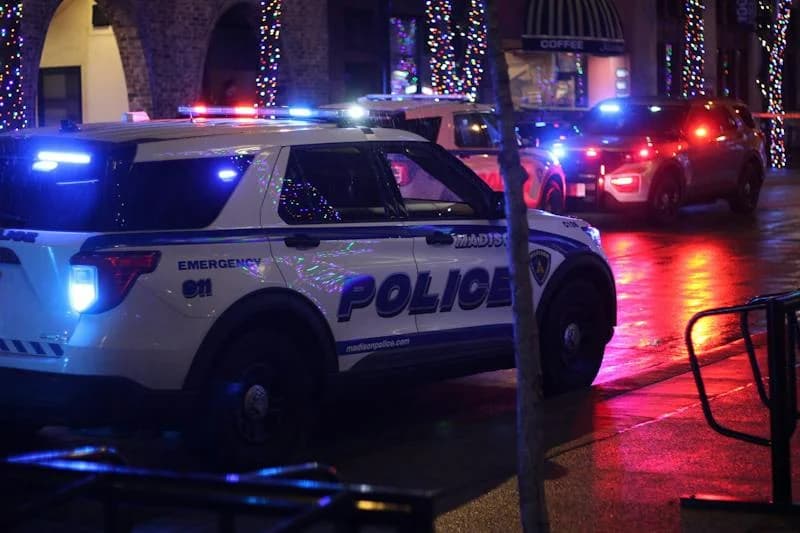
Madison police arrested the president and vice president of the Alpha Epsilon Pi fraternity on Sept. 23 after discovering approximately 30 partially clothed, injured pledges in a basement. The suspects, both 20, face charges for hazing and disorderly conduct. The fraternity, unrecognized by UW-Madison since 2015, is cooperating with authorities, while the university investigates potential student misconduct.
Key points
- Officers responded to an anonymous tip at 112 Langdon St. around 8:20 p.m. on Sept. 23.
- Police found around 30 mostly 18-year-old males in a basement heated to 81 degrees.
- The suspects, Brayden Klein and Samuel Vane, were booked at Dane County Jail.
- UW-Madison terminated the chapter in 2015, but it remains recognized nationally.
- The national fraternity pledged to expel members found criminally responsible.
Background
This incident follows a pattern of Greek life misconduct seen elsewhere, such as the recent drug and hazing ring at Penn State. Locally, the AEPi chapter has a history of issues with UW-Madison, including a 2013 incident involving minors and subsequent suspensions. The university had terminated the chapter in 2015 after it continued hosting functions while suspended, though it has faced seven allegations since 2016.
How outlets are covering it
The Daily Cardinal and Channel 3000 emphasize the severity of the physical conditions, noting injuries and the 81-degree temperature. WKOW highlights the police captain's statement that this is the first such incident in his tenure. UW-Madison's official statement focuses on the legal status of the chapter, clarifying that while unrecognized by the university, it is legally allowed to operate because it is recognized by its national organization. All sources agree on the arrests and the national fraternity's condemnation of the act.
Why it matters
The case highlights the ongoing challenges universities face in regulating off-campus Greek life, particularly for organizations that are unrecognized but still active. It underscores the potential for severe physical harm in hazing incidents and the legal consequences for fraternity leaders. The incident also tests the university's ability to enforce conduct policies on students involved in organizations outside its direct jurisdiction.
What to watch
Madison police will continue their investigation, and UW-Madison's Office of Student Conduct will review any implicated students for non-academic misconduct. The national AEPi organization will determine if the arrested members are expelled. The university has encouraged the public to report hazing incidents through anonymous channels.
- AEPi fraternity president, vice president arrested for hazing The Daily Cardinal
- UW-Madison information related to Sept. 23 Langdon St. incident news.wisc.edu
- Madison police arrest two after hazing investigation at unsanctioned fraternity Channel 3000
- 2 men arrested after hazing incident at unrecognized Madison fraternity WKOW
- MPD investigating hazing incident at fraternity City of Madison, WI
Want the full story? Read the original reporting
Read on The Daily Cardinal