
Army Launches $2.2B Project Janus to Deploy Nuclear Microreactors at Five Bases
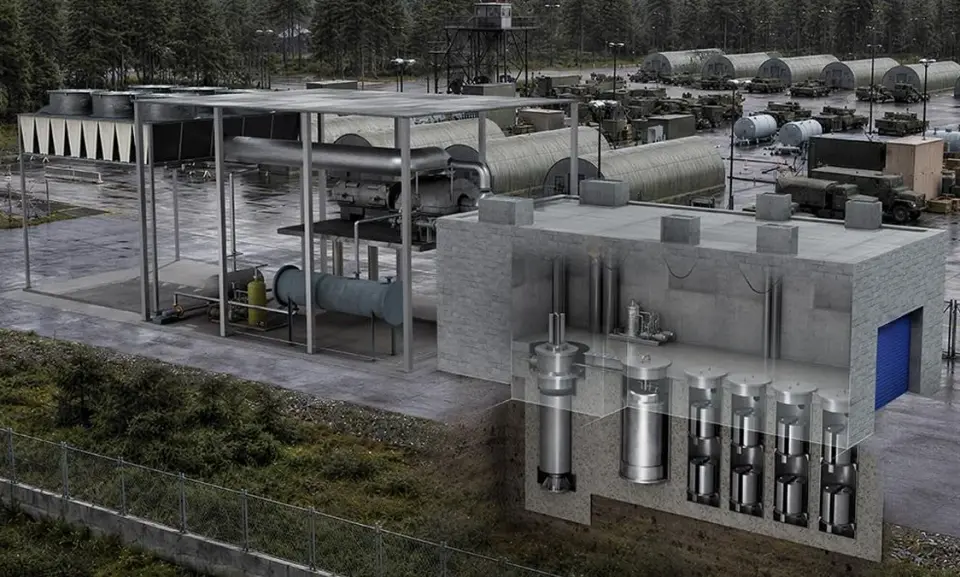
The U.S. Army has awarded up to $2.2 billion in contracts to five private firms to design and build nuclear microreactors for major military installations under Project Janus. The initiative aims to ensure energy independence for critical bases by the end of September 2028, a deadline set by President Trump. While officials emphasize resilience against grid failures, critics argue the program subsidizes unproven technology and bypasses standard regulatory oversight.
Key points
- Five companies—Antares Nuclear, BWXT Advanced Technologies, General Atomics, Radiant Industries, and Westinghouse—were selected to partner with Fort Bragg, Fort Campbell, Fort Hood, Fort Benning, and Fort Drum, respectively.
- Contracts are structured as Other Transaction Agreements, with payments tied to milestone completion; Radiant Industries secured a deal worth up to $750 million.
- The Army intends to have at least one reactor operational by September 2028, with contractors owning and operating the systems while the Army provides technical support.
- General Atomics will deploy a liquid-metal-cooled microreactor at Fort Hood, scalable from 5 to 20 megawatts, utilizing self-regulating fuel and pump-free cooling.
- The Army plans to expand the program to approximately 15 additional sites within five years, though specific locations have not yet been finalized.
Background
The Army announced its interest in microreactors last year, selecting sites based on security, mission requirements, and seismic stability. This move aligns with broader military efforts to secure energy independence, following earlier announcements regarding other defense technologies. The initiative is part of a larger push to integrate nuclear energy into military infrastructure, with the Army aiming to create a foundation for a commercial microreactor industry.
How outlets are covering it
Federal News Network and Spectrum News highlight the strategic necessity of the program, emphasizing energy resilience and the potential for commercial spin-offs. General Atomics focuses on the technical maturity of its design, citing decades of nuclear expertise. In contrast, WWNY reports on criticism from experts like Alan J. Kuperman, who argue the program acts as a hidden subsidy for uneconomical reactors and bypasses the Nuclear Regulatory Commission. While Army officials assert the reactors are safe and will not contaminate soil, critics contend that no such reactors currently exist in commercial operation, making the military the first customer for untested technology.
Why it matters
This initiative represents a significant shift in military energy policy, prioritizing self-sufficiency over reliance on the commercial grid. Success could accelerate the commercialization of advanced nuclear technologies, while failure could expose vulnerabilities in defense infrastructure. The program also signals a growing emphasis on nuclear engineering within the military, with West Point increasing recruitment in the field.
What to watch
The five companies must meet the September 2028 deadline to have at least one reactor operational. The Army will continue community outreach and town halls to address local concerns. Future expansions to additional sites are planned within the next five years, pending the success of the initial prototypes.
- Army awards $2.2B in contracts for nuclear microreactors Federal News Network
- US to Spend Billions to Power Army Bases With Nuclear Reactors Bloomberg
- Critics: military base nukes too expensive, risky WWNY
- General Atomics Microreactor Selected for US Army Janus Program General Atomics
- Army announces Fort Drum to get nuclear power Spectrum News
Want the full story? Read the original reporting
Read on Federal News Network