Constellation Energy and Google announced a 20-year power purchase agreement to add 890 MW of nuclear capacity via uprates at 11 reactors, triggering a 12% stock surge for Constellation and broad gains across the utility sector.
Facing surging power demand from AI data centers, U.S. tech companies are funding upgrades to existing nuclear plants rather than waiting for new construction. Constellation Energy and Google announced a deal to add 890 megawatts of capacity through 'power uprates' at 11 reactors, a process that is faster and cheaper than building new plants. This strategy aims to add up to 8,000 megawatts to U.S. grids by the mid-2030s, addressing critical shortages in the PJM Interconnection grid.
Google and Constellation Energy have announced a 20-year power purchase agreement to upgrade 11 nuclear reactors across Illinois, Pennsylvania, and New Jersey. The deal, valued at over $4.3 billion, aims to add 890 megawatts of new capacity to the PJM grid by 2028, supporting Google’s data center expansion while addressing grid reliability concerns.
Google and Constellation Energy have announced a 20-year power purchase agreement to add 890 megawatts of new nuclear capacity to the PJM grid. The deal involves upgrading 11 nuclear units in Illinois, Pennsylvania, and New Jersey, with the first upgrades expected by 2028. This agreement includes a separate 15-year supply contract for 2,700 megawatts and a five-year technology partnership to integrate AI into grid operations.
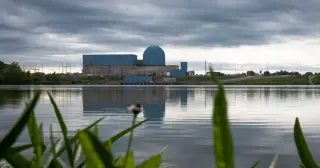
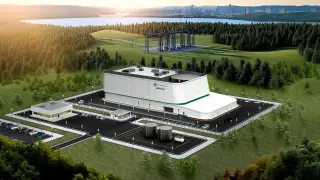
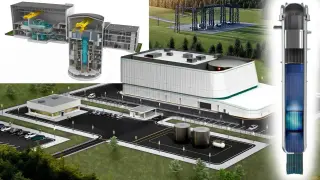
The Nuclear Regulatory Commission has approved the Tennessee Valley Authority’s construction permit for a 300-megawatt BWRX-300 small modular reactor at the Clinch River site in Oak Ridge, Tennessee. This marks the first such permit for this specific reactor design in the United States and the second for any commercial reactor in nearly a decade. The approval allows TVA to begin construction, though a separate operating license is required before fuel loading. The project is part of a broader push to secure reliable, low-carbon power for the growing AI data center sector, with TVA potentially building up to four units at the site.
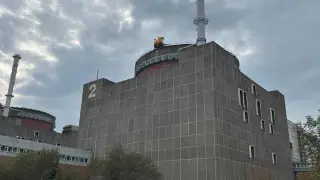
Europe’s largest nuclear plant, Zaporizhzhia, lost its last power line on Aug. 20 and spent about 18 days cooling six shut-down reactors and spent-fuel pools using emergency diesel generators, ultimately running only two of the 20 on-site units to stretch dwindling fuel as off-site deliveries were disrupted by fighting. The plant’s off-site depot reportedly ran dry, and the IAEA warned a full station blackout remained possible if power and fuel couldn’t return. Although the line was repaired by Sept. 7, margins stayed razor-thin, underscoring how even non-operating reactors require continuous cooling and highlighting the risk of common-cause failures in a war zone.
Studsvik AB announced a deal with GE Vernova Hitachi Nuclear Energy and Samsung C&T to develop four 300-MW BWRX-300 reactors (about 1,200 MW total) on a single site in Sweden, likely at Studsvik’s Nyköping area or a greenfield site at Valdemarsvik, leveraging Cyclife Sweden’s metal-recycling plant on the same industrial park that currently processes retired reactors at about 5,500 tons a year. The project is not a final investment decision and awaits a state-aid package and other approvals; first unit is targeted for the mid-2030s, with Sweden pursuing two parallel reactor programs (BWRX-300 and Rolls-Royce SMR) and two ownership models.
Turkish President Recep Tayyip Erdogan said Russia will help Turkey build additional nuclear power plants, signaling expanded nuclear cooperation beyond the Akkuyu project. The comment came during Erdogan’s meeting with Vladimir Putin on the sidelines of the SCO in Bishkek, indicating possible new reactors and closer energy ties with Moscow as Turkey seeks to diversify its energy sources.
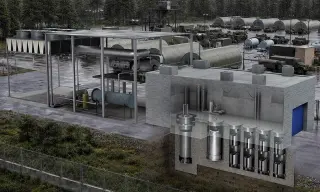
The U.S. Army awarded up to $2.2 billion in contracts to five firms under Project Janus to design and deploy nuclear microreactors at five Army installations, with a goal of having at least one reactor operating by September 2028 to harden base power against grid failures. The contractors will own and run the reactors, while the Army funds construction and the first year of operations; the effort also seeks to spur private capital and establish a pathway for a commercial microreactor industry.
The U.S. Army plans to invest about $2 billion to install nuclear microreactors at five bases to provide reliable baseload power, part of a broader push to expand domestic nuclear energy and boost energy resilience, while weighing safety, security, and regulatory considerations.
Washington is pursuing a public-private push with London-based Core Power to develop a US-flagged nuclear-powered merchant fleet to challenge China’s dominance in shipbuilding, including a framework for rapid licensing, insurance and port access; the first vessel could begin construction in 2028, backed by about $200 million in private funding from Mitsui, Mitsubishi and Sumitomo with no federal funding guarantee. Proponents say nuclear propulsion could deliver faster, higher-capacity ships with lower fuel costs, but critics warn about liability, insurance, crew training and public acceptance, with most expecting commercial ships no earlier than the 2030s; MIT’s design has received ABS approval, and officials plan international talks to advance the technology.
Eni is expanding into nuclear fusion, aiming to commercialize a European fusion plant by the early 2040s via a partnership with Commonwealth Fusion Systems, and leveraging its hydrogen/hydrocarbon know-how. The plan includes a US plant expected in the 2030s and a European second site, plus a fuel-cycle venture with the UK Atomic Energy Authority, as it joins a broader industry race to commercialize fusion—though the technology has yet to prove it can scale commercially.
AI-driven demand for power from data centers is reviving a long-dormant nuclear reactor experiment near Lynchburg, Virginia. The 120-foot-tall facility, once a $400 million project that collapsed as energy markets shifted, is being reconsidered with BWXT overseeing its revival, as former SpaceX engineers argue the revived reactor could help meet the power needs of AI-era data centers and push next-generation nuclear tech forward despite past setbacks.
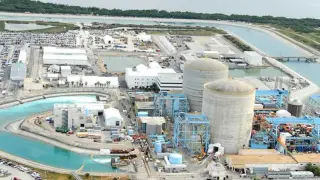
St. Lucie Nuclear Plant Unit 1 was manually shut down after three control rods dropped into the reactor core in a non-emergency; the trip was uncomplicated and the plant stabilized in Mode 3 with decay heat being removed through the main condenser while Unit 2 remained unaffected. The NRC resident inspector was notified. Licenses for Units 1 and 2 have been renewed, and local siren tests are scheduled as routine maintenance.
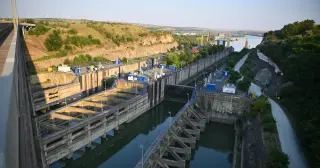
Record heat and shrinking river levels across Europe are forcing nuclear plants to throttle or shut down, with Hungary’s Paks near the Danube at risk, Romania facing possible shutdown of its last reactor after water-diversion attempts, and France seeing a 20% drop in production due to drought and jellyfish, highlighting climate-driven risks to electricity supply.