
Global demographic shift: Older adults to outnumber children by 2060
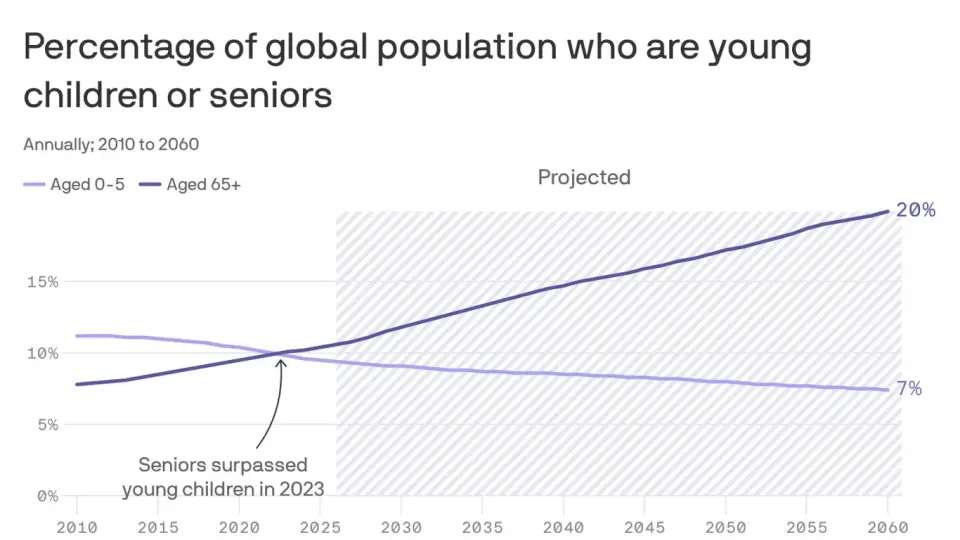
The world is experiencing a rapid demographic shift where the population of those aged 65 and older is projected to grow from 852 million in 2025 to 2 billion by 2060. This increase will account for 55% of all net global population growth over that period. More than 71% of the global population now lives in countries with fertility rates at or below the 2.1 replacement level, a significant rise from 45% in 2013. This trend is spreading beyond wealthy nations, with China, India, and several other populous countries falling below replacement levels. The shift creates a 'fertility trap' in many regions, leading to fewer workers and caregivers supporting growing older populations, which puts pressure on pensions and health systems. While Europe remains the oldest region, Asia will account for two-thirds of the global increase in older adults, and Africa's older population is projected to surpass Europe's by 2060.
Key points
- The global population of those 65+ is projected to grow from 852 million in 2025 to 2 billion by 2060, accounting for 55% of net global population growth.
- Over 71% of the world's population lived in countries with fertility rates at or below the 2.1 replacement level in 2023, up from 45% in 2013.
- China and India, the world's two most populous countries, now have fertility rates below the replacement level, along with Bangladesh, Mexico, and Vietnam.
- The U.S. ranked as the 48th-oldest country in 2025, with 18.9% of its population aged 65 or older, but is projected to fall to 110th by 2060 as other countries age faster.
- Asia's 65+ population is projected to surge from 487 million to 1.24 billion by 2060, while Africa's older population is expected to more than quadruple from 60 million to 249 million, surpassing Europe's 214 million.
Background
This demographic shift follows previous discussions on the health and economic implications of aging. For instance, recent studies have highlighted the importance of maintaining fitness and cardiovascular health in older adults, such as the Generation 100 study in Norway and the STAREE trial on statin therapy. Additionally, the economic and social challenges of aging populations have been a recurring theme, with earlier coverage noting the need for societies to rethink old age as an economic asset rather than a cost. The current data underscores the urgency of these issues as the global population ages rapidly.
Why it matters
The rapid aging of the global population poses significant challenges for social security, healthcare systems, and economic stability. The decline in fertility rates and the resulting 'fertility trap' mean fewer workers and caregivers will support growing older populations, straining pensions and long-term care. This shift requires societies to adapt by promoting preventive health, longer working lives, and age-friendly jobs to turn longer lifespans into healthier, more economically engaged years. The demographic changes also highlight the need for global cooperation to address the economic and social implications of an aging world.
What to watch
The next steps involve monitoring the demographic trends in key regions, particularly Asia and Africa, where the largest increases in older populations are expected. Policymakers will need to adjust social security and healthcare systems to accommodate the growing older population. Additionally, efforts to promote preventive health and age-friendly jobs will be crucial in mitigating the economic impacts of aging. The U.S. and other countries will need to reassess their strategies for supporting older adults, focusing on maintaining their economic engagement and health.
Want the full story? Read the original reporting
Read on Axios