
demographics4.865 min read
Japan tops 100,000 centenarians as aging crisis deepens
20 days ago•Source: Al Jazeera

The latest demographics stories, each synthesized from multiple sources with added background and context.
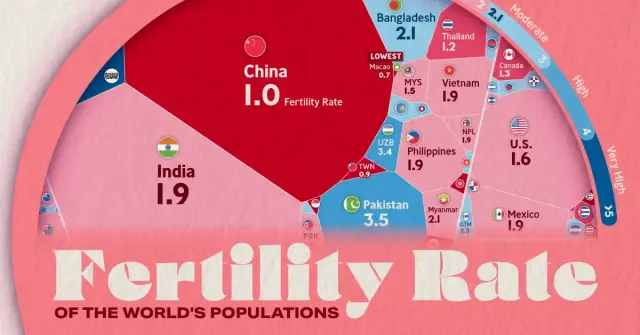
A Voronoi-style visualization of fertility rates across 236 countries shows about 71% of the global population lives in countries with below-replacement fertility (2.1 births per woman). India (~1.94) and China (~1.02) sit below replacement, while Sub-Saharan Africa has the highest rates (Chad 5.94, Somalia 5.91, DR Congo 5.90). Fertility has fallen from about five births per woman in the 1960s to a 2024 global average of roughly 2.2, with future growth increasingly concentrated in high-fertility regions, shaping aging populations, labor markets, and long-term demographics. The data come from the UN World Population Prospects 2024 Revision, using 2025 estimates.
The Texas Tribune•4 months ago
CBS News•6 months ago

U.S. population grew 1.8 million (0.5%) from July 2024 to July 2025, the slowest pace since the pandemic, driven mainly by a historic drop in net international migration (2.7 million to 1.3 million); births and deaths were relatively stable. Growth slowed across regions and states, with the Midwest the only region where all states gained population and South Carolina the fastest-growing state, while Puerto Rico declined. Net international migration is projected to fall further, to about 321,000 by July 2026.
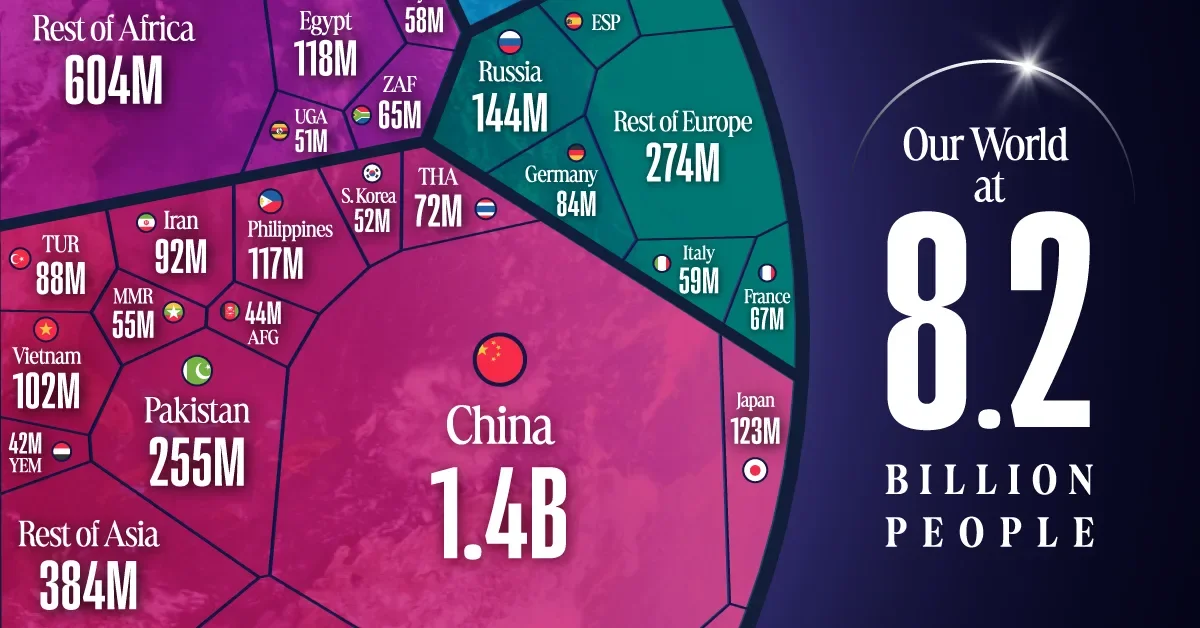
Global population surpassed 8.2 billion in 2025, with India contributing roughly a quarter of that growth and nearing 1.46–1.5 billion while China declines; the United States is around 347 million, and Nigeria is projected to overtake the U.S. by 2050. The Visual Capitalist graphic visualizes 204 countries’ populations using UN data, highlighting aging trends in Europe (Italy and Greece shrinking) and broader demographic shifts.
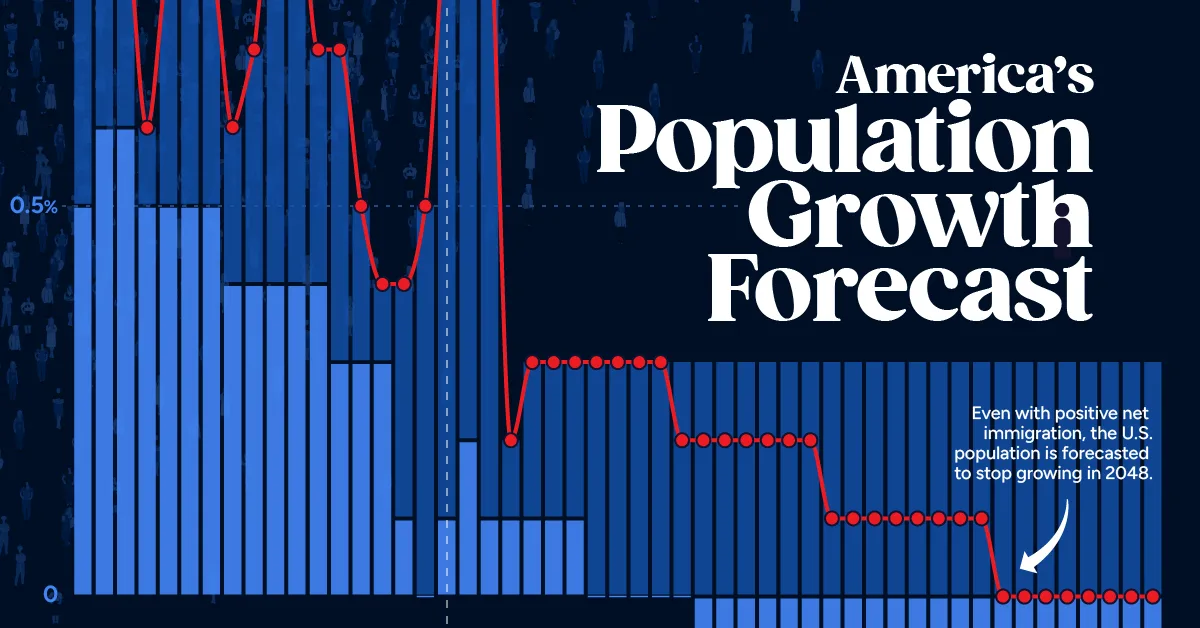
US population growth is slowing due to low fertility rates and an aging population, with projections indicating growth will halt around 2048 as natural decline and immigration balance out, leading to a peak and subsequent decline by 2055.
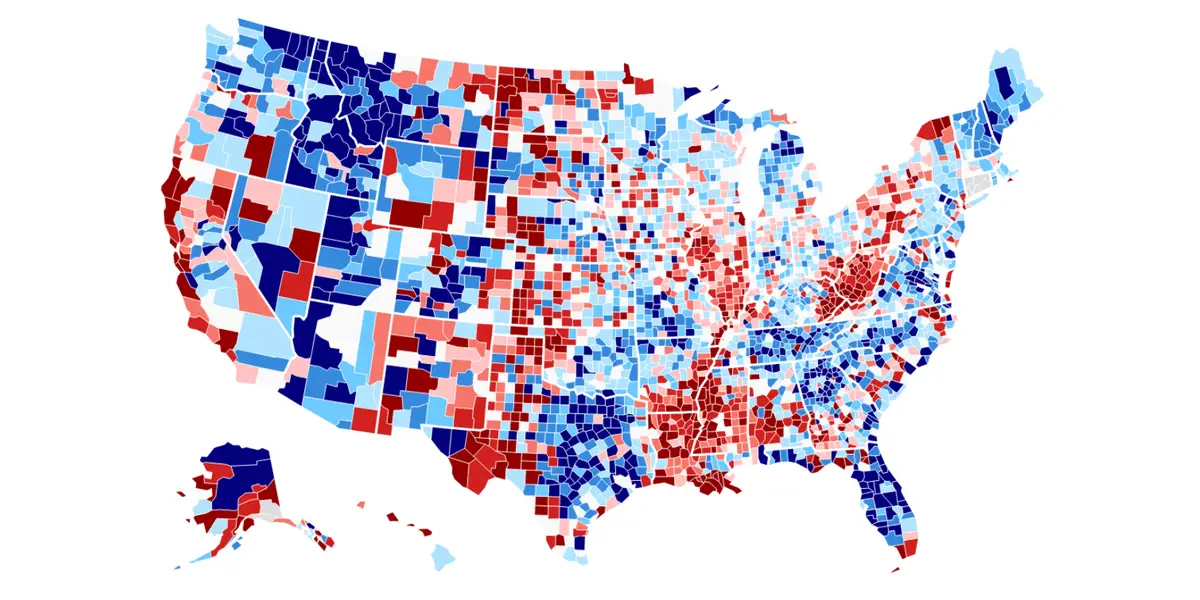
Younger Americans, particularly those aged 25 to 44, are increasingly moving from urban areas to rural regions, reshaping local demographics and economies. This trend, observed since 2020, is driven by new work opportunities and the appeal of natural surroundings, with significant migration to areas like the Colorado Rockies and Georgia's Blue Ridge Mountains. Rural counties have seen a rise in new businesses and income, contrasting with stagnant or declining young adult populations in major cities. This shift is part of a broader economic movement towards the South, with rural areas experiencing a notable boom.

Birth rates in some of the world's richest countries have halved due to economic concerns, with the average fertility rate dropping from 3.3 children per woman in 1960 to 1.5 in 2022, according to an OECD report. Many people are choosing to have children later or not at all, influenced by financial uncertainty and the pressures of parenthood. The report highlights particularly low fertility rates in Korea, Italy, and Spain, while Israel has the highest rate among OECD countries.
Birth rates in wealthy nations have halved, reaching a record low, raising concerns about demographic and economic impacts.

Japan's birth rate hit a record low for the eighth consecutive year in 2023, with only 727,277 babies born, a 5.6% drop from the previous year. The number of marriages also fell by 6%, contributing to the declining birth rate. The government is implementing financial support measures to encourage childrearing, but experts argue that these efforts may not be enough to reverse the trend, citing economic instability, traditional gender roles, and a reluctance among young people to marry or have children. Japan's population is projected to fall by 30% by 2070.

Nagasaki, Japan, has been identified as the fastest-declining metro area in the world, with a population decrease of 3.43% from 2020 to 2024. This decline is attributed to factors such as industrial decline, low fertility rates, and an aging population. The global population trends indicate that while some regions are experiencing growth, others, particularly in Asia and Europe, are seeing declines due to various socio-economic factors.
Japan's native population is declining at a record rate as births plunge, exacerbating the country's demographic crisis. The number of births in 2021 fell to the lowest level since records began in 1899, while deaths reached a postwar high, leading to a natural population decline of almost 900,000. This trend highlights the challenges posed by Japan's rapidly aging population and low birth rate, which have significant implications for the country's economy and social welfare system.

Japan's population has fallen for the 13th consecutive year, dropping to 124.35 million, with the number of Japanese nationals decreasing by 837,000, the largest drop since 1950. Single-person households are projected to make up 44.3% of all households by 2050, with nearly half of them comprising individuals aged 65 or older. The average household size is expected to decrease, and the number of elderly people living alone is set to increase, necessitating enhanced support for the elderly. Additionally, the population of those aged 75 or above has surpassed 20 million for the first time, while the number of young people has hit a record low. However, the foreign national population has risen, with only Tokyo experiencing a population increase for the second consecutive year.