
Pagosa Springs residents fight to preserve history and economy after back-to-back historic floods
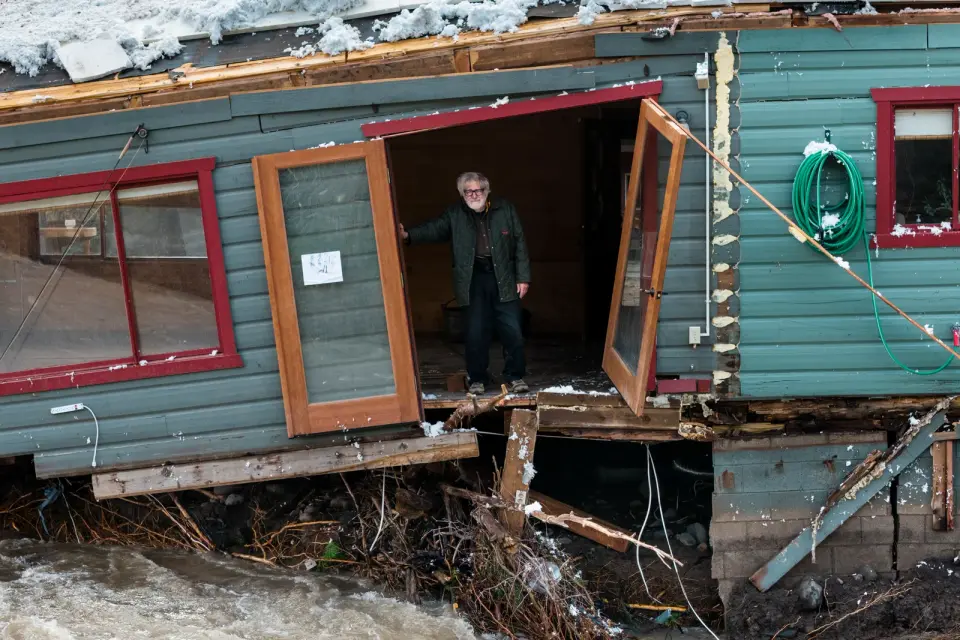
Two consecutive storms in late October and early November 2026 devastated Pagosa Springs and surrounding areas in southwestern Colorado, causing catastrophic damage to infrastructure, homes, and local businesses. The San Juan River surged to record levels, isolating the town and forcing evacuations. While residents and volunteers are actively salvaging cultural artifacts and clearing debris, the community faces a prolonged recovery period complicated by road closures, supply chain disruptions, and uncertainty regarding federal disaster aid. Local officials and business owners are urging visitors to return to support the tourism-dependent economy, which has suffered significantly from repeated natural disasters and infrastructure projects.
Key points
- The San Juan River in Pagosa Springs peaked at approximately 10,400 cubic feet per second, a massive increase from normal summer flows of 8 to 40 cfs, causing severe erosion and structural damage.
- The Pagosa Springs History Museum, a historic 1938 WPA building, is teetering over the river after its foundation was washed away; volunteers are racing to salvage artifacts before the structure collapses.
- U.S. Highway 160 remains closed on both sides of Pagosa Springs, isolating the town and forcing a three-hour detour through New Mexico for essential supplies and medical care.
- Archuleta County reported at least 800 damaged buildings from the first flood, with over 540 homes affected; the second flood caused additional damage, particularly in La Plata County.
- Colorado Governor Jared Polis requested nearly $27 million in federal aid, but the total damage is expected to rise significantly as assessments continue.
- Local businesses, including The Springs Resort and Rosie’s Pizzeria, are struggling with supply chain issues and declining tourism, with some estimating losses exceeding $300,000.
Background
Pagosa Springs and Archuleta County have faced a series of natural disasters in recent years, including significant flooding in 2025 and the Rio Blanco fire. The 2025 flood request for federal aid was denied by the Trump administration, forcing the county to fund repairs through local budgets and grants, which are heavily reliant on tourism revenue. This latest event is the second major flood in less than two years, compounding the economic strain on a community already dealing with a years-long downtown construction project and high gas prices.
How outlets are covering it
The Colorado Sun emphasizes the cultural and economic impact, highlighting the struggle to save the local museum and the need for tourism to sustain the economy. The Denver Post focuses on the immediate human toll and community resilience, detailing how neighbors are helping each other clear debris and the isolation caused by road closures. AP News highlights the financial vulnerability of uninsured residents, such as Matthew Martinez, who faces significant cleanup costs and potential homelessness. The Durango Herald focuses on the political response, noting that Senators Bennet and Hurd are pushing for a federal major disaster declaration to unlock funding, while CDOT officials outline timelines for reopening critical highways like 151 and 160.
Why it matters
The repeated flooding in Pagosa Springs and the broader Four Corners region highlights the increasing frequency and intensity of extreme weather events linked to climate change, such as the 'super' El Niño. The isolation of rural communities due to infrastructure failure exposes vulnerabilities in supply chains and emergency response. The struggle for federal aid and the reliance on tourism for recovery underscore the economic fragility of small towns in the face of recurring natural disasters, with long-term implications for regional stability and community resilience.
What to watch
CDOT aims to reopen Colorado Highway 151 within 10 days to provide a shorter route between Durango and Pagosa Springs, while the Piedra Bridge on U.S. 160 is expected to take at least 30 days to repair, potentially reopening by mid-January. Federal officials are working to determine if a major disaster declaration will be granted for the latest round of flooding, which could unlock additional FEMA funding. Local businesses and residents are focused on immediate cleanup and stabilization efforts, with hopes that winter tourists will return to support the economy. The Pagosa Springs History Museum plans to rebuild its collection and is accepting donations to fund the effort.
- Their town has been burned, flooded and nearly cut in half. But residents want you to know “Pagosa is here.” The Colorado Sun
- Southwest Colorado communities come together to dig out from ‘Armageddon’ of back-to-back floods The Denver Post
- Uninsured and flooded out, a Colorado man worries if life will be normal again AP News
- Hurd, Bennet visit Durango, Pagosa Springs after flooding Durango Herald
- 'Warm storm' increased flooding in southwest Colorado 9NEWS
Want the full story? Read the original reporting
Read on The Colorado Sun