
Lake Powell hits record low, nearing critical hydropower threshold
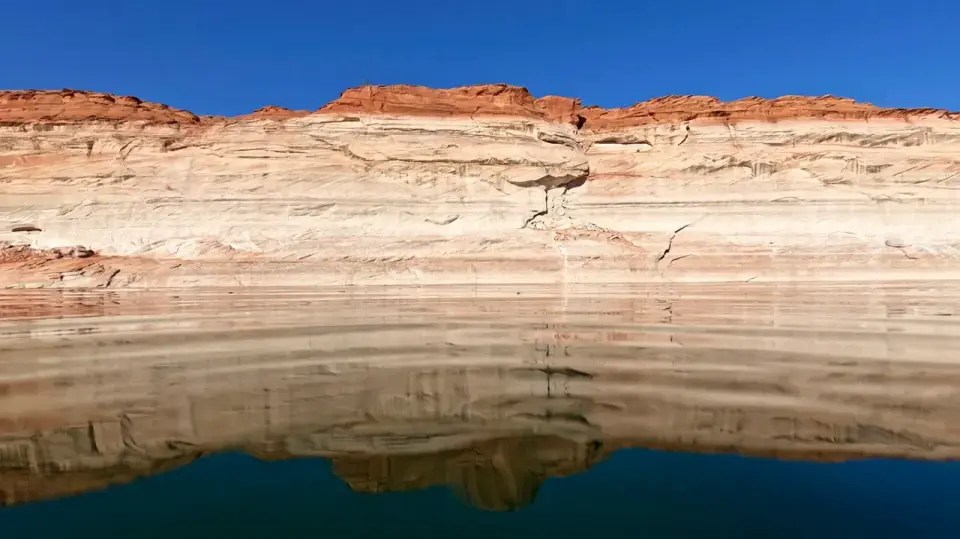
Lake Powell, the second-largest reservoir in the U.S., has reached a record-low water level of 3,519.8 feet, surpassing the previous low set in April 2023. This decline, which is part of a broader crisis affecting the Colorado River basin, threatens hydropower generation and water supplies for millions. The U.S. Bureau of Reclamation projects the level could drop further by March 2027, approaching the minimum threshold required for electricity production. Concurrently, Lake Mead, the nation's largest reservoir, has also hit a record low, dropping over 23 feet since the start of the year. These developments highlight the severe impact of a 25-year drought and heavy water usage on the region's infrastructure.
Key points
- Lake Powell's water level reached 3,519.8 feet as of August 17, 2026, a new record low.
- The level is down approximately 3.8 feet from a month ago, according to the U.S. Bureau of Reclamation.
- Lake Mead, the largest U.S. reservoir, also hit a record low at 1,039.83 feet, down more than 23 feet since January 2026.
- The U.S. Bureau of Reclamation projects Lake Powell could fall below 3,492 feet by March 2027, nearing the 3,490-foot minimum power pool level.
- Seven states depend on the Colorado River for water, hydropower, and habitat, serving 35 to 40 million people.
- The Interior Department proposed cutting water use by up to 3 million acre-feet per year, a plan opposed by Arizona Governor Katie Hobbs.
Background
This development follows a series of record-low measurements in the Colorado River basin throughout 2026. In July, both Lake Powell and Lake Mead reached historic lows, with officials warning of potential system-wide failures. The basin has been in a drought for over 25 years, exacerbated by climate change and heavy usage. Previous reports indicated that El Niño might offer limited relief but would not reverse the long-term decline in storage levels.
How outlets are covering it
The Hill and Associated Press report the factual decline in water levels, citing data from the U.S. Bureau of Reclamation. The Hill emphasizes the political friction surrounding the Interior Department's proposed water cuts, noting Arizona Governor Katie Hobbs's rejection of the plan as 'draconian.' The Yahoo article, while largely obscured by technical code in the provided text, frames the situation as 'uncharted territory,' highlighting the unprecedented nature of the low levels. Both sources agree on the severity of the crisis but differ in emphasis, with The Hill focusing on policy disputes and the broader implications for the seven dependent states.
Why it matters
The record-low levels in Lake Powell and Lake Mead threaten the stability of the Colorado River system, which provides water and electricity to 35-40 million people across seven states. If levels drop below the minimum power pool threshold, hydropower generation could cease, leading to significant economic and environmental impacts. The ongoing drought and heavy usage necessitate urgent policy decisions and potential water-use cuts, which could strain relations between federal and state governments.
What to watch
The U.S. Bureau of Reclamation projects that Lake Powell's level could fall below 3,492 feet by March 2027. The Interior Department is expected to finalize its water-cut proposals, facing resistance from states like Arizona. Continued monitoring of water levels and potential adjustments in operating guidelines for the Colorado River are anticipated in the coming months.
- Lake Powell, second-largest reservoir in US, hits record-low water level The Hill
- Lake Powell Hits Lowest Level On Record As Water Crisis Continues The New York Times
- ‘Uncharted territory’: Second-largest reservoir in US plunges to a record low Yahoo
- Lake Powell is just 30 feet away from its worst disaster SFGATE
- Lake Powell hits record low, threatening key water and electricity supply for millions PBS
Want the full story? Read the original reporting
Read on The Hill