
King Tides and El Niño Drive Record Coastal Flooding Across Southern California
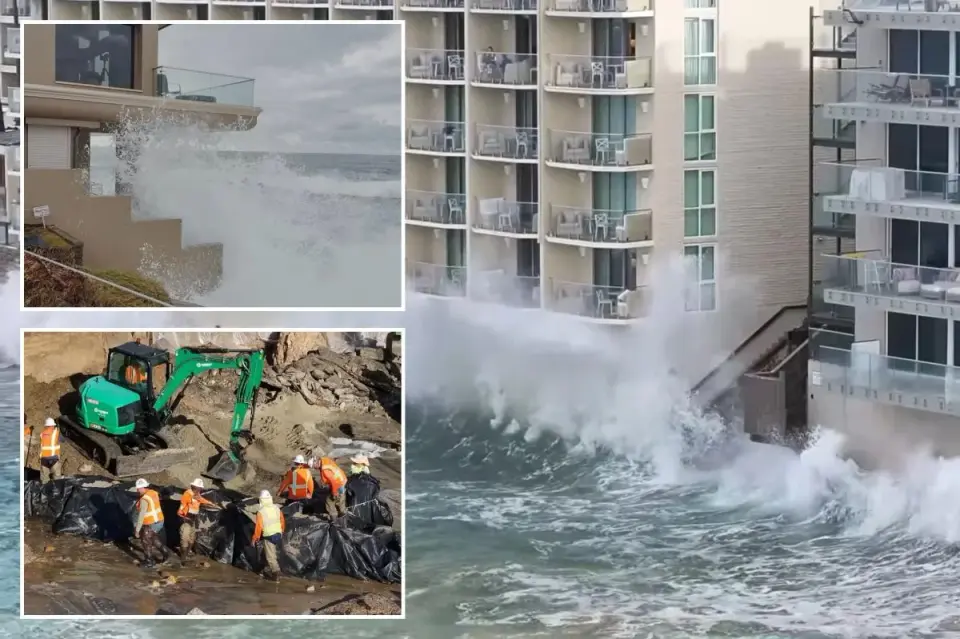
Southern California faces severe coastal flooding from Sunday through Thursday as king tides, amplified by El Niño and record ocean heat, push water levels up to 8 feet above baseline. The National Weather Service issued warnings for San Diego and Orange counties, while officials in Laguna Beach and Newport Beach implemented emergency measures, including relocating hotel guests and reinforcing eroded bluffs. This event follows months of storm damage and is part of a broader trend of rising sea levels and intensified erosion along the state's coast.
Key points
- The National Weather Service forecast minor to moderate coastal flooding from Sunday to Thursday, with high tides reaching 7.5 to 8 feet, up to 1.5 feet above standard projections due to warmer ocean temperatures.
- The Surf & Sand Resort in Laguna Beach moved all guests off the first floor as a precaution against pounding surf, though no structural damage to the building was confirmed.
- California’s Office of Emergency Services issued Coastal Flood Warnings for Orange and San Diego counties, with advisories in effect along the entire state coast until October 29.
- Crews are conducting a $4 million emergency operation to stabilize a fractured 360-foot bluff near El Moro and Crystal Cove using rocks and sand-filled barriers.
- In Capistrano Beach, six to seven homes have been red-tagged as uninhabitable and are undergoing demolition due to structural damage from recent waves.
Background
This latest surge follows a series of destructive events earlier in 2026, including Hurricane Marie and Tropical Storm Rachel, which stripped sand from beaches and damaged infrastructure. Laguna Beach declared a local emergency in September due to severe erosion, and the region has been dealing with a prolonged marine heat wave and an active El Niño pattern that has raised sea levels by approximately one foot over the past century. Previous coverage noted that these conditions are part of a rare alignment of astronomical cycles and climate factors expected to intensify through the winter.
How outlets are covering it
The California Post focused on immediate local impacts, highlighting the precautionary measures at the Surf & Sand Resort and the unconfirmed reports of seawall collapse. The Los Angeles Times provided a broader scientific and regional context, emphasizing that current tides are unprecedented in duration and height due to the combination of El Niño, a marine heat wave, and specific lunar cycles. While the California Post noted that the resort building had withstood past storms, the Los Angeles Times highlighted that actual tides are running 1.25 to 1.75 feet higher than astronomical predictions due to thermal expansion of the water. Both outlets agreed that the damage is exacerbated by prior storm impacts, but the Los Angeles Times placed greater emphasis on the long-term climate drivers and the potential for record-breaking levels during upcoming holidays.
Why it matters
The convergence of astronomical king tides, El Niño, and record ocean heat is creating a new baseline for coastal risk in California. The damage to critical infrastructure, including highways and residential areas, highlights the vulnerability of coastal communities to climate change. As officials prepare for further peaks around Thanksgiving and Christmas, the ongoing erosion and flooding threaten public safety, economic stability, and the long-term viability of coastal development in Southern California.
What to watch
Officials expect tides to remain elevated through Thursday, with further peaks forecast around Thanksgiving, Christmas, and Martin Luther King Jr. Day. The California Department of Transportation plans to install a fill buttress at the base of the Crystal Cove slope to provide long-term protection. Newport Beach and Long Beach are continuing to move sand and install barriers to reinforce eroded beaches. If strong winter storms coincide with these high tides, the impact could be significantly worse, potentially leading to record-breaking flooding and further infrastructure failures along the coast.
- 5-star hotel in the crosshairs as coastal flooding pushes SoCal to its limits New York Post
- All SoCal seaside communities are under a Coastal Flood Warning or Advisory KTLA
- Exceptionally high tides will swamp California, ‘likely to get worse before it gets better’ Los Angeles Times
- Long Beach braces for possible record high tides this week; coastal flood advisory in effect through Thursday ABC7 Los Angeles
- San Diego, L.A. likely to see highest tides on record; Bay Area also could see coastal flooding San Francisco Chronicle
Want the full story? Read the original reporting
Read on New York Post