
Federal Colorado River Plan Imposes Deep Cuts on Lower Basin States Amid Record Drought
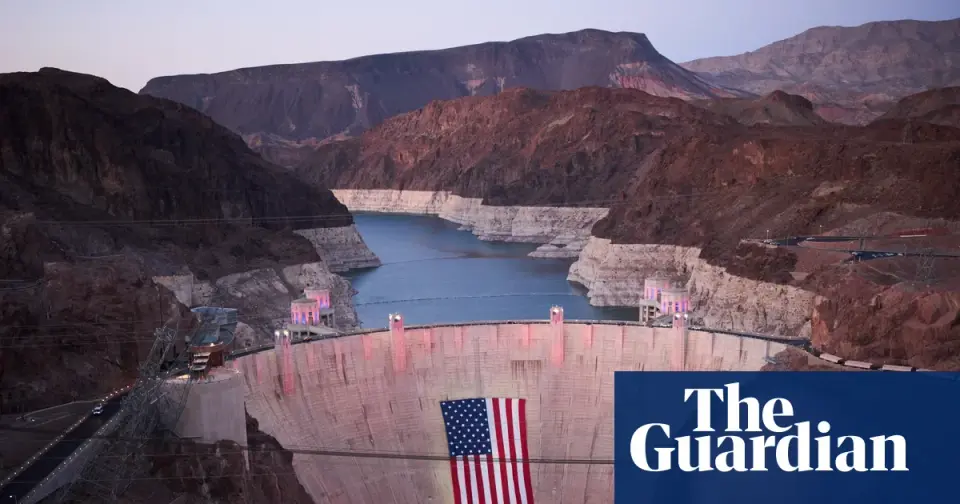
The US federal government has released a 10-year plan to manage the Colorado River crisis, imposing potential water cuts of up to 3 million acre-feet annually on the Lower Basin states of Arizona, California, and Nevada. This move follows record-low reservoir levels and failed state negotiations, with Upper Basin states facing only voluntary reductions. Critics argue the plan is insufficient, while supporters view it as a necessary interim measure to prevent system collapse.
Key points
- The US Bureau of Reclamation unveiled a 10-year framework on Friday to manage the Colorado River, which supplies water to 40 million people and irrigates 5.5 million acres of farmland.
- The plan mandates potential cuts of up to 3 million acre-feet (3.7 billion kiloliters) for the Lower Basin states (Arizona, California, Nevada), equivalent to 40% of their collective supply, while Upper Basin states (Colorado, Utah, New Mexico, Wyoming) face no mandatory restrictions.
- Lake Powell and Lake Mead have reached their lowest combined water levels since 1957, with Lake Powell at 23% capacity and Lake Mead at 27%, threatening hydropower generation and water delivery.
- The plan uses a flexible, two-year review cycle to adjust allocations based on hydrologic conditions, aiming to bridge the gap until the seven basin states reach a consensus, which has stalled for over three years.
- Arizona officials rejected the proposal as 'unreasonable,' arguing it places the burden solely on the Lower Basin, while Upper Basin stakeholders noted they already face natural scarcity without reservoir buffers.
Background
This development follows months of intense negotiation and missed deadlines among the seven states relying on the Colorado River. Previous archive coverage from August 2026 highlighted the federal government's move to step in after states failed to agree on a unified plan by a February deadline. The crisis is exacerbated by a century of overuse, climate change, and a severe snow drought, with flows down 20% and precipitation down 7% over the last century. The federal intervention aims to prevent the reservoirs from reaching 'minimum power pool' levels, which would halt hydropower generation.
How outlets are covering it
The New York Times emphasizes the federal government's insertion into a deep crisis and the potential for complex legal battles, noting the plan lays bare the challenge of aligning consumption with sparse supply. CNN highlights the historic low of the reservoirs, warning that levels could crash to the point where water cannot be delivered, and questions whether El Niño will provide sufficient relief. Al Jazeera focuses on the economic impacts, noting that while cities may maintain taps, water rates will rise, and agriculture faces significant uncertainty. The Guardian presents a balanced view, quoting Interior Secretary Doug Burgum on the plan's flexibility, but also including criticism from UCLA researcher Noah Garrison, who calls the plan 'toothless' for kicking the can down the road. Arizona Representative Adelita Grijalva called the proposal 'unacceptable,' while Upper Basin ranchers argued for 'shared pain' as hydrology worsens.
Why it matters
The Colorado River is the lifeblood of the American West, supporting major cities like Las Vegas, Phoenix, and Los Angeles, as well as critical agricultural centers. The plan's outcome will determine the future of water security for 40 million people, 5.5 million acres of farmland, and hydropower generation for 700,000 homes. Failure to manage the crisis could lead to system collapse, legal disputes, and severe economic and environmental impacts, including the loss of 14 native fish species and the drying of wetlands in Mexico's river delta.
What to watch
The federal government is expected to release a 'record of decision' in the coming week detailing short-term operations, closely following a proposal by Lower Basin states to shave 3.2 million acre-feet from their combined total over 2027 and 2028. Final operating guidelines are due by October 1. The seven states will continue negotiations, with the plan's two-year review cycle allowing for adjustments based on supply. Legal challenges are anticipated, particularly from Arizona, which faces the largest cuts. Experts warn that immediate action is needed, including investments in water efficiency and new sources, as long-term recovery is unlikely even with improved snowpack.
- Water cuts loom as US unveils long-awaited response to Colorado River crisis The Guardian
- U.S. Raises Threat of Steep Water Cuts in Lower Colorado River Basin The New York Times
- Historically low water level in two crucial US reservoirs threatens water and power for millions CNN
- US proposes cuts to Colorado River use for Arizona, California and Nevada Al Jazeera
- Reclamation Publishes Final Environmental Impact Statement for Future Colorado River Operations U.S. Department of the Interior (.gov)
Want the full story? Read the original reporting
Read on The Guardian